
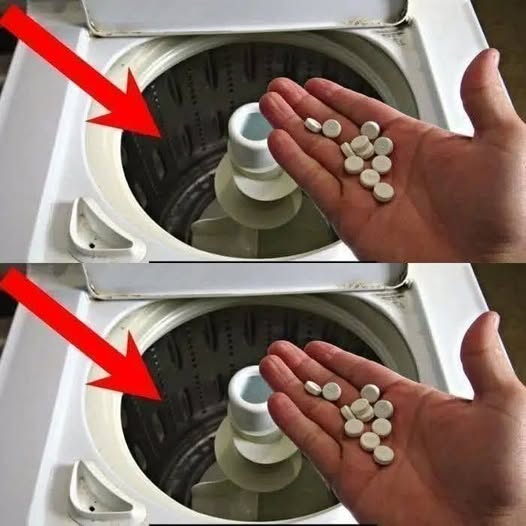
White clothes do not fade because they grow old. They fade because residue builds up quietly, layer by layer, wash after wash, until brightness has nowhere left to shine. Long before commercial stain removers and chemical brighteners crowded store shelves, households relied on simpler solutions grounded in observation and practicality. One of those nearly forgotten methods is the use of aspirin in laundry, a technique that looks odd at first glance but holds up surprisingly well under modern scientific scrutiny.
Everyday wear leaves behind more than visible dirt. Sweat deposits uric acid and body oils deep into fabric fibers. Antiperspirants introduce aluminum salts that cling stubbornly to cotton. Hard water adds mineral scale. Even high-quality detergents can leave microscopic residues that never fully rinse away. Over time, these elements bind together and attach themselves to fabric at a molecular level. Once that happens, ordinary washing cycles are no longer enough. Whites turn gray, collars yellow, and towels lose the crisp feel they once had, even when they smell clean.
This is where aspirin quietly earns its place.
Aspirin contains salicylic acid, a compound widely known in skincare and medical science for its ability to break down organic material. In laundry care, salicylic acid works as a mild but effective cleaning agent. It penetrates fabric fibers and loosens the bond between oils, minerals, and the cloth itself. Instead of masking discoloration the way optical brighteners do, aspirin helps remove the substances causing the problem in the first place. The fabric is not bleached or coated. It is actually cleaner.
Continue reading next page…