
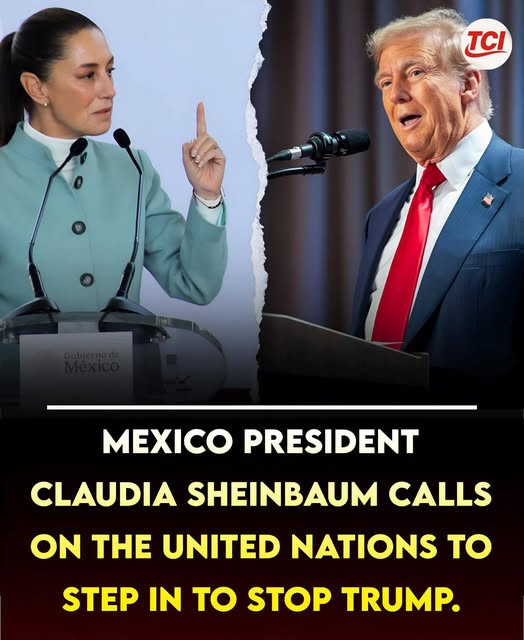
In the days following the stunning U.S. military operation in Venezuela and the capture of President Nicolás Maduro.
President Claudia Sheinbaum’s response hardened into one of the most significant critiques of U.S. foreign policy from a Latin American leader in decades.
Sheinbaum’s admonishment was not merely rhetorical. It was grounded in international law, diplomatic doctrine, and Mexico’s constitutional principles, and it immediately reshaped the diplomatic landscape in the Americas.
Sheinbaum’s government issued a forceful official communiqué condemning the U.S. operation as a unilateral breach of the United Nations Charter.
The statement explicitly referenced Article 2(4) of the Charter, which prohibits the threat or use of force against the territorial integrity or political independence of any state — a fundamental legal obligation binding on all U.N. member states.
This was not incidental phrasing: it was a legal framework deliberately chosen to elevate the dispute into the realm of global norms rather than bilateral contention.
In press briefings and formal addresses, Sheinbaum underscored that Latin America and the Caribbean are historically and legally designated as a “zone of peace” — a concept that has been repeatedly affirmed by the Mexican Foreign Ministry and regional institutions precisely to prevent foreign military intervention in hemispheric affairs.
In her view, the U.S. action represented more than a strategic strike; it signaled a dangerous erosion of sovereignty, self‑determination, and the rule of law.
Continue reading next page…