
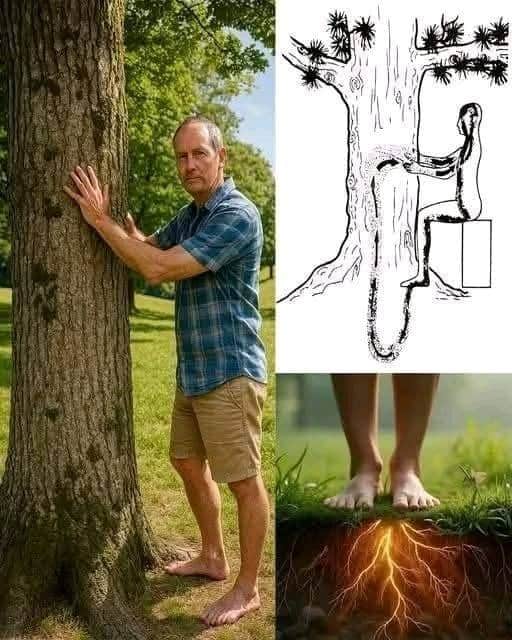
This gentle 15-minute grounding practice offers a calm yet powerful way to reconnect your mind and body with nature. It doesn’t require tools, memberships, or prior experience—only your awareness, bare feet, and a nearby tree. In today’s fast-paced digital lifestyle filled with screens, artificial environments, and constant mental stimulation, this simple outdoor ritual helps restore balance through direct contact with the natural world.
At its foundation, this practice blends two time-honored wellness traditions that have been used across cultures for generations. The first is grounding, also known as earthing, which involves direct skin contact with natural surfaces such as grass, soil, or sand. The second is mindful tree connection, a contemplative nature practice where a person physically and mentally engages with a tree as a symbol of stability, endurance, and calm. Combined, these practices create a short yet meaningful pause that supports relaxation and nervous system regulation.
The principle behind grounding is simple. Human physiology developed through constant interaction with the earth. For most of human history, people walked barefoot, lived close to the ground, and spent much of their time outdoors. Modern living has disrupted that connection. Insulated buildings, synthetic footwear, and urban environments have created distance from nature. Grounding practices aim to gently reintroduce that connection through natural sensory input.
When you stand barefoot on natural ground, thousands of nerve endings in the feet are activated. These sensory signals communicate safety and familiarity to the brain. Many people notice subtle shifts within minutes, such as slower breathing, reduced mental chatter, and a greater sense of calm. This response supports activation of the parasympathetic nervous system, which plays a role in relaxation, recovery, and emotional balance.
Incorporating a tree into the practice enhances the grounding experience. Trees are naturally stabilizing organisms. Their roots anchor deeply into the earth, allowing them to withstand weather changes and environmental stress over long periods of time. Light physical contact with a tree connects you to a living system that embodies resilience and patience. For many, this creates a quiet sense of reassurance and perspective.
To begin, select a tree that feels comfortable and approachable. It doesn’t need to be rare or visually impressive. A healthy, mature tree with textured bark works well, but the most important factor is that you feel at ease near it. People often feel naturally drawn to certain trees—trust that instinct. Find a nearby patch of natural ground such as grass, soil, or sand, and avoid concrete or artificial surfaces.
Remove your shoes and stand barefoot. Allow your feet to settle naturally. Notice the temperature, texture, and subtle unevenness beneath you. Gently shift your weight from heels to toes. This small movement helps release tension in the feet, legs, and lower back—areas where stress often accumulates without awareness.
Place one or both hands lightly on the tree trunk. There’s no need to hug or apply pressure. A relaxed, respectful touch is enough. Notice the surface of the bark beneath your palm. If you feel safe, close your eyes. Take slow, steady breaths through your nose and exhale through your mouth, allowing your breathing to become natural and unforced.
As you remain there, bring your attention to the physical points of contact—your feet on the ground, your hands on the tree, your body standing upright yet relaxed. Thoughts will arise, and that’s normal. When they do, gently redirect your focus back to sensation. This is a mindfulness practice rooted in awareness, not perfection or mental silence.
Some people find it helpful to visualize the tree’s roots extending deep into the earth and imagine tension releasing downward into the soil. Others focus on the tree’s steady presence as a reminder that growth and strength don’t require constant urgency. There is no right or wrong way to experience this practice. The benefit comes from allowing yourself to slow down without judgment.
Fifteen minutes is sufficient to notice effects without feeling overwhelming. Short, consistent wellness routines are often more sustainable than lengthy sessions. Afterward, you may choose to reflect quietly or write in a journal. Some people experience mental clarity or emotional ease, while others simply feel more grounded and refreshed.
Optional additions can support the experience but are not essential. Staying hydrated with water nearby is helpful. Soft background music may reduce external distractions if you’re in a noisy area. Familiar calming scents like lavender or sandalwood can serve as an additional sensory cue. These are optional comforts, not requirements.
This grounding ritual can be especially supportive during periods of stress, emotional overload, or mental fatigue. It works well as a reset between tasks, a calming evening routine, or a mindful start to the day. Many people use it to reconnect with themselves after extended time indoors or excessive screen use.
It’s important to maintain realistic expectations. Grounding and tree connection are not medical treatments or cures. They are supportive lifestyle practices that encourage natural self-regulation. Their effects are often subtle but build over time with regular use, contributing to improved emotional awareness, relaxation, and overall well-being.
In a culture that often prioritizes constant productivity, standing barefoot beside a tree may initially feel unfamiliar or unproductive. Yet there is strength in stillness. Trees grow without rushing and endure without resistance. Spending even a few quiet minutes in nature can serve as a reminder that balance comes from steady connection, not constant motion.
This practice asks nothing of you except presence. No purchases, no performance, no expectations. Just you, the ground beneath your feet, and a living tree offering quiet companionship. In those fifteen minutes, external noise softens, and space opens for calm, clarity, and reconnection.