
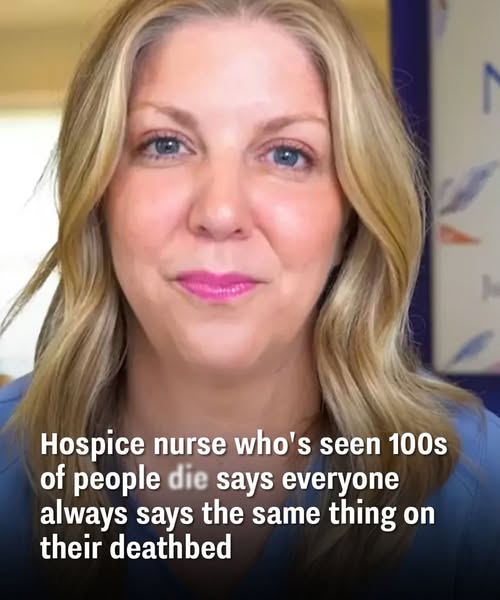
After spending years caring for individuals during their final stage of life, one hospice nurse has noticed a pattern so consistent that it completely transformed how she views living well. It isn’t dramatic or inspirational in the traditional sense. It doesn’t involve wealth, career success, or social status.
Instead, it is quiet. Simple. And often recognized far too late.
Julie McFadden has dedicated her professional life to end-of-life care, supporting patients during their last weeks, days, and sometimes final hours. Her role places her in deeply personal moments—spaces where honesty replaces appearances and reflection replaces ambition. In these moments, people tend to speak with remarkable clarity.
Over time, Julie noticed something striking: when everything unnecessary falls away, people express the same realizations again and again.
What stands out most isn’t regret over what they failed to achieve—but what they failed to appreciate.
Julie’s work now reaches far beyond hospice facilities. Through education, public discussions, and digital platforms, she helps people approach topics like aging, health, and mortality with calm realism. Her intention has never been to provoke fear. Instead, she shares insight shaped by experience—offering guidance rooted in compassion, not theory.
As people approach the end of life, priorities shift dramatically. The pressure of work deadlines, financial goals, and long-term plans fades. Titles and productivity no longer matter. What replaces them is reflection.
Julie explains that people stop measuring their lives by accomplishments and start remembering moments. Conversations become more open and sincere. There’s no longer a need to impress or perform.
One topic surfaces frequently: work.
Many patients express that they spent too much of their lives working. Not out of greed or ego—but necessity. They worked to maintain financial stability, support loved ones, manage healthcare costs, and build some sense of security for the future. Rest, connection, and personal fulfillment were postponed in the name of responsibility.
Julie emphasizes that this is not about assigning blame. Most people work hard because they feel they must. Still, as time becomes limited, many wish they had found greater balance—more presence with family, more attention to relationships, and more moments of rest instead of constant urgency.
Yet even this reflection is not the most common one she hears.
The realization that appears most often is much simpler—and far more profound.
People wish they had valued their health.
Not that they had prevented illness. Not that they had lived forever. They simply wish they had appreciated what their bodies once allowed them to do effortlessly.
Julie says patients often speak with amazement about basic functions they once ignored: breathing without effort, walking without pain, sleeping comfortably, eating without difficulty, waking up with energy. These ordinary abilities become extraordinary when they are gone.
When health is stable, it rarely feels urgent. It becomes invisible—something assumed to be permanent. Only when physical decline begins does its importance become unmistakable.
Julie has heard this realization countless times. Patients recall ordinary days they once rushed through—days now remembered as precious. Moments that felt routine are later recognized as gifts.
Witnessing these reflections has profoundly changed how Julie approaches her own life.
She has shared that her experiences in hospice care made her more intentional about gratitude. Rather than waiting for major milestones, she focuses on everyday wellness and quality of life.
Each evening, she practices a simple routine. No complicated rituals. No forced optimism. She writes down small physical comforts she’s grateful for:
- Walking without assistance
- Breathing freely
- Having enough energy to get through the day
- Feeling warmth from the sun
These basic experiences are not glamorous, but they support everything else—relationships, independence, financial stability, and long-term well-being. By noticing them regularly, Julie stays present instead of assuming her health will always be the same.
Her work has also influenced her lifestyle choices. She has spoken openly about habits she avoids—not from judgment, but from repeated observation.
Daily alcohol use. Smoking or vaping. High-risk behaviors that offer short-term relief but compromise long-term health and longevity.
Julie has cared for many people whose suffering could not be reversed—and in some cases might have been reduced or delayed. Seeing these patterns repeatedly reshapes how one thinks about prevention, self-care, and respecting the body as a limited resource.
She stresses that this awareness doesn’t require extreme changes. It starts with attention.
Listening to your body.
Resting when needed.
Choosing habits that protect long-term health, comfort, and independence.
These choices often don’t feel urgent—especially when health insurance, savings, or youth create a sense of safety. That’s exactly why they matter.
Julie is clear that her message is not meant as a warning. She isn’t trying to frighten people into lifestyle changes or overwhelm them with fear about aging or mortality.
Her insight is quieter than that.
Good health rarely announces itself. It doesn’t demand attention. Yet it supports everything—careers, relationships, financial planning, retirement goals, and daily joy.
By listening to those who reach the end of life, Julie believes people can learn how to live with greater awareness now—before loss delivers the lesson.
The greatest tragedy she witnesses isn’t death itself. It’s regret born from distraction. Not recognizing physical strength while it was still there. Not noticing how much was already working.
Her experience offers a powerful reminder: fulfillment doesn’t always come from doing more. Sometimes it comes from noticing what is already enough.
The voices Julie hears at the end of life are not asking for more time. They are wishing they had been more present in the time they had.
And that lesson, she believes, is available at any age—long before the final chapter begins.