
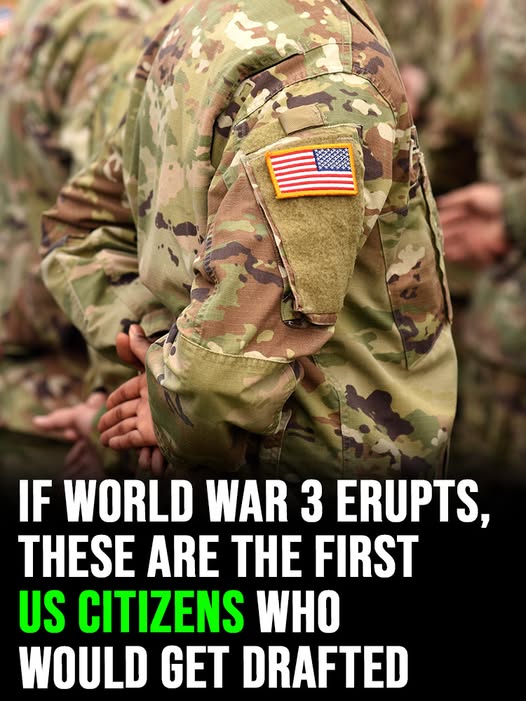
No one wants the reality of a global conflict, and leaders in Washington typically avoid full-scale war whenever possible. But in a serious international crisis, such as a hypothetical World War III, the U.S. government could consider reinstating the military draft as part of its national security strategy. Here’s how the process would work and which Americans would be first in line if a draft were activated under U.S. defense law. ([sss.gov][1])
How the U.S. Draft Could Be Reinstated
At present, the U.S. does not have an active draft. The U.S. Armed Forces operate on an all-volunteer basis, a system in place since 1973. However, the federal government still maintains a legal mechanism for compulsory service if a major national emergency arises and the military needs additional personnel. ([sss.gov][1])
For a draft to be reinstated:
- Congress and the President would have to act. They must amend the Military Selective Service Act to authorize induction of personnel for service. ([sss.gov][1])
- The Selective Service System would then be activated. This contingency agency would open processing offices and notify registrants that they are being ordered to report for duty. ([sss.gov][1])
- A National Draft Lottery would determine the order of call. Birth dates would be randomly paired with sequence numbers, and the system would publish lottery results publicly. ([sss.gov][2])
Who Is Currently Required to Register
Under existing U.S. law, nearly all male citizens and male immigrant residents between 18 and 25 years old must register for the Selective Service within 30 days of their 18th birthday. Failing to register can carry legal penalties and result in ineligibility for federal student aid, job training, certain federal jobs, and other benefits. ([AS USA][3])
This registration requirement applies broadly, including to U.S. citizens, permanent residents, refugees, and undocumented immigrants in the eligible age range. ([AS USA][3])
Order of Call in a Draft
If authorized, the Selective Service System’s lottery would determine which registrants are called first to serve. The typical prioritization is:
- Men turning 20 in the year of the draft would be first to receive induction orders. ([sss.gov][2])
- Next would come individuals turning 21, then 22, 23, 24, and 25 during that year. ([sss.gov][2])
- If additional personnel were needed, lotteries for younger ages—including 19 and 18—would follow. ([sss.gov][2])
This structured progression helps organize military conscription according to legal age cohorts while ensuring the process remains transparent and equitable. ([sss.gov][2])
Eligibility, Evaluation, and Deferments
Being called through the draft lottery does not automatically send someone to the front lines. Inductees would first report to a Military Entrance Processing Station (MEPS) for evaluation of physical and mental fitness. Some individuals could be deferred or exempted based on medical conditions, educational commitments, family responsibilities, or other lawful considerations. ([sss.gov][1])
Additionally, some registrants might qualify as conscientious objectors due to religious or moral beliefs, which can result in assignment to noncombatant or alternative civilian roles instead of traditional military service. ([sss.gov][1])
Gender and Draft Registration
Currently, only men are required to register with the Selective Service System under U.S. law. Women are permitted to serve in all military roles, including combat, but a change in registration policy would require legislative action by Congress. ([Wikipedia][4])
What This Means for Americans
While a world war remains a hypothetical and extreme scenario, the Selective Service System provides a legal framework to support the U.S. Armed Forces in the event of a major national emergency. Registering with the system is a legal obligation for young men and one of several components that would shape how the country responds if it ever activated conscription again. ([AS USA][3])