
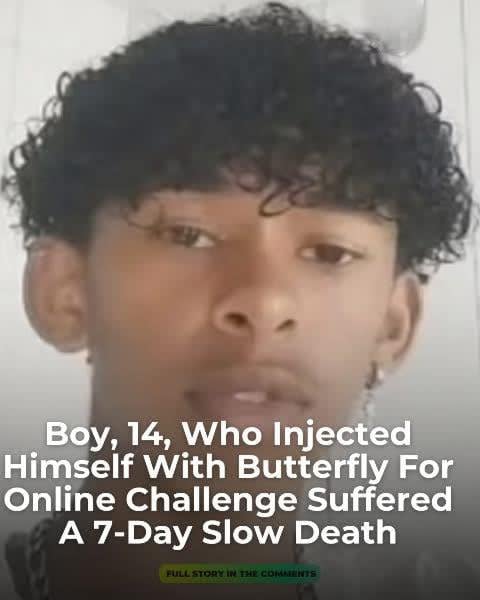
In a small city in Brazil, the death of a 14-year-old boy unfolded quietly—but the circumstances surrounding it have raised urgent concerns about online safety, adolescent decision-making, and public health education.
Davi Nunes Moreira was, by all outward appearances, a typical teenager. He lived with his family, attended school, and spent time online like millions of young people his age. What set his story apart was a single decision influenced by digital content—one that ultimately proved fatal.
A Medical Emergency With No Clear Answers
Davi was hospitalized after experiencing severe and unusual symptoms. He complained of intense pain, persistent vomiting, and increasing difficulty walking. His condition worsened rapidly, alarming his family, who rushed him to seek medical care.
When doctors initially asked what had happened, Davi said he had been injured while playing. The explanation seemed reasonable, but it prevented medical staff from immediately identifying the true cause of his illness.
Over the next several days, his health continued to decline. Despite testing and treatment, doctors struggled to understand why his body was failing. His symptoms did not align with a typical injury, and it became increasingly clear that something harmful had entered his system.
A Critical Detail Revealed Too Late
Only after significant deterioration did Davi disclose the truth: he had injected himself with a substance made from a dead butterfly.
The revelation shocked both his family and the medical team. By that point, doctors believe the opportunity for early, targeted intervention had likely passed. Whatever substance entered his bloodstream had already caused extensive internal damage.
Davi remained hospitalized for seven days. Despite intensive medical care, his condition worsened as multiple systems in his body began to fail. He died quietly in the hospital, far from the online environment that may have influenced his actions.
Medical Experts Warn of Extreme Risk
Following his death, healthcare professionals explained that determining a single cause was difficult. Possible contributing factors included severe infection, toxic exposure, septic shock, or a reaction caused by foreign material entering the bloodstream.
What experts agreed on was clear: injecting unknown organic substances into the body is extremely dangerous—especially for adolescents.
Insects can contain toxic compounds or harmful bacteria, particularly after decomposition. When such material is injected, it bypasses the body’s natural defenses, including the digestive system and liver, which normally help filter out dangerous substances. Direct entry into the bloodstream can trigger overwhelming immune responses that are difficult or impossible to reverse.
Fear, Silence, and Missed Time
One of the most troubling aspects of the case was the delay in Davi telling the truth. Fear played a significant role—fear of punishment, embarrassment, and disappointing his family. Like many teenagers, he believed he could handle the consequences on his own.
That silence proved costly. Doctors were not misinformed out of negligence, and his family acted quickly once they recognized the seriousness of his condition. The tragedy stemmed from a lack of critical information during the early stages of treatment.
Link to an Online Challenge
Authorities later confirmed that Davi’s actions were connected to an online challenge circulating on social media. Such trends often rely on shock value and secrecy, encouraging risky behavior without explaining real-world consequences.
Experts in adolescent mental health note that teenagers are particularly vulnerable to these influences. The areas of the brain responsible for impulse control and risk assessment are still developing, making young people more likely to underestimate danger—especially when seeking validation or curiosity-driven experiences online.
A Broader Wake-Up Call
Davi’s death unfolded over several days, marked by confusion and suffering that might have been reduced had full disclosure occurred earlier. His story has prompted renewed conversations about digital wellbeing, parental awareness, and the responsibility of online platforms to address harmful content.
In the aftermath, families, educators, and healthcare professionals have emphasized the importance of open communication—creating environments where young people feel safe admitting mistakes without fear or shame.
A Preventable Tragedy
Medical professionals stress that introducing unknown substances into the body—particularly through injection—is not experimentation. It is a serious medical risk. Modern healthcare relies on strict standards of sterility, dosage, and biological compatibility for a reason.
Davi was a child navigating a digital landscape that can reward dangerous behavior with attention while discouraging honesty through embarrassment. His final days reflect not only a medical emergency, but a broader failure to equip young people with practical health knowledge and safe spaces for disclosure.
His story now serves as a sobering reminder:
Not every online trend is harmless.
Not every secret stays manageable.
And not every mistake can be reversed.
Davi Nunes Moreira did not seek fame. He became trapped between curiosity and fear—where silence proved more dangerous than truth.