
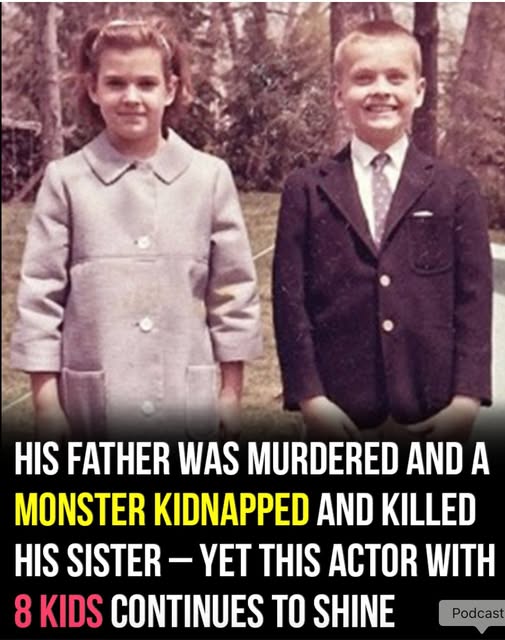
Some of the most talented figures in entertainment have endured extraordinary hardship behind the scenes. In rare cases, personal tragedy becomes the force that shapes resilience, compassion, and long-lasting success.
Few stories illustrate this better than that of one of Hollywood’s most respected television icons — an award-winning actor who has continued to inspire audiences despite a lifetime marked by devastating loss.
Now 70, the six-time Emmy Award winner remains a towering presence in American entertainment. His enduring career and grounded outlook are not accidents, but the result of hard-earned perspective forged through unimaginable pain.
A Childhood Marked by Loss
Born in 1955 in St. Thomas, U.S. Virgin Islands, the actor’s early life was unsettled by his parents’ divorce. He was raised primarily in New Jersey by his mother and maternal grandparents, where his grandfather became a central figure in his upbringing.
That stability ended when his grandfather passed away from cancer while the actor was just 12 years old. The loss deeply affected him, particularly as his grandfather’s behavior changed toward the end of his life — something the actor later internalized as personal rejection.
Only a year later, tragedy struck again. At age 13, his father was shot and killed outside his home. The crime, committed by a stranger who was later found not guilty by reason of insanity, left the young teenager grappling with anger, grief, and a profound sense of helplessness.
The Unthinkable Loss of a Sister
The heartbreak did not stop there. At age 20, while studying theater at Juilliard in New York, the actor learned that his younger sister, Karen, had been kidnapped, assaulted, and murdered in Colorado Springs.
The emotional toll was overwhelming. In later interviews, he admitted to irrational but persistent guilt — a common response among siblings who experience traumatic loss.
The man responsible, Freddie Glenn, was convicted of multiple murders. Although originally sentenced to death, the sentence was later overturned, leading to repeated parole hearings that reopened wounds for surviving family members.
Decades later, the actor publicly opposed Glenn’s release, writing that the pain of losing his sister had never faded.
In a 2014 parole hearing conducted via video, he confronted the man directly — expressing forgiveness on a personal level, while firmly refusing to support his release in honor of his sister’s life.
More Tragedy, and a Dangerous Escape
In 1980, tragedy struck again when the actor lost two half-brothers in a scuba-diving accident. One brother died during the dive; the other perished attempting a rescue. One body was never recovered.
The compounded grief contributed to a period of substance abuse in the 1990s, which the actor later described as an attempt to numb unbearable emotional pain.
He has since spoken openly about his struggles with addiction, faith, and self-forgiveness — becoming sober in 1996 and remaining so ever since.
Today, he encourages others facing loss to seek support, connection, and faith rather than isolation.
A Career That Defined Television History
Despite personal turmoil, his professional life soared. He rose to fame in the 1980s after being cast as psychiatrist Dr. Frasier Crane on the hit sitcom Cheers — a role that would become one of the most iconic characters in television history.
He later reprised the role in the spin-off Frasier, earning multiple Emmy Awards and cementing his status as a Hollywood legend.
His voice, often described as rich and unmistakable, became as recognizable as his sharp wit and comedic timing.
Finding Love, Family, and Healing
After several marriages, the actor eventually found lasting love with Kayte Walsh, an English flight attendant. The two met during a flight to London, and their relationship quickly blossomed.
They married in New York City in 2011, despite a 25-year age difference. In later interviews, he credited his wife with restoring joy and emotional openness in his life.
Together, they have welcomed four children, bringing his total number of children to eight. Becoming a father again later in life gave him renewed purpose and the opportunity to be more present than he had been earlier in his career.
He has spoken candidly about past regrets, acknowledging times when work took precedence over parenting — and his ongoing efforts to make amends.
A Legacy Built on Resilience
Some of his children have followed him into the entertainment industry, pursuing acting and film production. He is also a proud grandfather, embracing family life with the same gratitude he applies to his career.
At the heart of his story is a powerful lesson: pain does not have to define the future.
Despite unimaginable loss — including the murder of his father and sister — the Hollywood icon has chosen forgiveness over bitterness, sobriety over self-destruction, and love over isolation.
That man is Kelsey Grammer.
His journey stands as a testament to emotional resilience, mental health awareness, and the enduring power of hope — proving that even after profound tragedy, it is possible to rebuild, heal, and find meaning in life again.