
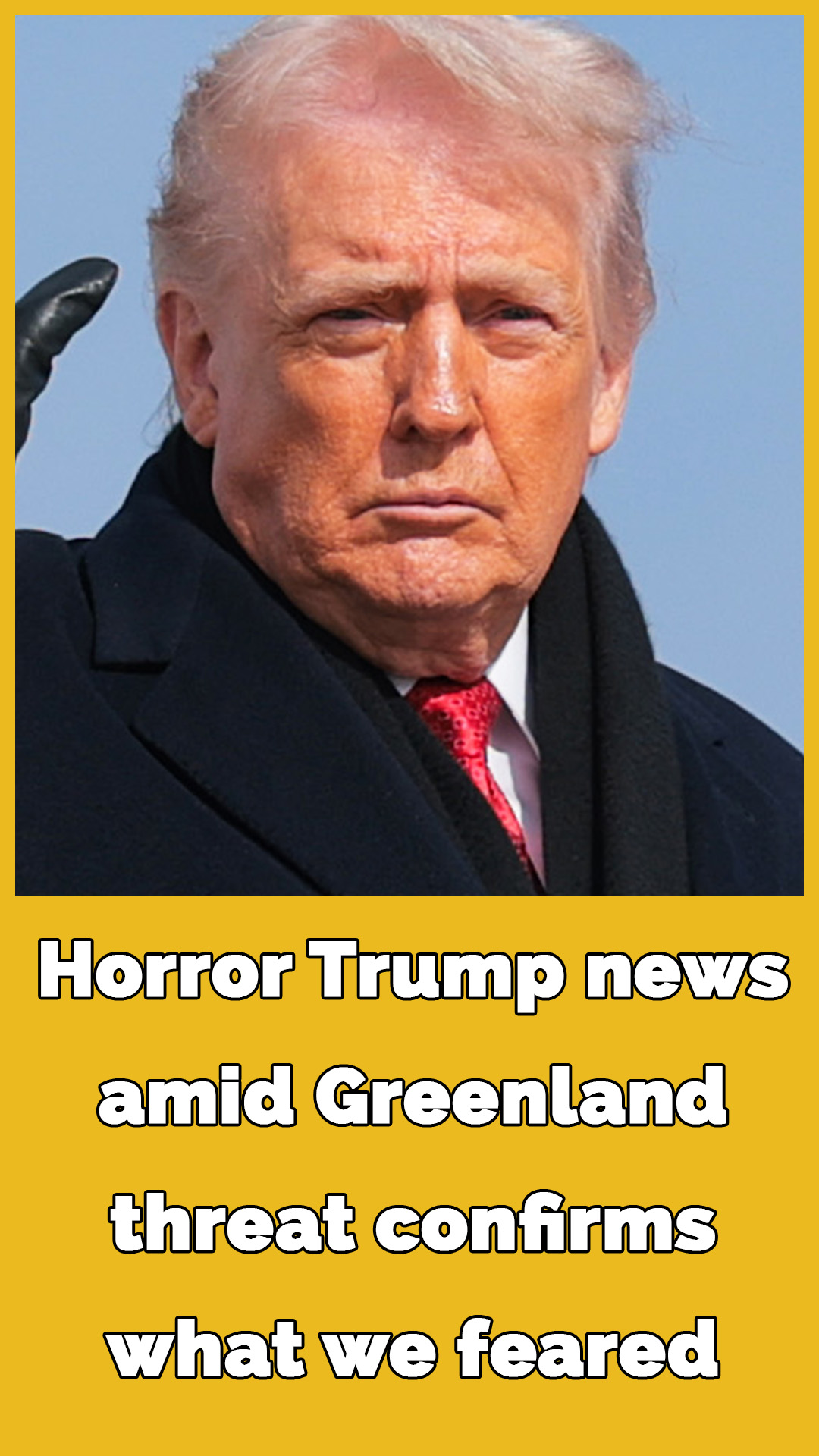
Donald Trump’s continued interest in Greenland has puzzled world leaders, policy experts, and voters alike. Why would a former U.S. president push so aggressively to acquire a vast Arctic island governed by Denmark?
Now, a former CIA operative says the explanation may be far more strategic than it appears.
Andrew Bustamante, a former U.S. Air Force officer and CIA covert operations specialist, has weighed in on the growing controversy surrounding Trump’s remarks about Greenland. According to Bustamante, the push is not political theater—it’s about long-term power, economic security, and America’s position in the Arctic.
Tariff Threats Raise Global Alarm
Tensions escalated after Trump suggested imposing tariffs on the United Kingdom and several European countries unless the United States is allowed to purchase Greenland. The proposal immediately drew criticism from European leaders.
UK Prime Minister Keir Starmer publicly rejected the idea, emphasizing that decisions about Greenland’s future belong solely to Greenland and Denmark. His remarks echoed broader concerns among NATO allies about sovereignty and international law.
Despite the backlash, Trump has doubled down, repeatedly arguing that Greenland is essential to U.S. national security. He has suggested the U.S. could acquire the territory “the easy way or the hard way,” language that has unsettled diplomats and defense analysts.
Public opinion has not been supportive. Polling shows that Greenland’s population has overwhelmingly rejected the idea of becoming part of the United States, and only a small percentage of Americans support the proposal.
A Former CIA Analyst Explains the Strategy
Speaking to The Express, Bustamante said Trump’s interest centers on America’s future dominance in the Arctic—a region becoming increasingly important due to climate change and global competition.
“Arctic control is critical to maintaining U.S. global leadership,” Bustamante explained. “Greenland plays a central role in that strategy.”
He added that the island’s vast reserves of critical minerals—including rare earth elements essential for advanced technology, renewable energy systems, and military hardware—are a major factor. As Arctic ice melts, access to these resources becomes easier, increasing Greenland’s geopolitical value.
According to Bustamante, this creates a strong incentive for the U.S. to secure economic influence rather than pursue outright ownership.
“There is no legal precedent, even under U.S. standards, for taking Greenland by force,” he said. “But economic agreements with Greenlandic groups seeking greater independence could change the equation.”
A Quiet Economic Path Forward?
Rather than a military confrontation or high-profile diplomatic battle, Bustamante believes the U.S. could pursue a behind-the-scenes approach—one that strengthens American influence without formally violating NATO commitments.
He suggested that Washington may focus on gaining control over specific strategic areas or resources through investment and partnerships, even if Denmark strongly objects.
“I don’t see a scenario where Denmark is satisfied,” Bustamante said. “But I do see a potential outcome where Greenlanders feel they benefit more than they do now.”
Such a move, he added, would be complex and gradual, but unlikely to simply disappear from the global agenda.
Why Greenland Is Strategically Critical
Greenland’s geographic location makes it invaluable for missile defense systems, satellite tracking, and Arctic maritime monitoring. Positioned between North America and Europe, it plays a key role in NATO defense planning.
Beneath its ice, Greenland is believed to hold significant deposits of uranium, iron ore, rare earth minerals, and possibly oil and gas—resources central to global energy security and future economic growth.
Despite this, Trump has publicly denied that mineral wealth is the driving force, insisting the focus remains solely on national security.
Adding to speculation, JD Vance visited a U.S. military base in Greenland earlier this year, prompting questions about whether long-term strategic planning is already underway.
Why the Debate May Quiet Down
Bustamante believes Trump understands how to leverage uncertainty. By keeping intentions unclear, he can apply pressure without committing to a definitive course of action.
“Strategic ambiguity is a tool,” Bustamante said. “If people believe there’s a chance action could happen, they may be more willing to negotiate.”
While the Greenland controversy may fade from headlines, Bustamante argues it will not disappear entirely. As Arctic access expands and global competition intensifies, Greenland’s importance will only grow.
Whether through diplomacy, economic partnerships, or strategic positioning, the island is likely to remain a key piece of the global geopolitical puzzle.