
The house still smelled like my mother.
Not in a sentimental, metaphorical way, but literally. Her rosemary-scented oil lingered in the hallway. Her hand lotion sat on the sink, cap loosely twisted as she always left it. Her reading glasses rested on the coffee table, bookmark still in place. The crocheted blanket she had worked on during chemo draped over a chair, waiting for shoulders that would never need it again. Even her slippers remained by the bed, toes pointed toward the closet, as if she might walk back into them at any moment.
Cancer had taken her slowly over eight months. First her energy, then her hair, then her appetite, and finally her independence. Some days she laughed, showing glimpses of her old self. Other days, she stared out the window, as if listening for instructions from another world. Near the end, she apologized constantly—for being tired, for needing help, for existing at all.
I would hold her hand and tell her not to apologize. She didn’t owe me anything. She could simply be sick without feeling like bravery was a performance. She’d nod—and then apologize again ten minutes later.
Paul, my stepfather, was present through it all. He drove her to appointments and carried himself like the “devoted husband” everyone expected. Linda, my mother’s best friend since college, was always around too—sometimes too much. She brought casseroles no one ate, organized hospital “shifts” like a military operation, and hugged me at the perfect photo moments.
“We’re a team,” Linda would say, pressing her manicured fingers to my shoulder. “Your mom isn’t alone in this.”
I believed her, because I needed to.
Shock Comes Weeks After the Funeral
After my mother’s passing, the house felt different. Not peaceful, but scorched and empty. Four weeks after the funeral, Paul appeared at my apartment, standing in my kitchen as the coffeemaker gurgled.
“There’s something I need to tell you before you hear it elsewhere,” he said.
“What’s wrong?” I asked.
Linda and I are getting married,” he said casually.
My brain froze.
“Married? To each other?”
“Yes,” he confirmed.
“My mother died twenty-eight days ago,” I whispered.
“I know it seems sudden—”
“Sudden?” I snapped. “She was her best friend. You were her husband.”
Paul’s expression was calm, almost annoyed, correcting me: “Was.”
I pointed to the door. “Leave.”
They married four days later.
The Wedding Photos and the Necklace
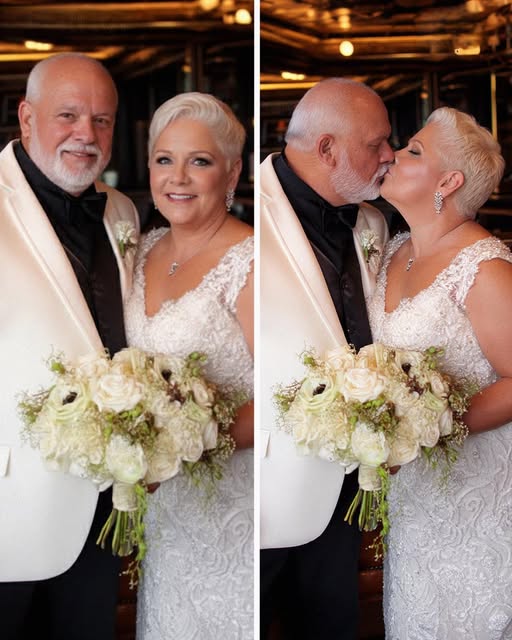
Photos of the ceremony went online immediately: champagne flutes, lace dress, perfect lighting, captions about healing and new beginnings. Peonies, my mother’s favorite flowers, were everywhere. It felt like theft dressed as romance.
And then I remembered my mother’s necklace—gold with tiny diamonds along the clasp, the one piece she never removed. She’d told me as a child, “One day, this will be yours.”
I called Paul.
“Where’s Mom’s necklace?” I asked.
A long pause.
“We had to make decisions about the estate,” he said carefully.
“Did you sell it?” I pressed.
Silence again.
“You pawned my mother’s necklace?”
“We needed funds for the honeymoon. It was just sitting in a drawer,” he admitted.
Two days later, I ran into Linda at the grocery store. “Was selling her necklace worth it?” I asked.
“Oh, that old thing? We needed Maui money. Sentimentality doesn’t pay for honeymoons,” she laughed, checking her watch. “We leave in two hours.”
The Truth Comes Out
Sara, a nurse from my mother’s final months, approached me later. “I didn’t know if I should tell you, but it doesn’t feel right staying silent,” she said.
She revealed everything: hand-holding in empty corridors, whispered conversations, secret kisses, plans for trips while my mother lay medicated, believing she was surrounded by love.
My reaction was not anger—it was a chilling calm.
I didn’t yell or storm the house. I took action.
Exposing the Betrayal
Using my spare key, I accessed Paul’s laptop, emails, receipts, and bank records. I documented transfers, pawn receipts, and messages showing the affair and the planning of their honeymoon. I compiled everything into a binder, organized for maximum accountability.
When they returned from their vacation, I presented the binder as a “gift.” Their expressions shifted as they saw proof of their actions and financial deceit.
The fallout was swift:
- The estate was frozen for review.
- My mother’s necklace was recovered and returned to me.
- Paul’s employer launched an internal investigation after discovering misuse of company resources during my mother’s illness.
- Linda’s social circle turned cold in the face of evidence-backed scandal.
Their illusion of a “romantic new beginning” was exposed. They weren’t grieving souls who found love—they were opportunists, exploiting loss for personal gain.
A Lasting Reminder
The necklace now sits safely in my jewelry box. When I touch it, I remember my mother fastening it with ease, letting me try it on as a child, her laugh filling the room.
“One day,” she had said, “this will be yours.”
It is.
And every time I wear it, I remember this too: love doesn’t end with death—but betrayal doesn’t disappear just because it’s dressed up in white lace and champagne.