
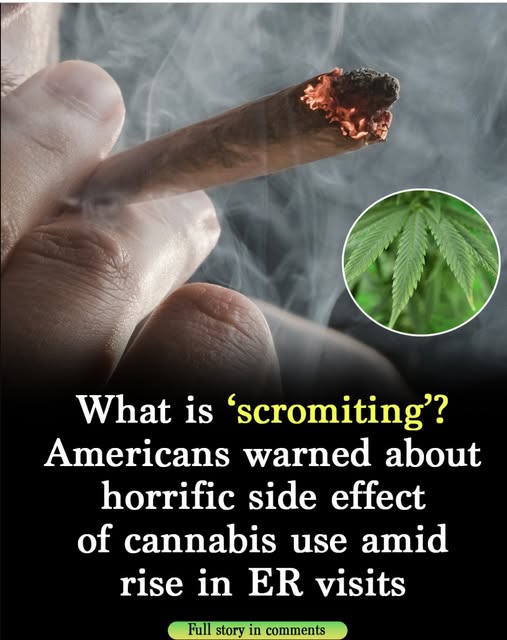
Doctors are raising alarms over a shocking cannabis-related condition that has been sending users to emergency rooms in record numbers — a phenomenon so extreme it has earned the nickname “scromiting.”
While the term may sound humorous, the reality is far from a joke.
Over the last decade, hospitals across the U.S. have seen a dramatic rise in patients experiencing intense nausea, uncontrollable vomiting, and crippling stomach pain, often leaving sufferers doubled over — sometimes recurring multiple times a year.
The medical culprit behind these episodes is Cannabis Hyperemesis Syndrome (CHS).
“Patients often have repeated emergency visits before the condition is correctly diagnosed, costing thousands of dollars each time,” says Dr. Beatriz Carlini, research associate professor at the University of Washington School of Medicine.
Symptoms So Severe They Leave Users Screaming
CHS attacks can appear within 24 hours of cannabis use and may persist for several days. The nickname scromiting comes from the extreme discomfort: many patients scream while vomiting.
Dr. Chris Buresh, an emergency medicine specialist, emphasizes the treatment challenges:
“There are currently no FDA-approved therapies, and standard anti-nausea medications often fail to relieve symptoms.”
In some cases, doctors resort to unconventional methods, including hot showers or baths, applying capsaicin cream to the abdomen, and even using medications like Haldol, typically reserved for psychotic episodes.
“When a patient reports improvement from a hot shower, it often confirms the diagnosis for me,” Buresh explains.
“Some describe going through all the hot water in their house just to feel relief.”
Who Is at Risk for CHS?
Even after a severe episode, CHS can return if cannabis use continues. Complete abstinence is the only way to fully recover, but overcoming cannabis dependency can be a significant challenge.
“The syndrome strikes intermittently, so users may think their symptoms were unrelated and resume cannabis use — only to become seriously ill again,” warns Dr. Carlini.
The exact cause of CHS remains under study. The leading theory suggests that overstimulation of the endocannabinoid system disrupts the body’s natural control over nausea and vomiting.
“Some individuals reach a threshold where even small amounts of cannabis trigger severe vomiting,” Dr. Buresh adds.
A study from George Washington University surveyed over 1,000 CHS patients and found that early and prolonged cannabis use is strongly linked to emergency room visits for scromiting.
A Growing Concern Among Teens
Disturbingly, adolescent cases of CHS in the U.S. have surged more than tenfold between 2016 and 2023. The fastest increases occurred in states where recreational cannabis remains illegal. While overall CHS cases are higher in states with legalized marijuana, younger users in non-legal states are increasingly affected.
Official Recognition of CHS
On October 1, 2025, the World Health Organization officially recognized CHS, assigning it a diagnosis code.
“Having a dedicated code for cannabis hyperemesis syndrome provides hard evidence of cannabis-related health risks, which physicians report is a growing issue,” explains Dr. Carlini.
With emergency room visits climbing nationwide, medical experts are urging both teens and adults to be aware of this potentially debilitating cannabis side effect.