
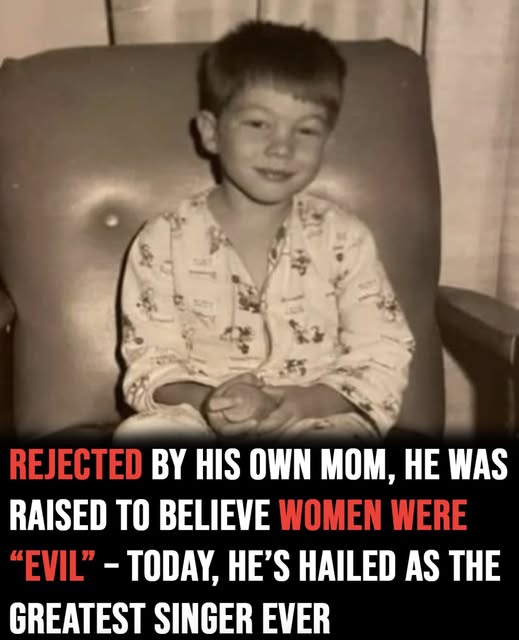
He was raised in a quiet Indiana town, far removed from fame, fortune, or global recognition. Yet against overwhelming odds, he would grow into the unmistakable voice behind one of the most influential rock bands in music history. His rise to superstardom is remarkable — especially considering the painful environment that shaped his early years.
As a child, he was taught that fear and punishment were normal, that strict religious rules governed every aspect of life, and that questioning authority was dangerous. Violence, emotional neglect, and instability marked his upbringing long before he ever stepped onto a stage.
A Troubled Family History
Known today for one of the most powerful vocal ranges in rock music, he would eventually become a Hall of Fame inductee, a chart-topping artist, and one of the best-selling musicians of all time. But his beginnings were far from glamorous.
He was born in Lafayette, Indiana, in February 1962 and named William. His mother was only 16 at the time, and his biological father was 20 — later described as charismatic but deeply troubled. When William was just two years old, his parents separated. Shortly afterward, his father abducted him and allegedly subjected him to abuse before disappearing from his life entirely.
His mother later remarried Stephen L. Bailey, who adopted William and renamed him William Bruce Bailey. For most of his childhood, he believed Bailey was his biological father. He never had a relationship with his real father as an adult; the man was murdered in Illinois in 1984.
Growing Up Under Strict Religious Control
The household William grew up in was intensely religious. He attended a Pentecostal church multiple times a week, participated in church activities, and even taught Sunday school. Years later, he described the environment as oppressive and fear-driven.
According to him, everyday items were routinely banned for being “sinful,” including televisions and popular music. Women were portrayed as immoral, and creativity was discouraged. This atmosphere left a lasting impact on his mental health and worldview.
He has spoken openly about experiencing physical and emotional abuse from his stepfather. Even singing along to a pop song on the radio once resulted in punishment because the music was considered inappropriate. He later expressed deep resentment toward his mother for allowing the abuse to continue, emotions that would eventually fuel his songwriting.
School Struggles and Mental Health Challenges
Outside the home, life wasn’t much easier. By middle school, his anger and rebellious streak were noticeable. Former classmates and coaches later recalled that he was frequently bullied, mocked for his ambition, and targeted for standing out.
Despite the ridicule, he insisted he would one day become famous — a claim many around him dismissed. As a teenager, his behavior drew the attention of mental health professionals, and he was diagnosed with bipolar disorder after repeated run-ins with authority.
His resentment toward his hometown ran so deep that he once compared living there to being imprisoned. Still, music offered a rare sense of freedom.
Music as an Escape — and a Lifeline
From a young age, he showed natural musical talent. He sang in the church choir, performed with siblings, joined school chorus programs, and studied piano. Teachers remembered him as intelligent, charismatic, and capable of commanding attention effortlessly.
Everything changed at 17 when he learned the truth about his biological father. The revelation triggered a downward spiral marked by arrests, short jail sentences, and increasing conflict with authority. After more than 20 arrests and the threat of harsher penalties, he made a life-changing decision.
In December 1982, he left Indiana for Los Angeles.
The Birth of a Legendary Rock Band
In California, he became immersed in the rock scene, inspired by artists like Queen, Aerosmith, and Elton John. Determined to succeed in the music industry, he formed a band and adopted the name Axl Rose — later legally changing it to W. Axl Rose, reclaiming his biological father’s surname.
In 1985, the foundations of Guns N’ Roses were laid. After signing with Geffen Records in 1986, the now-iconic lineup came together: Axl Rose, Slash, Izzy Stradlin, Duff McKagan, and Steven Adler.
Their debut album, Appetite for Destruction, was released in 1987. While initial sales were modest, relentless touring and breakout hits like “Welcome to the Jungle” and “Sweet Child o’ Mine” pushed the album to No. 1 on the charts.
Today, Appetite for Destruction has sold over 30 million copies worldwide, making it the best-selling debut album in U.S. music history.
Fame, Controversy, and Enduring Influence
Axl Rose’s unmistakable voice, commanding stage presence, and uncompromising personality made him one of rock’s most recognizable figures. But success came with turmoil. The late ’80s and ’90s were filled with internal band conflict, legal disputes, canceled shows, and public controversies.
Despite the chaos — including lineup changes, lawsuits, and long breaks from music — Rose remained a dominant force. In 2012, Guns N’ Roses was inducted into the Rock and Roll Hall of Fame, though Rose declined to attend the ceremony.
Over time, the band reunited for massively successful stadium tours, proving their lasting appeal and commercial power.
Relationships and Private Life
While Rose has largely kept his personal life private, his early relationships were turbulent. He was briefly married to Erin Everly, the inspiration behind “Sweet Child o’ Mine.” Their relationship was marked by financial struggles, emotional conflict, and allegations of abuse. Everly later pursued legal action, which was settled privately.
Rose has said he avoided having children due to the demands of his career, expressing concern about not being able to provide enough time and stability.
Axl Rose Today
Even in recent years, Rose has continued to make headlines, including a highly publicized onstage outburst during a 2025 concert in Buenos Aires — a reminder of the intensity that has always defined him.
In past interviews, he has acknowledged undergoing therapy to address anger, stress, and the long-term effects of childhood trauma.
From a painful upbringing filled with instability to global success in the music industry, Axl Rose’s story is one of transformation. He turned hardship into art, emotional struggle into creative fuel, and adversity into a voice that continues to resonate worldwide.
His journey stands as proof that even the darkest beginnings can lead to extraordinary success.