
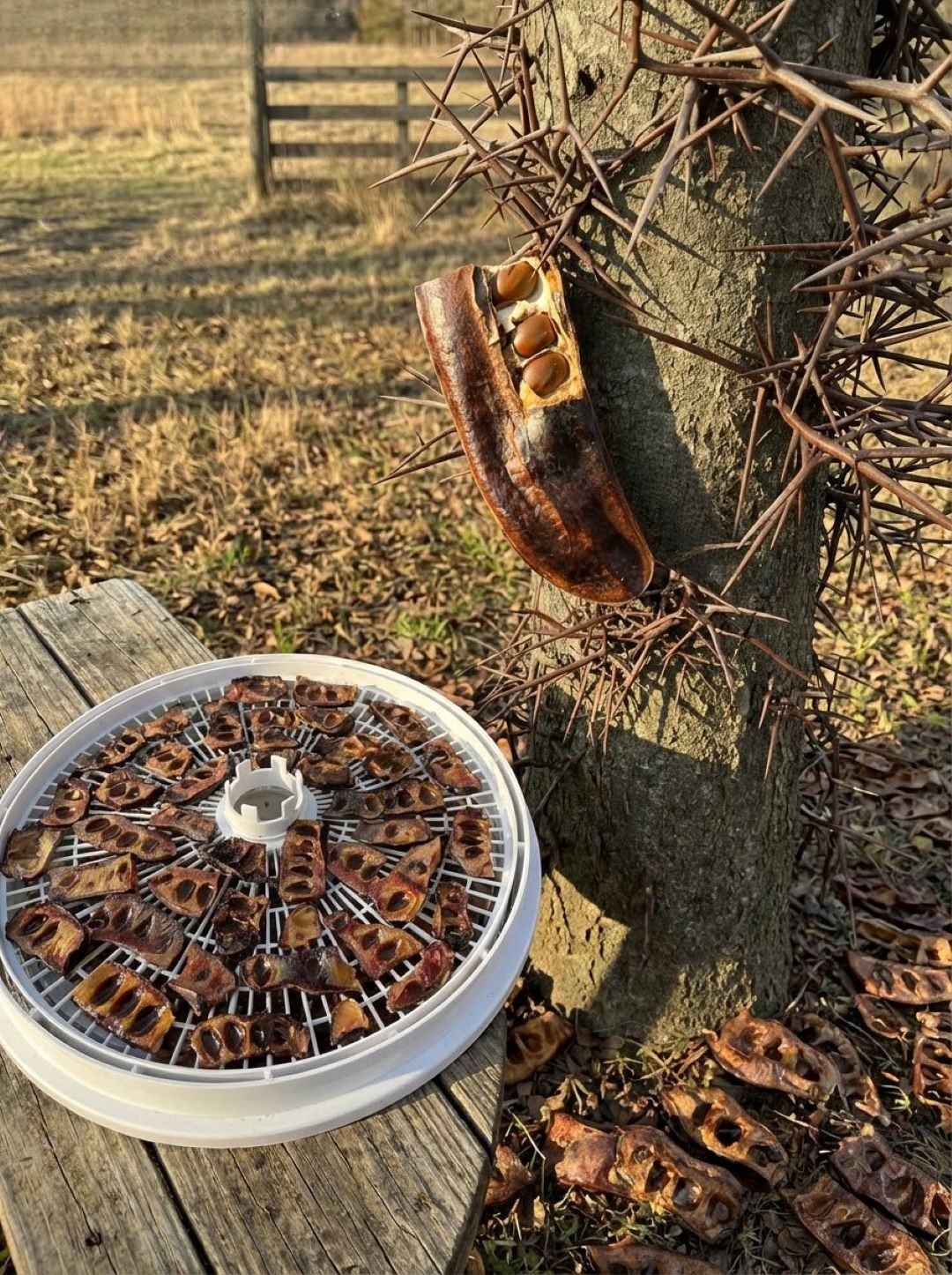
At a quick glance, the honey locust looks like any other roadside tree—quietly blending into fields, parks, and suburban streets. But beneath its airy canopy lies a story most people never hear. Long before supermarkets, plastic packaging, and store-bought supplies, this unassuming tree played a meaningful role in everyday survival. To those who knew its value, the honey locust wasn’t just shade on a summer afternoon—it was a natural multitool growing straight from the soil.
One of the tree’s most recognizable features is its long, curling seed pods. Inside those pods is a sticky, naturally sweet pulp that inspired the tree’s name. Indigenous peoples and early settlers often ate this pulp as a simple energy boost or transformed it into syrups and lightly fermented drinks.
The seeds didn’t go to waste either. They were sometimes roasted and brewed into a coffee-like drink or ground into meal. In a time when refined sugar was rare, the honey locust offered sweetness directly from nature.
Continue reading on the next page…