
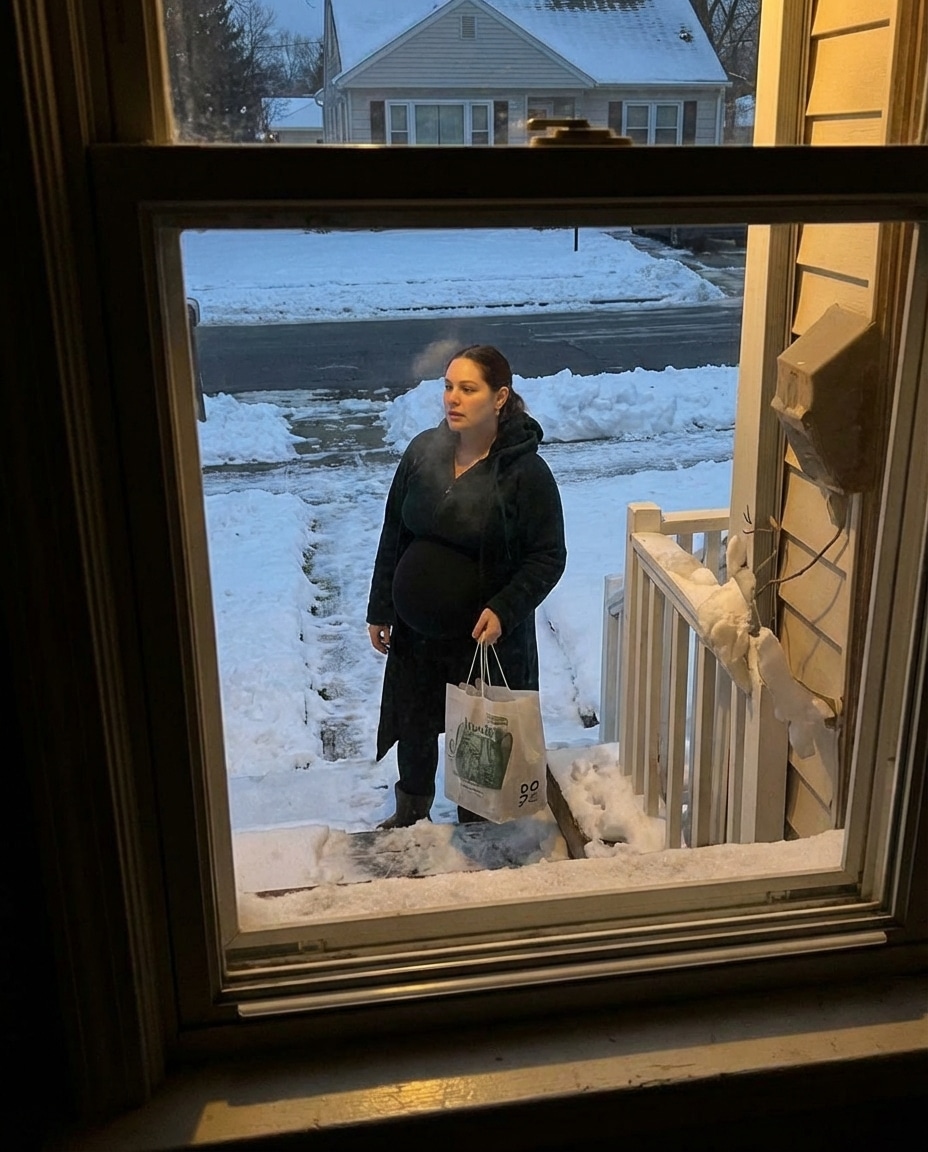
I thought I was just making a quick run for milk, a simple errand to prevent the twins’ morning from descending into chaos. Six months pregnant, my body already complaining with aches and exhaustion, I expected nothing more dramatic than icy wind, traffic, and whining children. What I didn’t anticipate was being shut out of my own home—and discovering a truth about my husband that shook the foundation of everything I thought I knew about him.
That morning had already started on edge. The twins were bickering over cups, each insisting that their milk be served first, as if it were a decree from the universe itself. I asked Will to handle the errand, hoping he’d smooth the chaos for once, but he refused, telling me I “babied them too much” and that I needed to let them handle a little frustration. Frustrated, sore, and navigating my swollen belly carefully through the snow, I decided I’d do it myself. Before leaving, I texted him to unlock the door, knowing my hands would be full and my patience thin.
No response came.
The store run felt like a blur, my thoughts bouncing between grocery lists, toddler meltdowns, and the dull ache of pregnancy. When I finally returned, the driveway looked deceptively calm—the soft glow of the living room lights spilling onto the snow—but the calm was an illusion. The door was locked. Will’s phone went straight to voicemail. I stood shivering, the wind biting my cheeks, and through the frosted glass I could hear one of the kids crying. The world seemed to narrow down to that sound and the impossible realization that I was barred from my own home.
When Will finally opened the door, his smile was small and smug, as though he had orchestrated the whole scene to teach me a lesson about patience or independence. My anger boiled over, but then I noticed something strange: a pair of women’s boots by the entryway, unfamiliar and out of place, and a female voice coming from the kitchen. My stomach dropped. I shoved past him, bracing for confrontation or betrayal, only to find a woman standing there with paperwork in hand. She looked as uncomfortable as I felt.
“I’m Karen,” she said, keeping her voice calm and professional. “I’m from Will’s workplace. I’m not here for anything personal.”
Her presence was confusing, until she explained that Will had been avoiding his responsibilities at work. Deadlines had slipped, emails had gone unanswered, and HR had been patient—but now the situation had reached a point where official termination papers required his signature. He couldn’t hide anymore.
The room was quiet in that way that feels louder than shouting, each detail of the conversation hanging in the air like icicles. Karen walked me through what had happened, and when she left, I turned to Will, who was suddenly looking small and unsettled, the smugness gone.
Continue reading on the next page…