
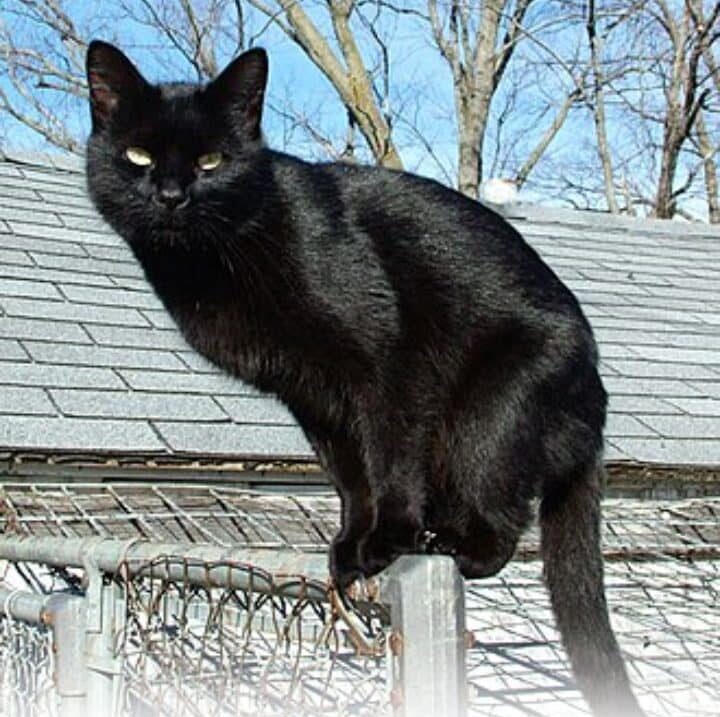
Black cats have long occupied a strange and powerful place in the human imagination. Few animals inspire such a mix of fascination, affection, fear, and symbolism. To some, they are elegant and mysterious companions; to others, they remain wrapped in centuries-old superstition. When a black cat appears in someone’s life—whether crossing a path or stepping through an open door—it often sparks questions that go far beyond the practical: What does this mean?
For much of history, black cats were never “just pets.” Their sleek appearance, glowing eyes, and quiet, almost spectral movements made them seem otherworldly, particularly in societies that explained the unknown through myth, ritual, and spiritual belief. Over time, these stories hardened into superstition—and not always kindly.
In medieval Europe, black cats became closely associated with witchcraft. They were believed to be familiars—supernatural companions that served witches—or even witches themselves in animal form. From this belief came the enduring idea that a black cat crossing your path was a harbinger of misfortune. Some traditions claimed that the only way to avert the curse was for the cat to retrace its steps, allowing the person to cross safely afterward. These stories spread widely, embedding themselves in folklore and popular culture, and persisted long after the original religious and social context faded.
Despite their persistence, these ideas are myths—stories passed down and reinforced through fear rather than fact. Yet myths have consequences. Even today, black cats are adopted from shelters at lower rates than cats with lighter or patterned coats. Superstition continues to shadow them, subtly influencing human behavior even in modern, rational societies.
When a black cat enters your home, the explanation is usually far simpler than folklore suggests. It may be seeking food, warmth, safety, or companionship. Cats are intensely curious animals, and a home can represent opportunity or shelter. A kitten may wander inside because it is hungry or lost; an adult cat may respond to familiar scents or a calm, non-threatening environment. None of this implies curses, rituals, or supernatural interference.
Yet symbolism has always shaped how humans interpret animal encounters. Across many ancient cultures, black cats were not feared—they were respected, protected, and even revered. In Egyptian society, for example, cats of all colors were sacred, guardians of the home and embodiments of divine protection. Black cats, in particular, were associated with the night, which symbolized intuition, quiet strength, and the unseen forces that influence life. Here, darkness did not represent evil, but power, mystery, and femininity.
Continue reading on the next page…