
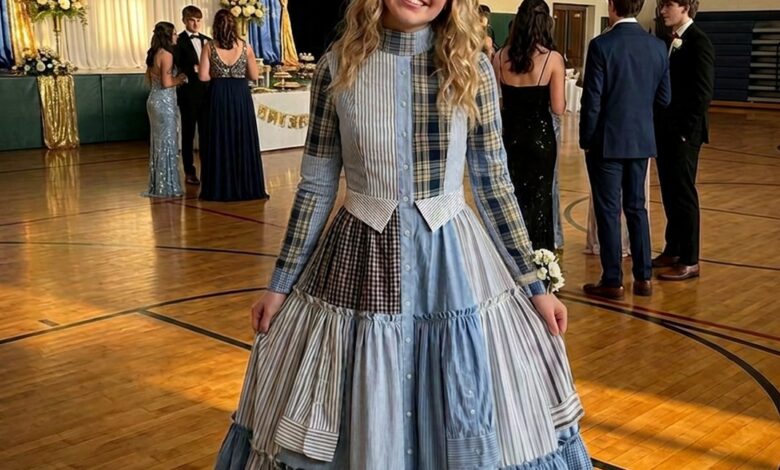
My father and I had always been a team. After my mother passed away when I was born, he raised me alone, balancing long workdays with the small routines that made our home feel warm and safe. He packed my lunches before dawn, flipped pancakes every Sunday, and even taught himself to braid my hair by watching videos online.
At school, life was harder. My father worked there as the janitor, and many students never let me forget it. Whispers in the hallways followed me: “the janitor’s daughter.” When the words stung, my dad would quietly remind me, “Honest work is something to be proud of. People who build themselves by putting others down don’t matter much.” His gentle smile carried more weight than any insult, and I promised myself I would make him proud.
Everything changed during my junior year when my father was diagnosed with cancer. Even sick, he worked as long as he could, always insisting he was fine whenever I worried. His focus remained on me—he wanted to see me at prom, at graduation, to watch me step confidently into my future. But a few months before prom, he passed away. I got the news while standing in the school hallway he had spent years keeping clean. Life became quiet after the funeral. I moved in with my aunt, and as prom approached, watching classmates plan and compare dresses only reminded me that the moment felt incomplete without him.
One evening, while sorting through his things, I found a stack of his neatly folded work shirts. Each one carried a memory: a bike ride, a school morning, a hug after a tough day. An idea formed slowly—I could take him with me to prom. With my aunt’s help, I decided to sew a dress from his shirts. I had almost no sewing experience. The project took countless long evenings, with moments of frustration and tears falling onto the fabric. Every stitch became a way to hold onto him, to honor the ordinary moments that had meant everything. When the dress was finally done, it wasn’t glamorous, but it held something far more precious: his love and belief in me.
On prom night, whispers followed me as soon as I entered. Some students laughed, some made careless comments. I tried to ignore them, reminding myself why I had made the dress. Then, the music stopped. Our principal stepped forward with a microphone. He spoke about my father’s years of quiet service—repairing lockers, helping students without recognition, caring for the school long after everyone else had gone home. Then he asked anyone who had ever benefited from my father’s kindness to stand. Slowly, teachers and students across the room rose. The laughter dissolved into applause.
In that moment, I knew my father’s presence had never left me. And the dress I wore carried his story exactly where it belonged.