
## Huge Asteroid Flyby Puts Planetary Defense in the Spotlight—Here’s What Scientists Are Watching
The update didn’t arrive with sirens or dramatic headlines. It came the way most space news does: measured, technical, and calm. At first, it sounded like a routine notice—another near-Earth object passing through the neighborhood.
Then the size estimates started circulating.
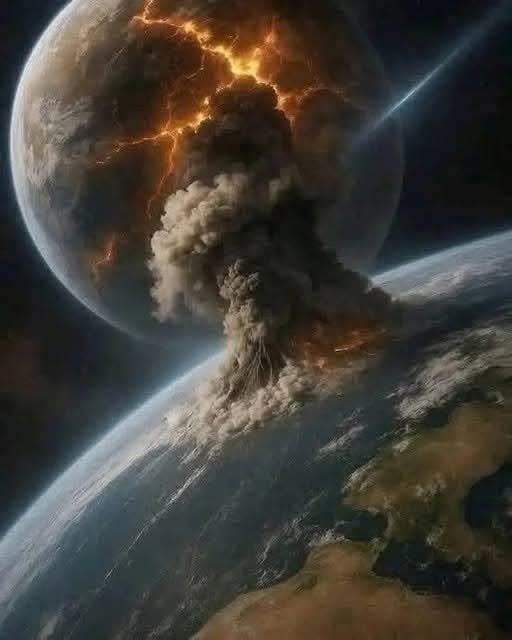
This wasn’t a small space pebble. It was a truly massive asteroid—large enough that, in a worst-case scenario, a direct impact could cause global consequences. Scientists have been clear: **this specific object is not on a collision course with Earth**. But its close approach is still a powerful reminder of how important **asteroid tracking, near-Earth object monitoring, and planetary defense** have become.
### What Is Asteroid 1998 OR2 (52768)?
The object drawing attention is **asteroid 52768**, also known by its catalog name **1998 OR2**. While the name sounds like a sterile database entry, the asteroid itself is anything but ordinary.
Based on scientific observations, estimates place its diameter at roughly **1.5 to 4 kilometers**. To put that in perspective, an asteroid in this size range falls into a category that researchers take very seriously—because an impact from an object this large could disrupt ecosystems, trigger massive regional destruction, and create long-term climate effects.
That doesn’t mean it’s going to happen here. It means the *scale* is big enough that experts pay close attention.
### How Close Will It Get—and Is Earth in Danger?
NASA and other international space agencies are tracking 1998 OR2 using high-precision instruments designed for **near-Earth asteroid detection**. The asteroid is moving at about **8.7 kilometers per second**, and current calculations show it will pass by Earth safely.
Scientists have repeatedly emphasized three key points:
– **There is no predicted impact trajectory**
– **There is no immediate threat to human life**
– **There is no reason for public panic**
In other words: it’s a close pass in astronomical terms, but not a danger in practical terms.
### Why This Flyby Still Matters: Earth’s “Thin Margin” of Safety
Even when a large asteroid misses us, events like this highlight a less comfortable reality: our safety depends heavily on **early detection** and **accurate orbit forecasting**.
Planetary defense isn’t just about Hollywood-style missions. It’s about:
– spotting objects early enough to matter
– continuously refining orbital predictions
– maintaining funding for detection programs
– coordinating internationally when a real threat appears
If a dangerous asteroid were detected late—months instead of years ahead—our options could shrink fast.
### Are We Ready to Deflect an Asteroid?
Deflecting an asteroid is possible in theory, but it’s not simple.
Current planetary defense strategies include methods like **kinetic impactors** (slamming a spacecraft into an asteroid to change its path). These ideas are being tested and improved, but the world has not yet faced a true emergency scenario where deflection must happen quickly, at scale, with no room for error.
A real response would likely require global coordination across:
– space agencies
– scientific organizations
– governments and emergency management
– military and aerospace partners
That kind of cooperation is achievable—but it needs planning long before any crisis.
### The Hidden Risk: Panic, Misinformation, and Economic Shock
One of the biggest dangers in an asteroid threat scenario isn’t only the rock in space—it’s what happens on Earth after the announcement.
A credible impact warning could trigger:
– market instability and financial panic
– supply shortages and panic buying
– misinformation spreading faster than facts
– breakdown of trust in public institutions
That’s why organizations like the UN and space-policy groups stress **clear, transparent communication**. In a real emergency, public stability could be as critical as the science.
### What Scientists Say We Need Next
Researchers consistently point to the same priorities:
– **Upgraded telescopes** (ground-based and space-based) to detect smaller, dimmer objects
– **Better early-warning systems** for faster identification and orbit refinement
– **More investment in deflection technology** so we have multiple options
– **International planning** so response protocols are ready before they’re needed
The goal isn’t fear—it’s preparedness.
### The Real Question This Asteroid Raises
1998 OR2 is expected to pass safely. The math is on our side this time, and the data has been checked and rechecked.
But this flyby is still a wake-up call, because it forces one big question:
**If the next one isn’t a miss—will we be ready in time?**
—
### Closing CTA
If you want, I can also turn this into a shorter news-style version or a longer deep-dive explainer. **What topic should I cover next—asteroid deflection tech, NASA’s tracking systems, or the biggest near-Earth objects on record?**