
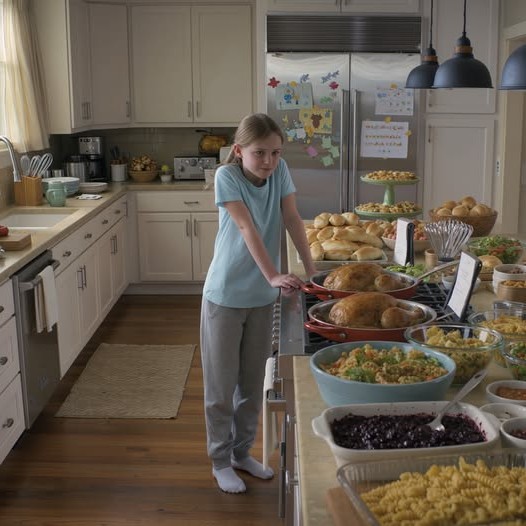
I read it three times. Adults only. After three days of cooking. After a seventeen-year-old poured herself into this.
I walked into the kitchen, careful like the floor might crack beneath us. “Sweetheart,” I said, “plans changed.”
Confused, she took the phone. Her shoulders slumped, her eyes filled, but no tears fell. She looked around the kitchen at food with nowhere to go.
“Why would they do that?” she whispered.
I didn’t have an answer. I hugged her. “We won’t waste it.”
That night, while my parents dined out, I posted in our local community group: free homemade meals for anyone who needs one—single parents, elderly neighbors, anyone struggling. Within an hour, people were at our door. Emily served each plate herself, shyly smiling as strangers thanked her, complimented her cooking, and told her how much it meant. For the first time that day, she stood a little taller.
The next morning, at 9:03 a.m., someone pounded on the door. Emily froze. I knew who it was.
My parents barged in, anger and humiliation on their faces. “What were you thinking?” my mother snapped. “Feeding strangers? Posting online? People are calling us selfish.”
I crossed my arms. “Then maybe you should think about why.”
They tried excuses. My father said the restaurant would be easier. My mother waved off Emily’s effort. “She’s a child. She’ll get over it.”
“She’s your granddaughter,” I said. “And she worked herself to exhaustion for you.”
Emily heard it.
I made it clear: we weren’t going to let them belittle her effort. They weren’t welcome until they could respect her. My mother stormed out. My father hesitated, then followed.
Emily returned and asked if it was her fault. I held her. “No. This is on them, not you.”
In the days that followed, neighbors shared photos and praise of Emily’s cooking. She read the messages in disbelief. People asked if she catered. Some even offered to pay her for small events. Slowly, she began exploring culinary school—not from obligation, but from joy.
Eventually, my father came back—alone this time. He apologized. Properly. To Emily. He even gave her a chef’s knife engraved with her initials.
“For your future,” he said.
Emily cried. Something softened between them. Not perfect, but real.
That night, she asked if things would get better. I told her yes. Not fast. Not easy. But yes.
Family can break. Family can bend. But when you protect the person who deserves it most, it can grow into something stronger than the example you were given.