
Wrapped in a blanket in the back seat, the boy slowly quieted. His breathing steadied. Exhaustion overtook fear, and he curled inward, seeking warmth.
At the station, everything moved quickly.
Medical staff arrived and worked with calm efficiency. Dirt was gently cleaned away. Small scrapes and bruises were examined—marks that suggested neglect rather than a single accident. Beneath the grime was a soft, watchful face. The boy didn’t cry. He didn’t protest. He simply endured, eyes following every movement as if bracing for something worse.
Ramirez stayed close.
When the exam ended, the boy was dressed in clean clothes that were far too big for him. Ramirez offered a small toy car from the station’s supply box. The child studied it carefully before taking it, holding it tightly but not playing.
Trust would not come quickly.
While Ramirez sat with him, other officers worked to answer the most urgent question: who was this child?
A photo was taken and shared through official channels and social media, along with a brief description and a request for help. The response was immediate. The image spread rapidly, shared by thousands who felt the same surge of concern and disbelief.
Ramirez spoke softly in his office, even though the boy didn’t answer. He talked about the weather, about the toy car, about nothing important at all—just filling the space so it didn’t feel empty. Slowly, the boy edged closer until his shoulder rested against Ramirez’s arm.
Hours later, the phone rang.
A woman’s voice came through, shaking and breathless. She had seen the photo. She recognized him instantly.
“That’s my nephew,” she said. “His name is Liam.”
When she arrived at the station, tension filled the room. Her eyes were red, her hands unsteady. The moment Liam saw her, something changed. He stood up suddenly and ran toward her, dropping the toy car as he wrapped his arms around her legs.
“Aunt Maria,” he whispered.
She fell to her knees, holding him tightly, repeating his name through tears—over and over—as if saying it enough might undo what had already happened.
As the reunion settled, the truth emerged.
Liam’s parents had been involved in criminal activity for years. Days earlier, their home had been raided, and both were arrested. In the chaos of the operation, no one realized a child was there. No one checked.
By the time authorities discovered the mistake, Liam was gone.
He had wandered off alone, likely searching for food or something familiar. Days passed before anyone even knew he was missing.
The room grew silent as Maria spoke. Even seasoned officers struggled to hide their reaction. The idea that a child so young could be overlooked—forgotten—cut deep.
Social services moved swiftly. Emergency protections were put in place. Maria, who had tried before to intervene, was approved for temporary custody while long-term plans were made.
Ramirez remained close throughout.
In the days that followed, Liam slowly began to change. His guarded stare softened. He laughed quietly at silly noises. He pushed toy cars across tables, cautious but curious. Ramirez visited when he could—never forcing interaction, just showing up.
Consistency mattered.
So did the community.
People who had seen Liam’s photo sent clothes, toys, and notes of support. Strangers who had never met him wanted him to know he mattered. A child who had once been invisible was now surrounded by care.
Liam’s path forward would not be easy. Trauma leaves marks deeper than bruises. But he was no longer alone.
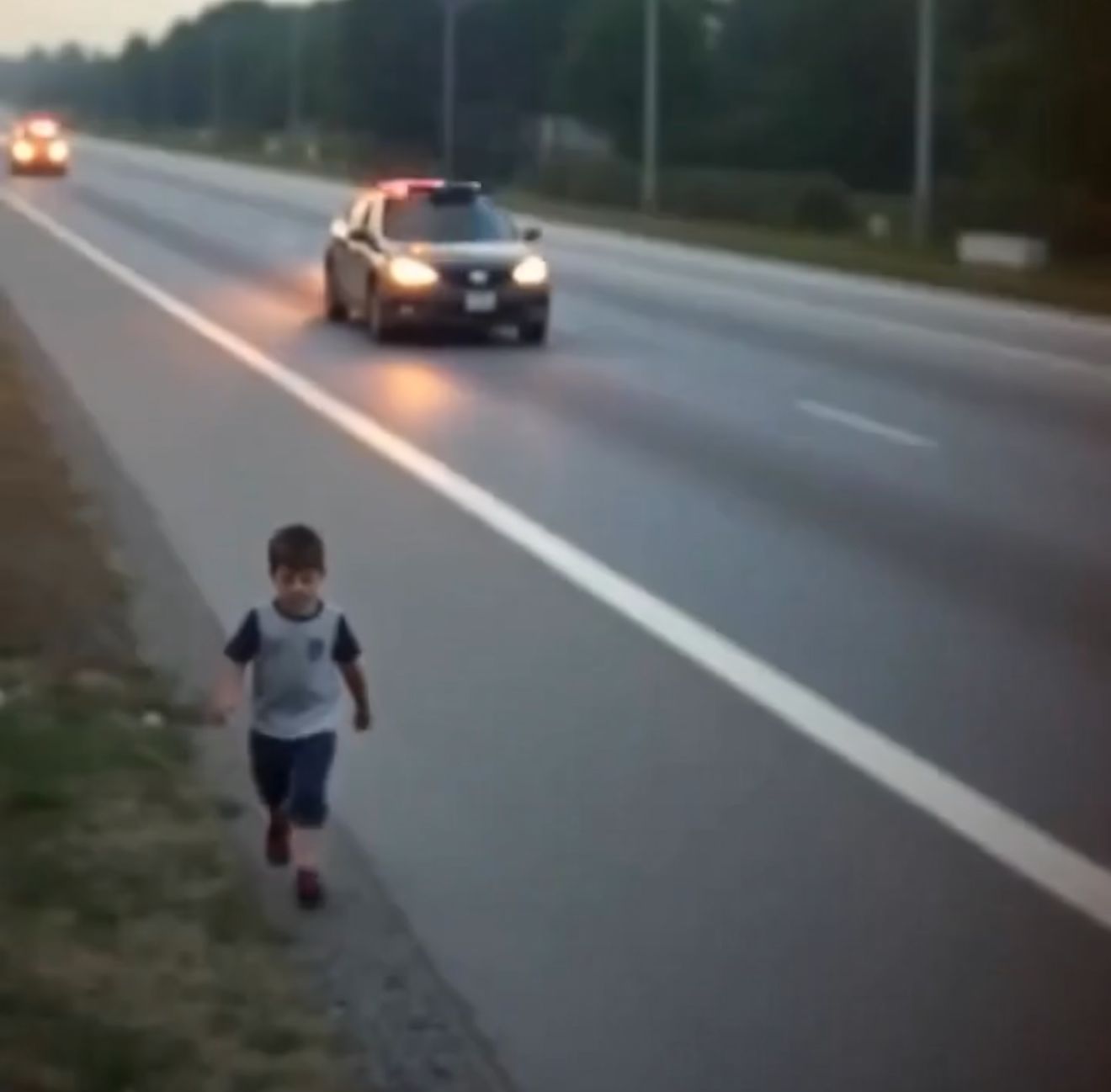
For Ramirez, the moment stayed with him—the empty roadside, the weight of a small child in his arms, and the realization that sometimes the difference between tragedy and safety comes down to one person paying attention.
Liam’s story is heartbreaking. But it is also proof of something enduring: resilience, compassion, and the quiet power of stepping in instead of looking away.
In a world that failed him early, Liam was finally seen.