
Paul, my stepfather, was there. Physically. Driving her to appointments, wearing the badge of “good husband” like armor. And Linda, her best friend since college—always present, always organized, always performing care in a way that demanded gratitude.
“We’re a team,” Linda used to say, squeezing my shoulder with perfectly manicured fingers. “Your mom isn’t doing this alone.”
I believed her, because I had to.
After my mother died, the house went quiet. Not peaceful. Scorched. Four weeks after the funeral, Paul knocked on my apartment door, expression practiced, like he was delivering bad news rehearsed to perfection.
“We need to tell you something,” he said. “Before you hear it elsewhere.”
“What is it?” My chest tightened.
Linda and I are getting married.
I froze.
“Married… to each other?”
“Yes.”
“My mother died twenty-eight days ago.”
“I know this feels sudden—”
“Sudden?” I snapped. “She was her best friend. You were her husband.”
He blinked, annoyed, correcting me: “Was.”
I pointed at the door. “Get out.”
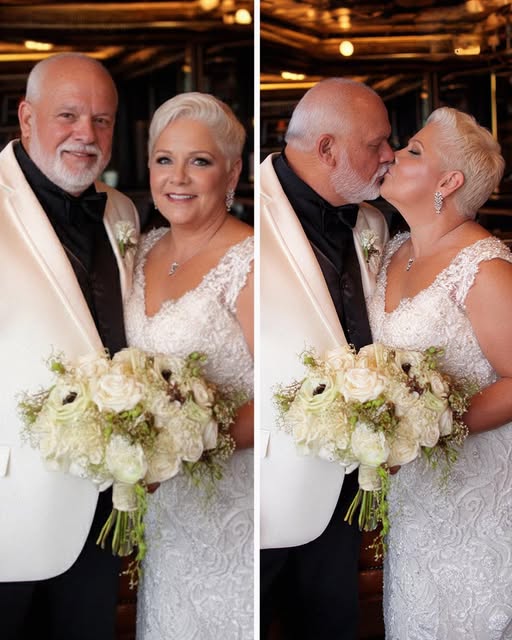
Four days later, they married. Photos appeared online within hours: perfect lighting, champagne flutes, a lace dress. Peonies. My mother’s favorite.
And then I remembered the necklace.
Her gold necklace, tiny diamonds along the clasp, the one she wore every holiday, every family photo. When I was little, she let me hold it. “One day,” she said, “this will be yours.”
I called Paul.
“Where’s my mother’s necklace?”
Pause.
“We had to make decisions about the estate,” he said, clipped, rehearsed.
“Did you sell it?”
“We needed funds for the honeymoon,” he admitted, casually. “It was just sitting in a drawer. Does it matter now?”
I hung up.
Two days later, I ran into Linda at the grocery store. Sunglasses perched on her head, tan, oblivious.
“Was it worth it?” I asked. “Selling her necklace?”
She laughed. “Oh, that old thing? We needed Maui money. Grow up.”
Then Sara touched my arm. One of the quiet nurses from the hospital. “I didn’t know if I should say anything,” she whispered, “but it doesn’t feel right staying silent.”
She told me everything. The hand-holding when they thought no one was looking. The whispered plans outside my mother’s room. The jokes about how long appointments took. The trips they imagined once she was gone.
Everything while my mother slept, trusting love surrounded her.
I didn’t scream. I didn’t break windows. I didn’t demand explanations. I did something far more effective.
I went through Paul’s laptop, email archives, receipts, bank statements. Photographed everything. Found the pawn receipt. Linda’s signature neat and confident. Bank transfers timed perfectly against my mother’s decline. I built a binder—organized, labeled, irrefutable.
A week later, they returned, sunburned and smug. I handed them a gift bag. Inside: the binder.
Paul’s smile faltered as he opened it. Linda’s face tightened.
On top, a note:
Copies have been sent to the estate attorney, the executor, and Paul’s employer. I believe in transparency. Don’t you?
Silence.
The estate was frozen. The necklace returned to me. Paul’s company investigated misuse of work resources while planning an affair during a grieving wife’s illness. Linda’s social circle went cold.
They lost not money alone. They lost the narrative that kept them comfortable: two grieving souls “finding love” in darkness. Exposed as opportunists who waited for a woman to die, treating her life as an inconvenience.
The necklace is back in my jewelry box. Sometimes I hold it, fingers tracing the clasp, remembering her laughter as it slipped on my wrist.
“One day,” she said.
It is.
Love doesn’t stop when someone dies. But betrayal doesn’t vanish just because people dress it up in white lace and call it a new beginning.