
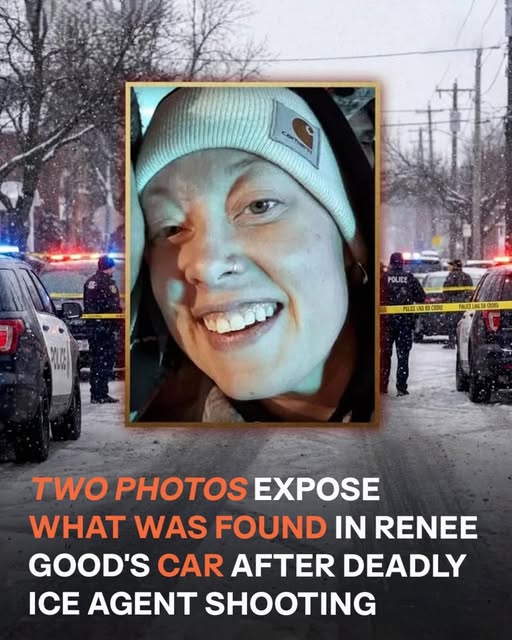
The fatal shooting of Renee Nicole Good, a 37-year-old Minneapolis mother and writer, has deeply shaken her family, neighbors, and the broader community. On the morning of January 7, 2026, Good was killed during an encounter involving agents from U.S. Immigration and Customs Enforcement (ICE), an incident that has since sparked a national conversation about public safety, federal law enforcement operations, and accountability.
While official investigations and political commentary continue, those closest to Renee emphasize a life defined not by controversy, but by creativity, faith, and devotion to family.
A Life Rooted in Community and Creativity
Renee Nicole Good lived only a short distance from where the incident occurred and was well known in her neighborhood. Friends and relatives describe her as compassionate, attentive, and deeply invested in the well-being of others. She earned a degree from Old Dominion University and received recognition for her writing, including an undergraduate poetry award in 2020.
Her artistic interests extended beyond writing. Renee enjoyed music, played guitar, participated in choirs during her youth, and co-hosted a podcast. On social media, she described herself simply as a poet, writer, wife, and mother navigating life in Minneapolis—an accurate reflection of her priorities.
A Devoted Mother With No Criminal History
Family members stress that Renee was a U.S. citizen with no criminal record and no history of political activism. She was raising three children: a teenage daughter and son from a previous marriage, and a six-year-old son from her marriage to the late Timmy Ray Macklin Jr.
Those who knew her say her life revolved around parenting, faith, and providing a stable home. She had participated in youth mission trips earlier in life and was known for seeking peace rather than confrontation. According to her former husband, Renee avoided conflict and focused on caring for the people around her.
What Happened on January 7
The day began as a normal school morning. After dropping off her youngest child, Renee was driving home with her partner when they encountered a significant federal law enforcement presence near their neighborhood elementary school. Multiple vehicles were reportedly blocking local streets, causing concern among residents.
Video evidence shows a federal agent approaching Renee’s vehicle and attempting to open the driver’s side door. Amid confusion and tension, the vehicle moved backward briefly and then forward. An officer was positioned in front of the car, and shots were fired through the windshield. The vehicle continued down the street before crashing.
Conflicting Accounts and Federal Response
Witnesses reported hearing three gunshots, followed by the sound of the collision. Renee’s partner was seen near the vehicle, telling bystanders that her wife had been shot and that their child was still at school. The scene left residents visibly shaken.
Federal officials later stated that the agent acted in self-defense, alleging that Renee had interfered with officers and used her vehicle as a weapon. Homeland Security Secretary Kristi Noem characterized the incident as a serious security threat, a position echoed by President Donald Trump, who defended the officer’s actions.
Family and Local Leaders Dispute Claims
Renee’s family and Minneapolis officials strongly disputed those characterizations. City leaders criticized the federal statements as misleading and escalatory, arguing that Renee was a concerned resident reacting to heavy law enforcement activity near a school.
Her mother, Donna Ganger, described the allegations as devastating and untrue, emphasizing her daughter’s gentle nature and lifelong commitment to caring for others. The family maintains that Renee was not involved in protests or organized resistance and that such claims misrepresent who she was.
Community Impact and Calls for Accountability
In the days following the shooting, community members gathered for candlelight vigils, sharing memories and calling for transparency. Neighbors recalled Renee walking with her children, engaging in friendly conversations, and offering help whenever needed.
Local advocacy groups expressed concern about the broader implications for community safety and civil rights, particularly when federal operations take place in residential neighborhoods near schools. For those who lived nearby, this was not an abstract policy debate—it was the sudden loss of someone they knew.
A Family Left Behind
The loss is especially profound for Renee’s youngest son, who attended school that morning and never saw his mother again. As investigations continue and legal questions remain unresolved, her family faces a future shaped by absence.
They remember Renee as a woman who loved language, music, and meaningful connection—someone who found beauty in ordinary moments and centered her life around her children.
Remembering the Person Behind the Headlines
As the federal investigation proceeds and public debate continues, many in Minneapolis emphasize the importance of remembering Renee Nicole Good as more than a headline. Her life was defined by small, consistent acts of care, creativity, and love.
To her family, she was their foundation. To her neighbors, she was a trusted presence. And to her community, her death serves as a sobering reminder of the human impact behind law enforcement encounters and public safety policies.