
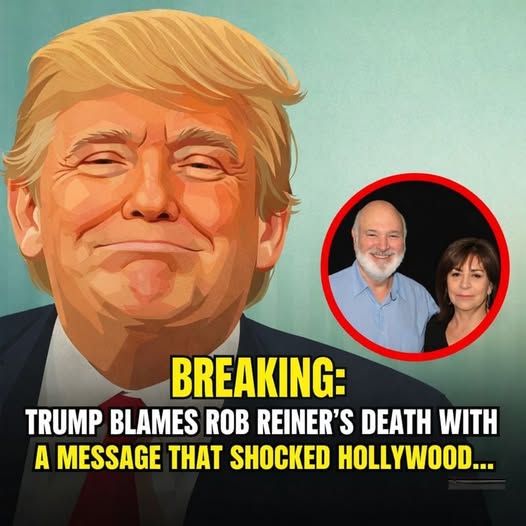
Across living rooms, major film studios, and active production sets in Los Angeles and New York, the message sparked instant and furious debate, reigniting the constant, exhausting question of political civility in the modern era: where is the line that should not be crossed, particularly in the immediate aftermath of a death? Supporters of the former President were quick to defend the statement, insisting that he was merely exercising his right to “speak his truth” about a known political adversary who had consistently targeted him. This perspective framed the message as a form of justified political pushback against a lifetime of criticism from the director.
Conversely, detractors—including many prominent figures within the motion picture industry and Democratic political circles—saw the action as something far darker. They viewed it as a shocking demonstration of a willingness to weaponize a family’s deep, personal tragedy, exploiting the circumstances of the director’s death for political gain and attempting to dehumanize a long-term critic. The sheer timing and nature of the attack, delivered when the family was already enduring the unimaginable horror of a violent death compounded by the reported arrest of their son, Nick Reiner, was deemed by many to be beyond the pale of acceptable public discourse.
As the evening progressed, the initial focus on the tragedy itself—the shocking circumstances of the death of a beloved figure and the complexity of the ensuing homicide investigation—risked being completely overshadowed by the furious, visceral reaction to Trump’s intervention. The event became a new epicenter for the country’s ongoing, deeply entrenched political divisions. What remained was a nation once again visibly split over the same polarizing man, and a grieving family—including Romy Reiner and others desperately trying to cope with an unbearable loss—left to mourn under the unrelenting glare of a political storm they never asked for, intensifying the pressure on an already high-profile criminal case.
The incident serves as a stark commentary on the state of American politics and the blurring of lines between personal tragedy and public political spectacle. The ease with which a political score could be settled over a fresh grave highlights the aggressive, unforgiving nature of the current digital media environment, where political figures feel little obligation to observe traditional norms of respect or restraint, even in the face of death. For the Reiner family, the immediate aftermath of their private catastrophe was instantly transformed into a national political talking point, adding a cruel, public dimension to their private agony. The incident will undoubtedly be closely analyzed by political commentators and media ethics experts as another landmark moment in the escalating incivility of modern politics.