
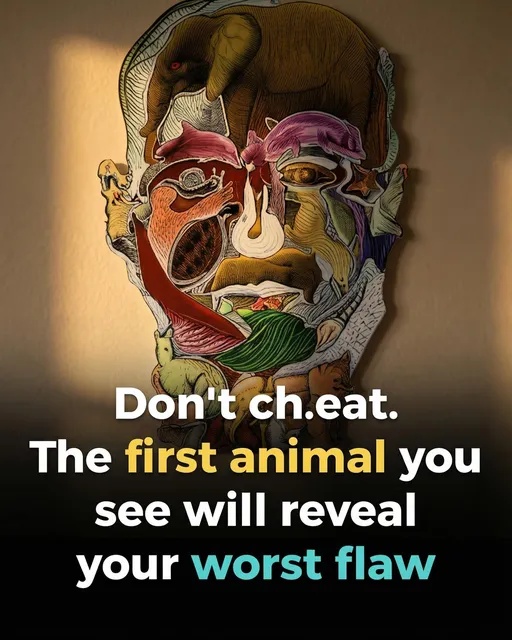
Consider the elephant. In this illustration, it symbolizes stubbornness — a tendency to hold your ground, even when compromise could make life easier. People who see the elephant first often identify with persistence, determination, or a strong belief system. But the shadow side is rigidity, a reluctance to bend or adapt even when circumstances demand it.
The iguana carries a different tone. It suggests emotional distance, the habit of stepping back rather than stepping in. Someone drawn to the iguana might prefer observation over participation, or feel safer keeping their feelings tucked away. It’s not coldness — it’s self-protection.
Then there’s the horse, tied to pride. Not arrogance necessarily, but a deep sense of self-sufficiency that sometimes turns into an unwillingness to show vulnerability. Horses in symbolism represent power, freedom, and dignity; in this illustration, they highlight the fine line between confidence and defensiveness.
Some animals reflect internal landscapes. The cricket, small and unobtrusive, represents worry — the persistent mental hum that some people carry beneath the surface. Those who notice the cricket first might be the ones who overthink, who anticipate problems before they arrive, who carry tension quietly.
The turtle symbolizes caution. It speaks to the people who move through life thoughtfully, carefully, and sometimes hesitantly. Those who feel most drawn to the turtle tend to approach new situations slowly, preferring certainty and safety over impulsive risk.
The rabbit stands for insecurity — not weakness, but sensitivity. Rabbits survive by paying attention. People who identify with the rabbit often see more, feel more, and think more deeply than others realize, though they may doubt themselves along the way.
Other animals reflect behavioral patterns we lean on when life gets complicated. The bear, for example, symbolizes rigidity. Whether it’s structure, routine, or control, bears prefer clarity and order. They can be incredibly dependable but may struggle when faced with unpredictability.
The fox highlights avoidance. Clever, agile, and quick to adapt, the fox doesn’t confront confrontation — it maneuvers around it. People who notice the fox first may be experts at sidestepping conflict, finding loopholes, or distracting themselves from uncomfortable truths.
The dolphin carries a very different energy. It points to spontaneity — the impulsiveness of someone who leaps before looking, embraces fun, and follows instinct rather than caution. This trait brings joy and creativity but can generate chaos when left unchecked.
More animals in the illustration add layers of nuance. The toucan hints at a desire for recognition or visibility — someone who enjoys being seen, heard, or appreciated. The kangaroo represents inconsistency, bouncing between directions or interests. The peacock symbolizes vanity or a tendency toward self-presentation. The whale represents emotional retreat, the instinct to dive deep into oneself rather than stay afloat in social waters.
Others take on subtler meanings. The snake points to manipulation — not necessarily malicious, but strategic or persuasive tendencies. The bird symbolizes instability, a mind in flight, hard to pin down. The sloth bear reflects procrastination: the struggle to take action even when the intention is there. And the snail expresses resistance to change, the steady but stubborn pace of someone who prefers familiar ground.
None of these traits are inherently good or bad. They exist on spectrums, balanced by context. Stubbornness can be strength. Caution can be wisdom. Spontaneity can be inspiration. Even insecurity can be sensitivity, a sign of someone who feels deeply and cares intensely. The point of the illustration isn’t to judge. It’s to illuminate.
The appeal lies in its simplicity. You look quickly, you choose instinctively, and you learn something about how your mind interprets the world. Maybe you recognize yourself in the description instantly. Maybe you don’t. Either reaction is valuable.
If the animal resonates, it can validate a truth you already suspected. If it doesn’t, it might still offer a new lens — a chance to ask, Why this shape? Why this instinct? Why that meaning? Even disagreement can deepen self-understanding.
These kinds of visual tests work best when taken lightly but thoughtfully. They’re not roadmaps or diagnoses. They’re invitations — a playful pause in your day that nudges you to look inward, acknowledge your patterns, and maybe even appreciate the complexity of your personality a little more.
So take a moment. Picture the illustration again. Think about the animal your eyes jumped to first. What does that say about you? Does it spark recognition? Curiosity? Resistance? No matter the reaction, it’s a chance to explore your inner world from a new angle — a reminder that your personality isn’t a fixed label but a living, evolving mix of instincts, choices, and hidden layers.
And sometimes, all it takes to uncover one of those layers is a single unexpected animal hiding in a picture.