
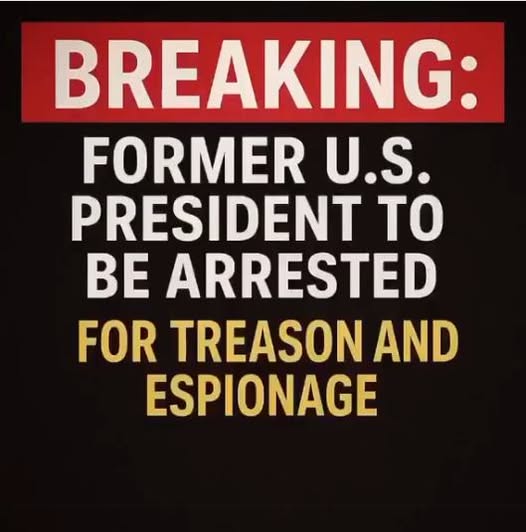
Understanding how claims like this gain traction requires recognizing the dynamics of today’s information economy. Outrage drives clicks. Shock drives sharing. Unnamed sources offer plausible deniability while insulating the claim from scrutiny. By avoiding specifics—dates, documents, jurisdictions—such narratives create an illusion of insider access while remaining unfalsifiable. The result is a story that feels urgent but collapses under basic verification.
The legal threshold for charges such as treason or espionage is extraordinarily high. Treason, defined narrowly in the U.S. Constitution, requires levying war against the United States or adhering to its enemies by giving them aid and comfort, proven by overt acts and corroborated testimony. Espionage statutes involve classified information and demonstrable intent. Seditious conspiracy entails coordinated efforts to overthrow or oppose the government by force. These are not accusations floated lightly or quietly; they are prosecuted through transparent legal processes that leave public footprints at every stage.
The suggestion that federal agencies are “working with the Secret Service on logistics” further strains credibility. The Secret Service’s protective mission is governed by law and protocol, particularly regarding former presidents. Any deviation would be publicly documented and immediately contested. The absence of official acknowledgment is not a delay tactic; it is decisive evidence that the claim lacks substance.
This episode underscores a broader issue in high-stakes political reporting: the erosion of standards. Responsible journalism relies on named sources, corroboration, documents, and on-the-record statements. When a story rests entirely on anonymity and implication, readers are asked to substitute trust for proof. In an era of deep polarization, that substitution can feel validating—but it is not informative.
There is also a human cost to misinformation. Public figures become targets of harassment. Institutions lose credibility by association with invented actions. Citizens are pulled into cycles of anxiety and anger that distract from real policy debates and verified developments. The long-term effect is a degraded public sphere where truth competes on equal footing with rumor.
Media literacy offers a way forward. When encountering extraordinary claims, apply simple tests: Is there primary documentation? Are multiple independent outlets confirming the same facts? Are named officials speaking on the record? Does the story explain legal mechanisms clearly and accurately? If the answer is no, skepticism is not cynicism—it is prudence.
The United States has robust checks and balances designed to prevent exactly the kind of covert, unilateral action implied by these rumors. Courts, inspectors general, congressional oversight, and a free press all function as safeguards. When something truly consequential happens, it does not arrive as a whisper. It arrives with filings, hearings, and scrutiny from every angle.
In the end, the story circulating is not about an impending indictment. It is about the vulnerability of the information ecosystem to sensationalism and the responsibility of readers to demand evidence. Democracy depends not only on institutions, but on an informed public willing to distinguish between verified reporting and viral conjecture. Extraordinary claims require extraordinary proof. Until that proof exists, the claim remains what it is: unsubstantiated speculation dressed up as news.