
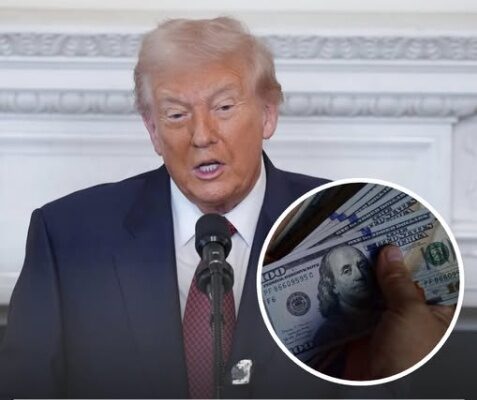
In reality, U.S. customs duties generated about $195 billion in the first three quarters of 2025 — a fraction of what Trump suggests. Independent analysts quickly ran the numbers. Erica York, an economist at the Tax Foundation, estimated that if the $2,000 payment went to Americans earning under $100,000 a year, roughly 150 million adults would qualify — costing about $300 billion. Expanding it to families or children could push the total above $500 billion. Even the most optimistic tariff projections fall hundreds of billions short. “Tariffs have raised around $90 billion in net revenues compared to Trump’s proposed $300 billion rebate,” York said. In short, the promise of a universal payout based solely on tariffs is financially impossible under current conditions.
Even if the math worked, Trump’s plan faces steep legal challenges. His tariff policy relies on the International Emergency Economic Powers Act (IEEPA) — a law meant for national security emergencies, not economic policy. Several federal courts have questioned whether presidents can impose such sweeping tariffs without congressional approval. The Supreme Court is now reviewing related cases that could determine whether Trump — or any future president — has that authority. If the Court rules against expansive executive powers, the revenue stream for Trump’s proposed payouts could vanish overnight.
Unfazed, Trump fired back online: “The President of the United States is allowed to stop ALL TRADE with a foreign country… but not to put a simple tariff for NATIONAL SECURITY? That is NOT what our Founders had in mind!” In true Trump fashion, he ended with all caps: “BUSINESSES ARE POURING INTO THE USA BECAUSE OF TARIFFS. HAS THE SUPREME COURT NOT BEEN TOLD THIS???”
At its core, the $2,000 promise is vintage Trump populism — a simple, emotional pitch that resonates with working-class voters. It echoes the stimulus checks Americans received during the pandemic, a move that remains politically popular. But unlike those COVID relief payments, this plan lacks congressional approval and depends on unpredictable tariff income. Economists also warn that tariffs act like hidden taxes — raising prices for consumers and businesses. That means Americans might end up paying for their own “dividends” through higher costs on everyday goods. Still, Trump’s framing is politically effective. He’s painting tariffs as patriotic — punishing foreign competitors while “rewarding” American citizens. For many of his supporters, that message hits home.
With the 2026 election cycle heating up, Trump’s announcement is as much campaign fuel as it is policy proposal. The $2,000 “dividend” reinforces his image as a defender of the working class and shifts the conversation from tax breaks for corporations to direct benefits for ordinary Americans. Whether or not it’s realistic, it’s powerful messaging — and that may be the point. Critics, however, call the proposal “economic theater” — a big promise without a plan. Under current law, the U.S. Treasury can’t simply divert tariff revenue into personal checks. Even if it could, doing so would leave holes in the federal budget that those funds currently support.
For now, Trump’s $2,000 payout remains just that — a promise. No legislation has been proposed, no timeline given, and no funding mechanism confirmed. Analysts say that even if Trump returned to office, implementing the plan would require Congress to authorize new spending rules and clarify eligibility. Until then, it remains political messaging — not fiscal reality. Still, one thing is clear: Trump has once again changed the conversation. By turning a complex economic issue into a simple, emotional pledge, he’s put tariffs — and himself — back at the center of national debate.
Trump’s $2,000 “tariff dividend” makes for great headlines but shaky economics. The plan depends on revenues that don’t exist, legal powers under fire, and a political climate as unpredictable as ever. But politically? It’s working. The idea taps into nostalgia for pandemic-era relief and fuels the narrative that Trump is fighting for the “forgotten American.” Whether anyone actually gets a check is doubtful — but the story keeps his name, and his message, front and center.
What do you think? Could Trump really pull off a $2,000 “tariff dividend,” or is it just another campaign headline? Share your thoughts in the comments and join the discussion on America’s most talked-about promise.