
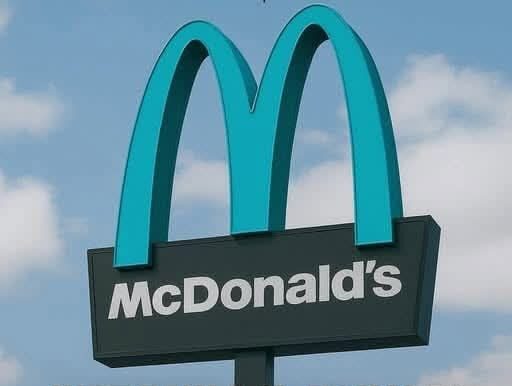
At first, the idea of changing the arches seemed impossible. The logo was sacred. But Sedona held its ground: adapt, or don’t build.
The Turquoise Solution
After weeks of negotiation, an unexpected compromise emerged. Instead of gold, the arches would be turquoise—a color deeply rooted in Southwestern culture and Native American symbolism. Turquoise reflects the sky, the stone, and the spiritual heritage of the region. It complemented the landscape rather than competing with it.
McDonald’s agreed.
When the restaurant opened, the reaction surprised everyone. The turquoise arches didn’t feel out of place. They felt intentional—almost poetic against the red rock backdrop.
A Global Brand, Local Rules
What began as a design concession became a powerful symbol. The Sedona McDonald’s proved that even the most recognizable brands can adapt without losing their identity.
Tourists quickly took notice. The turquoise arches became a photo stop, a curiosity, and eventually a local landmark. Many visitors stop just to see it—sometimes without even ordering food.
The building itself reflects the same philosophy: earth-toned walls, low-profile architecture, and desert landscaping that respects the land rather than dominates it.
Inside, it’s familiar. Outside, it’s uniquely Sedona.
More Than a Fast-Food Story
The turquoise arches represent something bigger than a logo. They reflect Sedona’s broader commitment to preservation. From hotels to gas stations, all development follows the same rules: subdued colors, minimal lighting, and designs that defer to nature.
Despite welcoming millions of visitors each year, Sedona has protected its sense of calm and character. The McDonald’s didn’t break that rule—it followed it.
And in doing so, it became one of the most recognizable examples of local values shaping global commerce.
A Quiet Lesson in Balance
Today, the turquoise McDonald’s appears in travel blogs, postcards, and design case studies. It’s often cited as proof that progress doesn’t have to erase identity—and that compromise doesn’t have to mean surrender.
More than thirty years later, those blue-green arches still glow softly against the desert cliffs, reminding visitors that even ordinary places can honor extraordinary land.
So if you ever pass through Sedona and spot that unexpected splash of turquoise, remember: you’re not just looking at a fast-food restaurant. You’re seeing what happens when a town chooses harmony over sameness—and wins.