
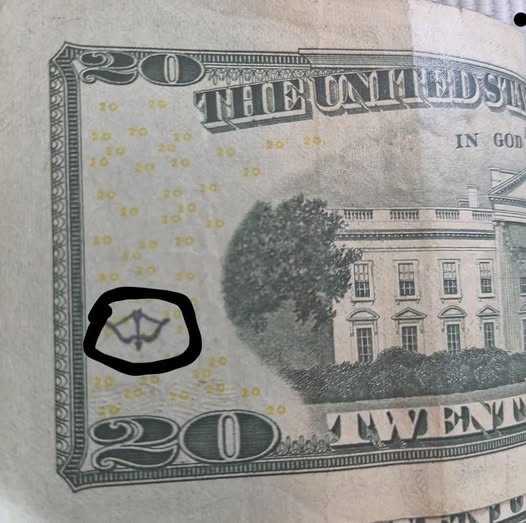
The U.S. dollar isn’t just paper money—it’s a global traveler, carrying with it the invisible weight of international trade and the subtle traces of its journey. If you’ve ever noticed tiny, cryptic symbols on a bill—a bow and arrow, a geometric shape, or a small character in colored ink—you might have dismissed them as random scribbles. In reality, these are chop marks, the silent signatures of merchants and traders who verified the authenticity of the bill as it passed through hands across the globe.
Chop marks are not official features printed by the Bureau of Engraving and Printing. Instead, they are a centuries-old tradition of verification, tracing back to the silver trade in East Asia. Merchants would punch marks into coins like the Spanish Eight Real or the American Trade Dollar to signal authenticity. As trade shifted from coins to paper, the practice evolved: inked stamps on banknotes became the modern equivalent.
When you see a bow and arrow or a Chinese character on a dollar, it’s proof the bill has circulated far beyond U.S. borders. In markets across Asia, Africa, and Latin America, where electronic verification is limited, trust becomes currency. A professional money changer inspects a bill, confirms it’s genuine, and leaves a chop mark as a personal guarantee. This simple symbol says: “I’ve checked this, and it’s real.”
Continue reading on next page…