

If climbing a flight of stairs leaves you breathless, carrying groceries feels heavier than it used to, or gardening sessions end sooner than they once did, you’re not alone.
Many adults over 50 chalk these changes up to “getting older,” but the truth is often different. Your muscles may be sending quiet warning signals—ones that are easy to miss, but crucial to notice.
What Is Sarcopenia?
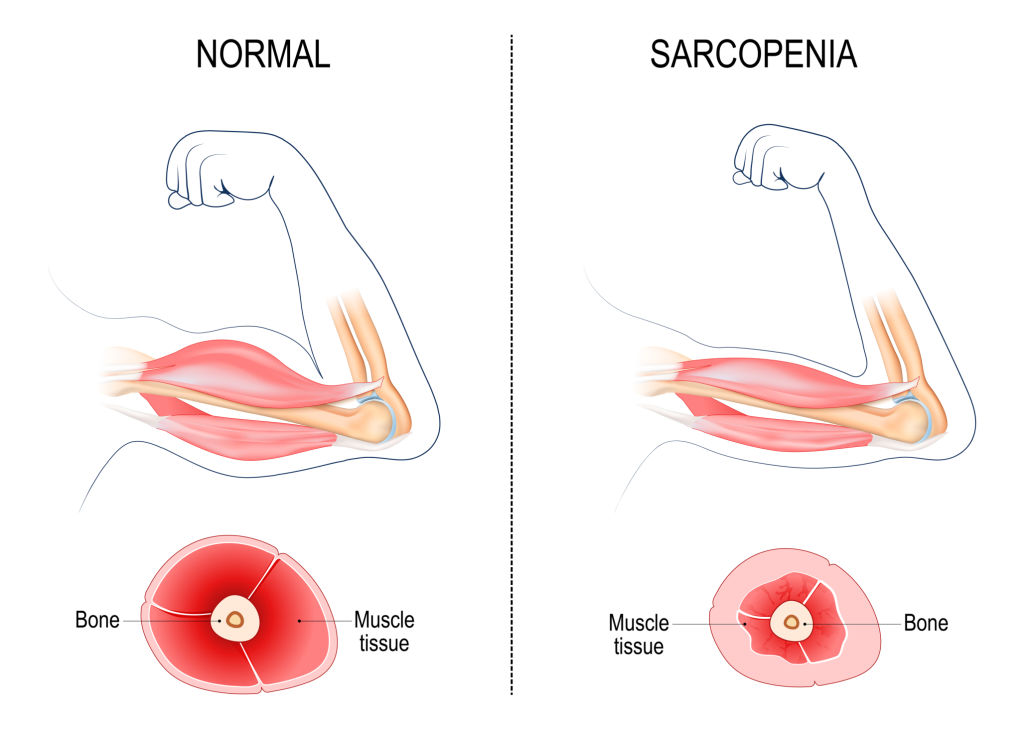
Sarcopenia is the gradual loss of muscle mass, strength, and mobility. While it becomes more common with age, it is recognized as a distinct medical condition—not an unavoidable part of getting older. Left unchecked, sarcopenia can make everyday tasks—walking, lifting, balancing, or standing up—more difficult, increasing the risk of falls, fractures, and loss of independence.
Why Muscle Loss Speeds Up After 50
Muscle decline is slow and often subtle, but several factors accelerate the process:
1. Natural Ageing Changes
Starting around age 30, muscle mass naturally begins to shrink. By 50–60, this process accelerates due to:
- Lower levels of muscle-supporting hormones
- Slower repair and recovery of muscle tissue
- Reduced absorption of protein and nutrients
Without targeted effort, maintaining strength becomes harder over time.
Continue reading on next page…