
2. Lifestyle Factors
Sedentary habits are a major contributor. Risk factors include:
- Long hours of sitting
- Avoiding strength or weight-bearing exercises
- Eating too little protein or skipping meals
Vitamin D deficiency is also widespread in adults over 50, particularly in northern climates, affecting muscle strength and balance.
3. Health Conditions
Certain chronic conditions can silently worsen muscle loss:
- Type 2 diabetes
- Thyroid disorders
- Chronic inflammation
- Neurological conditions
Even mild symptoms can accelerate muscle decline.
Early Signs Your Muscles May Be Weakening
You don’t need tests to notice changes. Watch for:
- Difficulty standing without using your arms
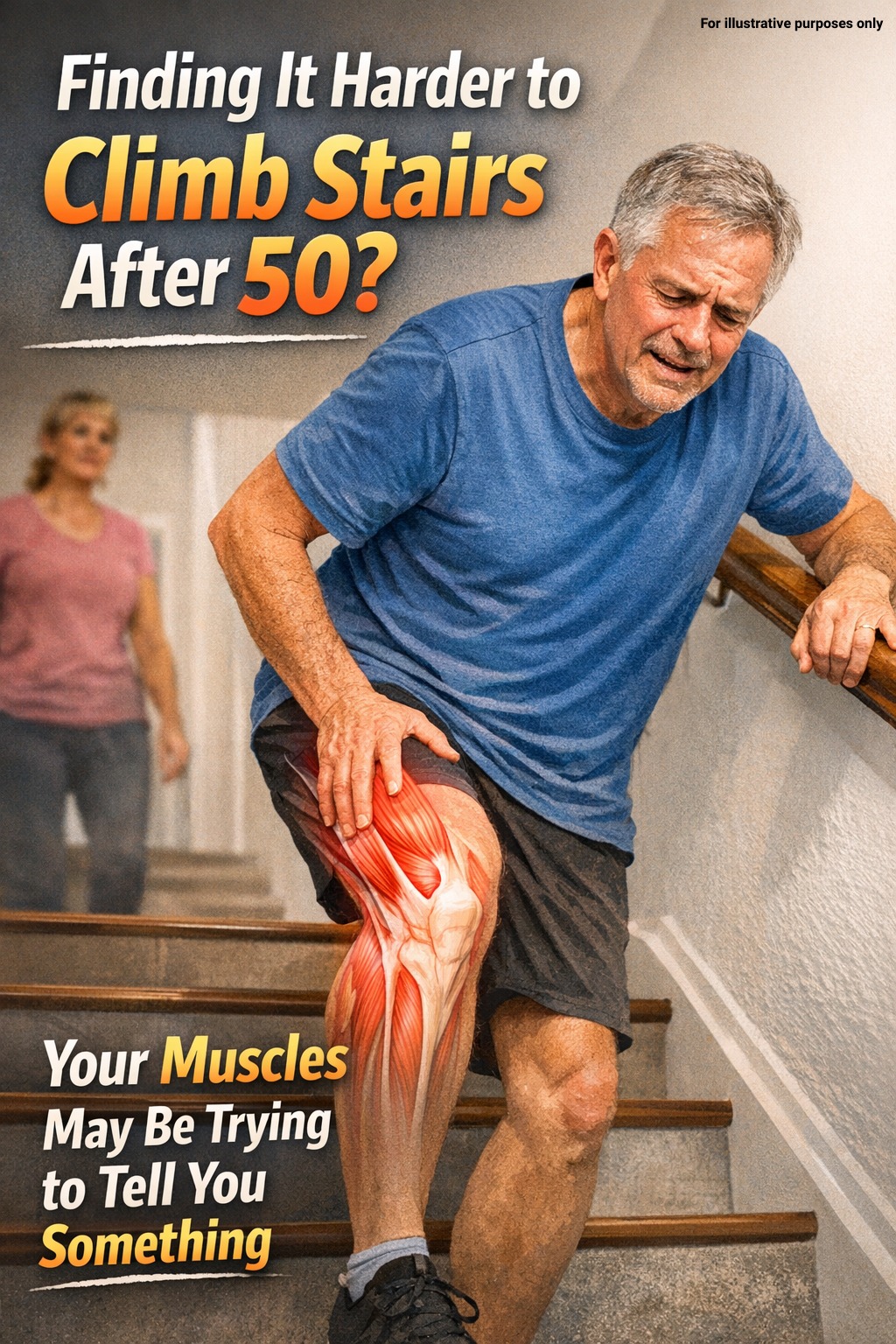
- Unusual fatigue after climbing stairs
- Thinning or loss of firmness in arms or thighs
- Balance issues, frequent trips, or unexplained tiredness
If several of these sound familiar, it’s time to discuss them with your doctor.
How Adults Over 50 Can Protect Their Muscles
The best news? Muscle strength can improve at any age—even in your 70s and beyond.
1. Move Every Day—Safely and Consistently
You don’t need a gym membership. Daily movement is key:
- Chair squats, gentle lunges, or step-ups
- Brisk walking or climbing stairs
- Yoga, Pilates, swimming, or cycling
Even 10–15 minutes a day can make a difference when done consistently.
2. Eat to Support Muscle Health
Protein is essential. Experts often recommend:
- 1.2–1.5 grams of protein per kilogram of body weight per day
Good sources include:
- Eggs, milk, yogurt, cheese
- Fish like salmon, sardines, or mackerel
- Beans, lentils, chickpeas
Other nutrients matter too:
- Vitamin D for muscle function
- Calcium for bones and muscles
- Omega-3s from fish, flax, or walnuts
- Adequate hydration for recovery and energy
3. Cut Habits That Harm Muscles
Certain lifestyle choices accelerate weakness:
- Ultra-processed foods
- Excess sugar and saturated fats
- Heavy alcohol use
Reducing these supports muscle strength and overall wellbeing.

The Bottom Line
Sarcopenia is not inevitable. With awareness, movement, and proper nutrition, adults over 50 can maintain strength, balance, and independence for years to come. Small daily actions now can make a big difference later.
Start today: Stand up, take a short walk, add a protein-rich snack, and notice the difference. Your muscles—and your future self—will thank you.
What changes have you noticed in your strength or energy as you’ve aged? Share your experiences and tips in the comments to help others stay strong and independent.