
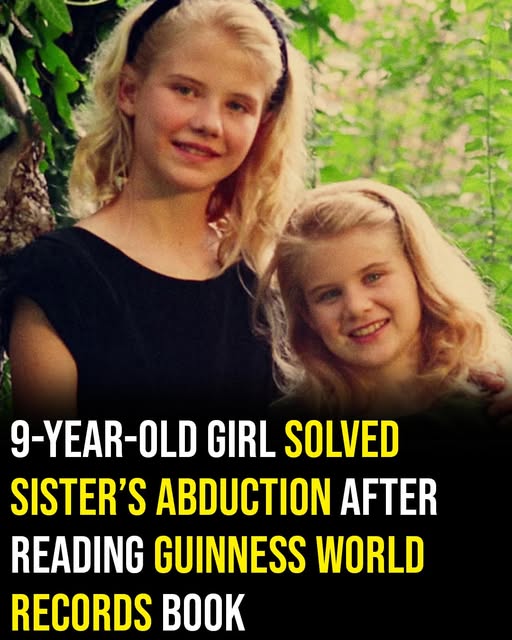
The kidnapping of Elizabeth Smart has re-entered public conversation following the release of a new Netflix true crime documentary, Kidnapped: Elizabeth Smart. The series revisits one of the most closely followed missing child cases in U.S. history—and highlights an extraordinary detail that ultimately helped bring Elizabeth home.
At the center of that detail is Elizabeth’s younger sister, Mary Katherine Smart, who was just nine years old when she witnessed the terrifying abduction.
A Crime That Shocked the Nation
Elizabeth Smart was taken from her family’s Utah home in 2002, an event that quickly became a national news story. The crime was especially disturbing because it occurred while her parents were out for the evening—and because Elizabeth’s younger sister saw the intruder.
In the documentary, both sisters speak candidly about that night and the months that followed. Mary Katherine recalls seeing a man enter their home and force Elizabeth away while threatening her with a knife. For years, investigators believed the key to solving the case might lie with the young witness.
They were right.
A Breakthrough From an Unexpected Source
After the kidnapping, Mary Katherine struggled with fear and sleeplessness. In the documentary, she explains that her father would often come into her room at night to comfort her, and while waiting for him, she would distract herself by reading books and replaying memories in her mind.
One evening, several months after Elizabeth disappeared, she was flipping through a Guinness World Records book—a moment that would unexpectedly change everything.
“For some reason,” Mary Katherine recalls, “a name suddenly came into my head. I knew instantly who had been in my bedroom that night.”
The name was Immanuel.
Connecting the Dots
Elizabeth and Mary Katherine’s father, Ed Smart, explains that when he and his wife returned home one evening, their daughter told them she believed she knew who took Elizabeth. She identified the man as “Immanuel,” a name used by Brian David Mitchell, a self-proclaimed street preacher who had previously interacted with the family.
Mitchell had crossed paths with the Smarts months earlier while preaching locally. Elizabeth and Mary Katherine’s mother had given him Ed Smart’s business card, hoping he might find work. Mitchell later came to the family’s home to help with household projects—an encounter Mary Katherine subconsciously remembered.
Revisiting the Guinness World Records book helped her recall his name with clarity.
Initial Doubts—and the Truth
At first, law enforcement was hesitant to act on the lead. Investigators were focused on a different suspect who had since died in custody. Still, Mary Katherine’s certainty prompted renewed attention.
Eventually, a composite sketch of Mitchell was released. That image proved crucial. Mitchell was later spotted in public with Elizabeth, leading to his arrest and her rescue after nine months in captivity.
Authorities later confirmed that Brian David Mitchell was responsible for the abduction.
Elizabeth Smart Reflects Years Later
Now, more than two decades after her ordeal, Elizabeth Smart is sharing her story on her own terms. In interviews tied to the Netflix documentary, she explained that the filmmakers were careful to approach the subject with sensitivity.
“They wanted to protect me,” she said, while also emphasizing that her experience was not something that should be softened or minimized.
After viewing the final documentary, she expressed gratitude for how her story was handled, saying it honored the truth of what she endured and the strength it took to survive.
Why This Story Still Matters
The Elizabeth Smart case remains one of the most powerful examples of resilience, family determination, and the importance of listening—even when the key witness is a child.
It’s also a reminder that breakthroughs in criminal investigations can come from the most unexpected places, including a child’s memory sparked by a book.
As the documentary brings this story to a new generation, many are once again recognizing the courage of both sisters—and the remarkable moment that helped bring Elizabeth home.
If you found this story meaningful, consider sharing it so others can learn about this extraordinary chapter in true crime history.