
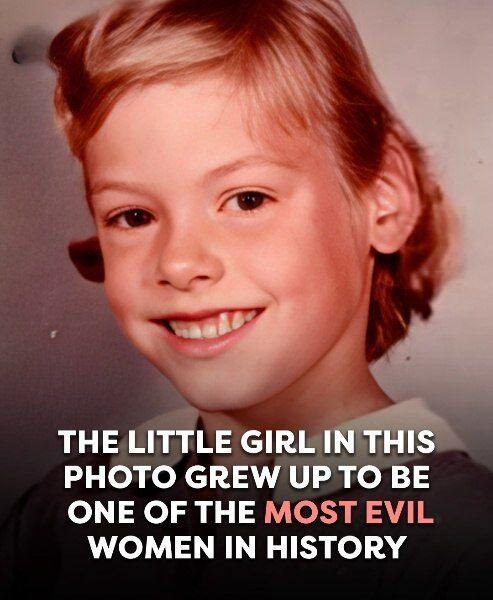
In an old, faded photograph, she looks ordinary—small, wide-eyed, holding onto a childhood that would soon be lost. But the little girl in that image would grow up to lead a life marked by tragedy and violence, leaving a lasting impact on the nation.
A Troubled Beginning
Born in 1956 in Rochester, Michigan, Aileen Wuornos came into a world already shaped by instability. Her father had a history of serious criminal behavior and died while she was young. Her mother left soon after, leaving Aileen and her brother in the care of their grandparents.
Her early years were filled with fear and hardship. She later described experiences of neglect and abuse in the home, including exposure to alcohol and violence. By her early teens, she faced further trauma, including a teenage pregnancy and adoption of her child, leaving her childhood behind before it had truly begun.
Struggling to Survive
As a teenager, Wuornos left school and worked to survive on her own. Encounters with the law, poverty, and repeated personal losses compounded the challenges she faced. She later moved to Florida seeking a fresh start, but hardships followed. Arrests, mental health struggles, and repeated crises shaped a path toward increasingly dangerous behavior.
The Violent Turn
By the late 1980s, Wuornos’ actions escalated dramatically. Over roughly a one-year period, she was involved in the deaths of several men. In her defense, she stated that she acted in self-protection during confrontations. Investigations and evidence eventually tied multiple cases together, resulting in serious criminal charges and convictions.
Media Attention and Legacy
Wuornos’ story became widely covered in the media, sparking debates over justice, trauma, and mental health. Experts have noted the influence of severe childhood adversity and untreated mental illness in shaping her life path. She was sentenced to death and was executed in 2002 at the age of 46.
Her life continues to serve as a stark example of how early trauma, neglect, and systemic failures can contribute to catastrophic outcomes. While some view her actions with horror, others see a tragic story of unaddressed pain and societal neglect.
Reflection
The little girl in that photograph grew up in circumstances no child should face. By the time she reached adulthood, the cumulative weight of her experiences had shaped a life that ended in tragedy—for her and others. Her story is a sobering reminder of the long-term effects of trauma, the importance of early intervention, and the need for compassion and support for vulnerable children.