
For most of my life, I was certain my father died when I was eight years old. There was no memorial service, no gravesite to visit, no box of keepsakes tucked away in a closet. Instead, there was a single afternoon when my mother sat across from me, her voice calm and carefully controlled, and told me, “He’s gone now. It’s time to move on.”
That was all I was given. No explanation. No memories. Just a firm conclusion.
I accepted it because children tend to trust certainty when it’s presented by the people who raise them. When classmates talked about their families, I repeated the same story. When teachers asked, I answered with one word: deceased. My mother kept our home free of reminders—no photographs, no shared stories, no dates that invited questions. She said remembering was too painful, and I learned early that silence was safer than curiosity.
A year later, Dan entered our lives.
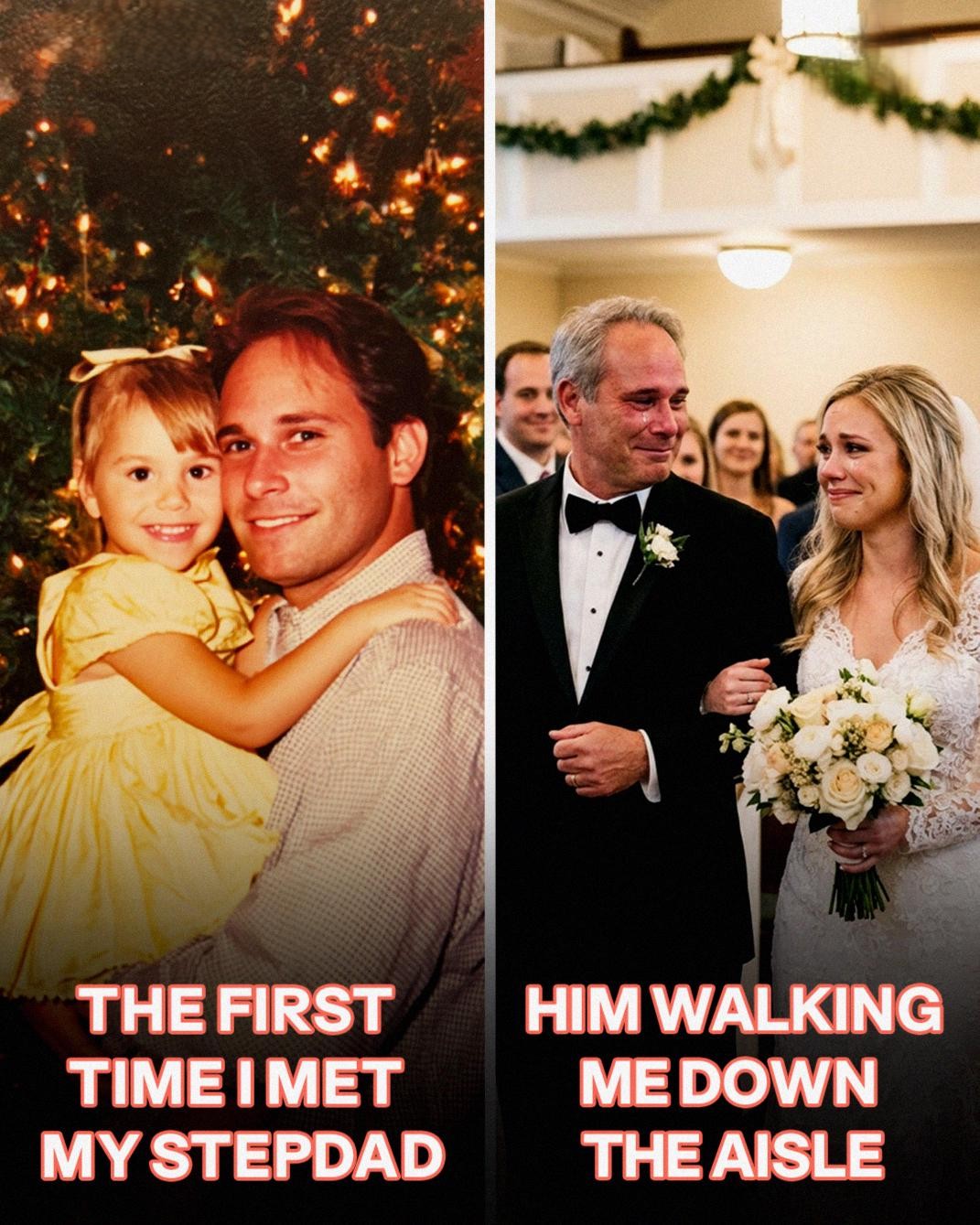
He never tried to replace anyone. He didn’t demand affection or rewrite history. He simply showed up. He drove me to school, waited through long appointments, fixed broken things before they became problems, and quietly supported me when I needed it. For years, I kept him at arm’s length out of loyalty to a man I barely remembered.
One day, as a teenager, I accused him of trying too hard. He surprised me by agreeing. “I’m not your father,” he said gently. Then added, “But I care about you like a daughter.” Something shifted—not loudly, but permanently.
Years later, when I got engaged, there was no debate about who would walk me down the aisle. I asked Dan. He accepted with an expression that looked like pride, though I didn’t realize then it was also guilt.
On my wedding morning, the atmosphere was a mix of excitement and tension. Dresses rustled, voices buzzed, and my mother moved sharply around the room. Dan stood quietly, adjusting his cufflinks again and again. When I teased him about being nervous, he smiled and said he just wanted everything to go right.
As the music prepared to start, he took my arm and leaned in. “There’s something you should know,” he whispered.
Before he could finish, a shout echoed through the venue.
The doors opened, and a man I had never seen stepped inside. He looked worn—not dramatic, just heavy with time and regret. When our eyes met, my mother reacted instantly, telling me not to look at him. Dan instinctively stepped in front of me.
The man spoke anyway. “You were lied to,” he said calmly. “And you deserve the truth.”
I already knew.
“My name is Nigel,” he continued. “I’m your father.”
The ceremony stopped. Guests were escorted out. My fiancé stayed beside me, letting me choose what happened next. I needed answers immediately.
That evening, in the empty venue, Dan finally explained everything. My father hadn’t died. He had been incarcerated for financial crimes. My mother chose to tell everyone he was gone rather than wait. Nigel wrote letters every year—letters I never received. Dan knew the truth and believed, mistakenly, that shielding me from it was the right thing to do.
A week later, I met Nigel in a small roadside diner. He spoke carefully, afraid of saying the wrong thing. He said he never stopped thinking about me and showed up at the wedding because he couldn’t bear being erased anymore. I believed he felt remorse. I also knew remorse didn’t erase years of absence.
The next day, I confronted my mother. She listened calmly, as if discussing something minor. When I told her I was stepping away from our relationship, she seemed more inconvenienced than heartbroken. She said she did what she thought was necessary. I told her she chose what was easiest for her, not what was honest for me.
I left without waiting for her response.
Weeks later, my husband and I married quietly in his parents’ backyard. There was no spectacle, no audience waiting for drama. Dan walked me down the aisle again. His hands trembled, but his smile was steady. When he placed my hand in my husband’s, he whispered words I’ll never forget.
Nigel attended, standing quietly in the back. We’re slowly building something—carefully, without expectations. I don’t know what role he’ll ultimately have in my life.
What I do know is this: family isn’t defined by biology or sudden declarations. It’s built through consistency, honesty, and presence. It’s about who stays when it’s uncomfortable, not who arrives when it’s convenient.
I spent years believing my father was gone. The truth was more complicated. He was absent. And the man who stayed—the one who showed up day after day—earned the place beside me.
We can’t choose how our story begins. But we can choose how we move forward. I choose clarity. I choose peace. And I choose the people who never walked away.