
I talked to my mom almost daily. Our calls usually slipped into the quiet gaps of everyday life—during my commute, while folding laundry, or while dinner simmered on the stove. We didn’t discuss anything dramatic. Our conversations were built from ordinary comforts: grocery sales, neighborhood gossip, weather forecasts, and the latest thrift-store bargain she was proud of.
And every call ended the same way.
“We’re okay, honey. Truly. Don’t worry.”
So when my workplace closed early for Christmas that year, I decided to surprise them. No announcement. No hints. Just me, a box of homemade gingerbread cookies, and fudge—the same recipe Mom used to “test” repeatedly when I was a kid.
The long drive felt unusually short. Snow lined the highways, holiday music played softly, and memories flooded back—Dad wrestling with tangled Christmas lights, Mom humming in her apron, the familiar warmth of home.
That feeling disappeared the second I turned onto their street.
The house was dark. No lights. No decorations. No wreath. And parked in the driveway was a sleek silver Lexus—definitely not my parents’ aging sedan.
My stomach sank.
I parked and walked toward the front door, the cold biting sharply. I knocked. Then knocked again. No answer.
I used the spare key Dad had insisted I keep “just in case.” The door opened easily—but the house inside felt unfamiliar.
The walls had been repainted a sterile gray. Family photos were gone. Vacations, graduations, childhood memories—erased. The cozy furniture had been replaced with cold, modern pieces that didn’t belong.
I stepped forward carefully.
“Hello?” I called.
Laughter echoed from the kitchen.
I followed the sound and stopped short. My sister’s phone sat on the counter, speaker on. The kitchen was immaculate, untouched.
“Yes, it’s officially my place now,” Elsa’s voice said casually. “They’re fine. They’re staying in the garage. Drew and I needed room to sort things out.”
My chest tightened.
She meant our parents.
I didn’t confront her. Instead, I opened the back door.
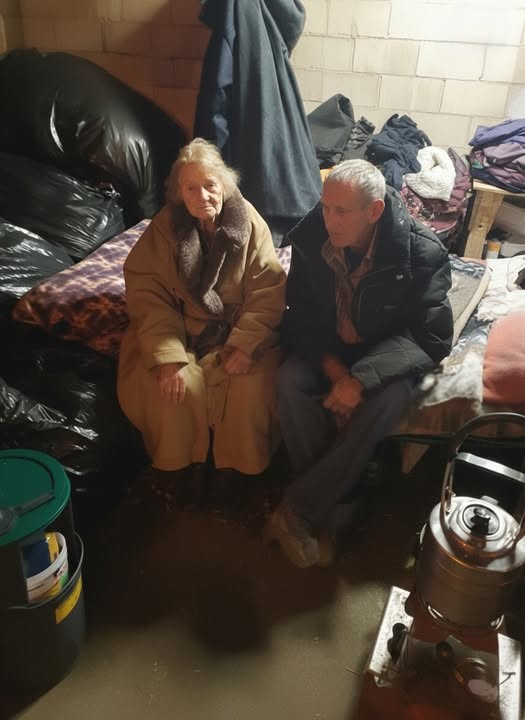
The garage was freezing. The light flickered on, revealing my parents bundled in coats. Mom sat on a folding cot, hands tucked into her sleeves. Dad hunched over a crossword puzzle on a metal chair, barely holding the pen. Between them sat a small camping stove and a low table I recognized from childhood Christmas traditions.
Mom forced a smile. “What a surprise, sweetheart.”
“You’re living out here?” I asked quietly.
Dad sighed. “Elsa said it was temporary. Then she needed more space. Eventually, this is where we ended up.”
Mom tried to smooth it over. “She said she’d get a heater.”
It was December. The garage felt like ice.
That’s when something inside me broke.
“Pack a bag,” I said. “I’ll be back.”
They didn’t argue.
Within an hour, I had booked the best hotel suite in town—fireplace, holiday lights, warmth. Then I called a locksmith.
“My parents own the house,” I explained. “Their names are on the deed. Someone forced them out.”
He understood immediately.
When I returned, Drew was lounging on the couch, television blaring.
“You don’t live here,” I said calmly. “You need to leave.”
The locksmith arrived moments later.
“You can’t do this,” Drew protested.
“There’s no lease,” I replied. “And I’m prepared to involve law enforcement.”
The locks were changed that night.
I brought my parents to the hotel. Mom cried when she turned on the fireplace. Dad walked the room slowly, as if confirming it was real.
“You’re safe now,” I told them.
Elsa arrived later to find her belongings neatly placed outside. She shouted. She blamed. She demanded explanations.
I didn’t engage.
Two days later, she came to the hotel asking to talk. I declined. Dad gently stopped Mom from stepping forward.
Some boundaries, once crossed, can’t be undone with apologies.
When my parents finally returned home, the house felt empty—but hopeful. We cooked together. We talked about repainting, replacing furniture, restoring warmth one room at a time.
That night, Dad handed me a new house key.
“For next Christmas,” he said.
And I understood something clearly then: sometimes love isn’t quiet. Sometimes it means stepping in, standing firm, and refusing to look away when the people who raised you need protection most.