
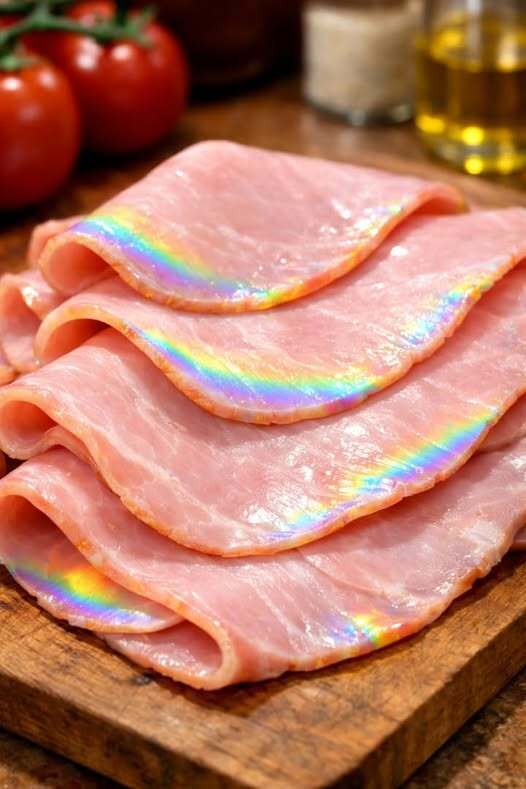
Cured meats, which retain moisture due to salt and preservatives, tend to show this effect more strongly. In fact, that shiny rainbow can actually indicate the meat was sliced cleanly and stored properly.
When the Shine Isn’t the Problem
While the rainbow itself is safe, it doesn’t give meat a free pass forever. Spoilage is still possible—and the real danger comes from ignoring the signs that actually matter.
Here’s what to check instead:
Texture matters most.
Fresh deli ham should feel firm and slightly moist. If it feels sticky, slimy, or leaves residue on your fingers, bacteria have likely started to grow. That’s a clear “don’t eat it” signal.
Smell tells the truth.
Good ham smells mild and savory. If you notice sour, sharp, ammonia-like, or rotten odors, it’s time to toss it—no matter how normal it looks.
Watch for true color changes.
Iridescence shifts as you move the meat. Spoilage doesn’t. Gray, brown, greenish patches, or fuzzy spots point to oxidation or mold, not harmless light tricks.
The Clock Is Always Ticking
Even deli meat that looks and smells fine has limits. Once opened, most sliced ham should be eaten within three to five days when refrigerated. Some bacteria—like Listeria—can grow even in cold temperatures without obvious warning signs. When in doubt, time matters more than appearance.
To slow spoilage, wrap deli meat tightly, store it in an airtight container, and keep it in the coldest part of your fridge. But remember: storage improves quality, not immunity.
The Bottom Line
That strange rainbow glow on your ham is usually just light bouncing off muscle fibers—not a health hazard. The real red flags are slime, strong odors, dull discoloration, and age. Trust your senses, follow safe storage timelines, and don’t let a harmless shimmer ruin your lunch.
Have you ever thrown food away because it “looked weird”? Share your experience and let’s compare notes below.