
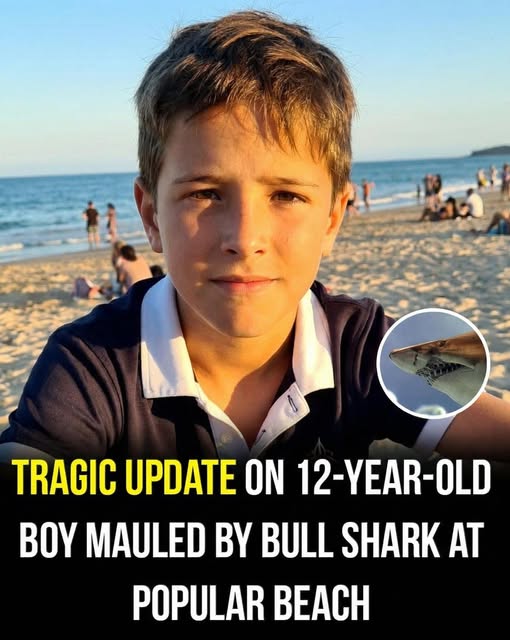
Nico’s friends, displaying remarkable presence of mind for their age, quickly raised the alarm. One friend ran to alert nearby adults while others remained by Nico’s side, shouting for help and attempting to assist him in staying afloat. The swift reactions of those around him proved critical in the initial minutes before trained emergency crews arrived.
Lifeguards and paramedics responded within minutes, a testament to Sydney’s well-organized beach safety and emergency response systems. Nico was treated on the scene, receiving immediate medical attention as professionals worked to stabilize him.
Once he was deemed safe enough to transport, paramedics rushed him to a specialized children’s hospital, where he remains under close observation.
At the hospital, a team of pediatric specialists and critical care professionals is providing round-the-clock care, closely monitoring his condition while working tirelessly to support his recovery.
During this difficult time, Nico’s family has been by his side, navigating the overwhelming stress and uncertainty that follows such sudden emergencies. Recognizing the immense emotional and logistical challenges they face, the local community has come together in a remarkable display of support.
A close family friend launched an online fundraiser to help ease the financial and practical burdens on Nico’s parents, allowing them to focus entirely on their son’s recovery.
In a message accompanying the fundraiser, the organizer emphasized Nico’s deep connection with his community, describing him as a vibrant, kind-hearted, and deeply loved child whose sudden accident had touched the hearts of many.
The response from people across Sydney and beyond has been immediate and heartfelt. Donations and messages of encouragement have poured in from neighbors, classmates, and even strangers moved by the story.
These contributions are helping cover everyday needs—transportation, meals, accommodation near the hospital, and other essentials—so that Nico’s parents can remain close to him during the critical stages of his recovery.
The support network that has rallied around the family is a reminder of how compassion and community can provide tangible relief in times of crisis.
In addition to the personal impact on Nico and his family, the incident has prompted renewed attention on water safety across the region. Authorities temporarily closed several nearby beaches as a precaution while surf life-saving teams and water safety specialists assessed local conditions.
While the exact circumstances of Nico’s accident are still under review, experts have used this moment to remind the public of the importance of swimming in patrolled areas, observing posted warnings, and remaining vigilant around natural water environments.
Surf life-saving organizations have highlighted that even experienced swimmers, including children accustomed to the water, can be caught off guard by sudden currents, tides, or underwater obstacles.
They urge that constant supervision, knowledge of safe swimming zones, and basic water safety education are critical for preventing similar emergencies. In the days following Nico’s incident, another young swimmer experienced a separate water-related scare at a nearby location.
Quick thinking by bystanders, coupled with rapid intervention from emergency services, ensured that child returned safely to shore, underscoring the importance of preparedness and vigilance near open water.
For Nico’s family, the ongoing medical treatment has required balancing hope with cautious optimism. Doctors have shared updates cautiously, explaining that while he remains in a serious condition, every measure is being taken to maximize his chances for a full recovery.
Specialists are working not only on immediate medical needs but also on rehabilitation strategies, anticipating the care that may be needed in the coming weeks and months.
Physical therapists, pediatric neurologists, and other healthcare professionals are collaborating to provide comprehensive, child-focused treatment plans that prioritize both recovery and comfort.
Community members have also taken on practical roles to ease the strain on the family. Neighbors have coordinated meal deliveries, local businesses have donated supplies, and schools have organized messages of support and encouragement from classmates.
Social media has amplified these gestures, spreading awareness and inspiring even more contributions from people who want to help in tangible ways.
The story of Nico’s incident has sparked broader conversations about the responsibilities of both guardians and public authorities in ensuring water safety. While Sydney has one of the most robust coastal safety infrastructures in the world, including patrolled beaches, trained lifeguards, and emergency response protocols, experts point out that accidents can still happen in moments of unexpected change in conditions.
They encourage parents and guardians to actively engage with children about water safety, to ensure that young swimmers understand the risks, and to maintain continuous supervision even in seemingly calm conditions.
The emotional toll of such an event cannot be understated. Nico’s parents, while trying to maintain a sense of calm for their son, have been navigating waves of fear, uncertainty, and hope.
Psychologists and child specialists note that families facing sudden medical emergencies often benefit from both practical assistance and emotional support, highlighting why community involvement is so impactful.
Every meal delivered, every encouraging message, and every donation providing necessary resources helps reduce the weight on Nico’s parents, giving them precious time and energy to focus entirely on his recovery.
Meanwhile, the wider Sydney community has been united in its vigilance and solidarity. Local authorities have launched a review of beach safety measures and are consulting with surf life-saving experts to assess whether additional warning signage, safety patrols, or public awareness campaigns are warranted.
These discussions aim not only to prevent future incidents but also to reassure the public that safety is a shared responsibility.
Beyond the procedural and medical responses, Nico’s situation has become a powerful human story that resonates across neighborhoods and communities. Messages of encouragement, prayers, and well-wishes have come from across the country, illustrating how even a local incident can touch hearts far beyond its immediate vicinity.
Classmates have created art and letters expressing support, while neighbors have organized vigils and moments of collective reflection, demonstrating the depth of care and connection that a single child’s experience can inspire.
The incident has also sparked reflection on resilience, both in the child and in the community around him. Healthcare professionals stress that early intervention, combined with strong emotional and logistical support from family and community, significantly improves outcomes for children facing sudden medical crises.
Nico’s friends, by alerting adults immediately and staying calm in a frightening situation, exemplify the importance of awareness, quick thinking, and courage—even at a young age.
While the path forward remains uncertain, the combined efforts of medical teams, family, and community members have created a network of hope and support.
The story of Nico Antic stands as a reminder of the fragile balance between everyday enjoyment and unexpected emergencies, illustrating both the risks inherent in natural environments and the extraordinary strength of collective compassion.
As doctors continue their meticulous work, monitoring Nico’s progress hour by hour, the community’s focus remains on sustaining hope, supporting his family, and spreading awareness of water safety.
The lessons learned extend beyond this single incident: vigilance, preparedness, and empathy can make a life-saving difference in moments of crisis. The combination of expert medical care, parental dedication, peer support, and a deeply engaged community forms a web of resilience that can inspire others facing similarly daunting circumstances.
In reflecting on the days following Nico’s accident, it is clear that his story is not only about danger but also about courage, swift action, and the power of unity.
While the uncertainty of recovery weighs heavily on those closest to him, the ongoing outpouring of love and support demonstrates how deeply humans are capable of responding to one another in times of need.
It also serves as a stark but important reminder that life’s ordinary moments—playing, swimming, and enjoying time with friends—can change in an instant, highlighting the need for both vigilance and gratitude.
Ultimately, Nico’s journey over the coming weeks will be shaped not just by medical interventions but by the immense community effort surrounding him. From fundraising and meals to public awareness campaigns and personal gestures of support, every act contributes to an environment of care and healing.
As doctors, family, and friends work tirelessly together, the story of Nico Antic stands as a testament to human resilience, the unpredictability of life, and the extraordinary strength that arises when compassion, unity, and hope converge.
Even as investigations into the incident continue and authorities refine water safety measures, the enduring message remains clear: preparedness, vigilance, and community solidarity are essential.
By sharing this story, Sydney has illuminated how ordinary citizens, local organizations, and emergency responders can collectively respond to crises, turning moments of fear and uncertainty into examples of courage, empathy, and unwavering support.
Nico’s recovery may take time, but the network of care and love surrounding him ensures that he will not face the challenge alone.