
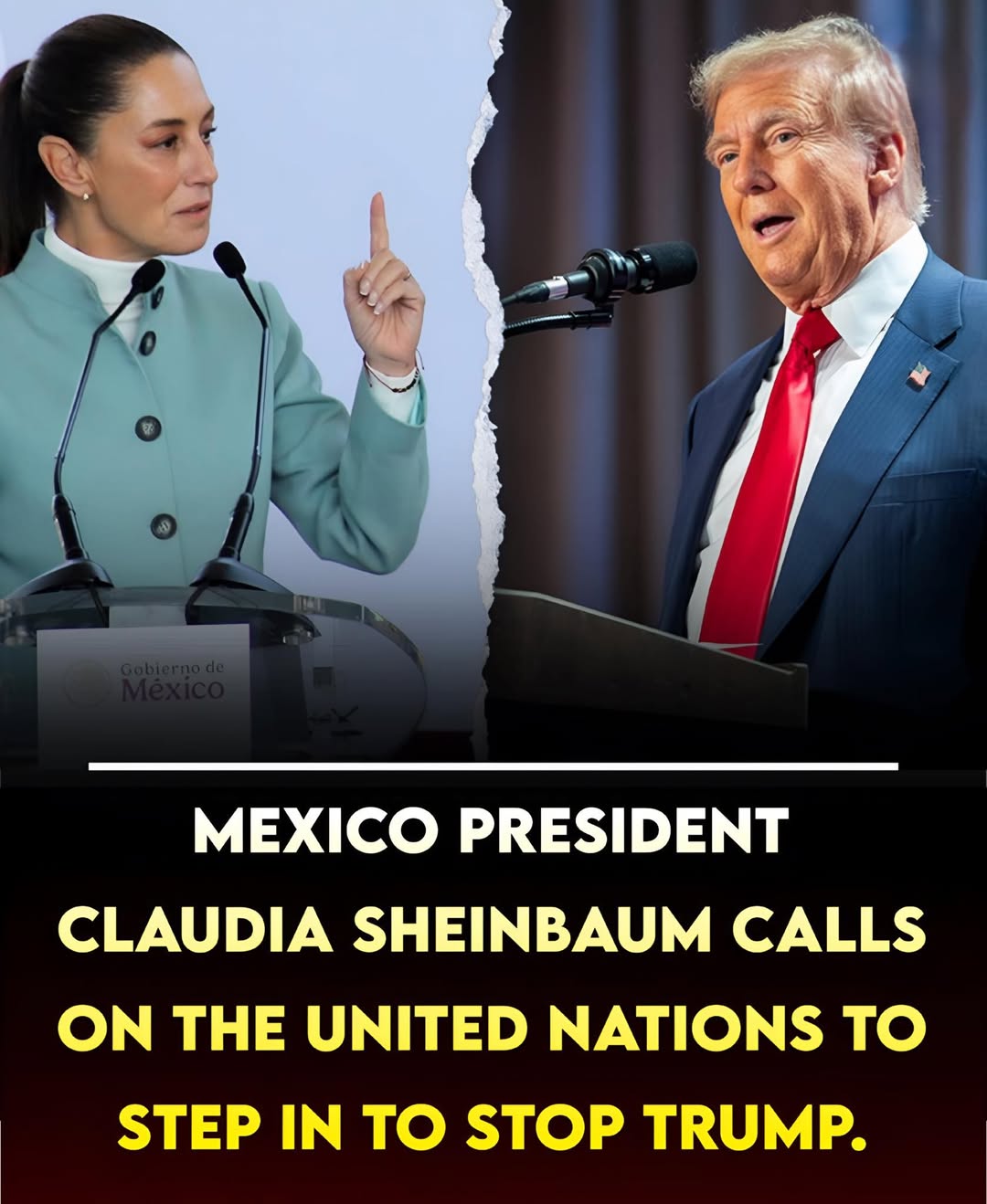
In the rapidly shifting landscape of global geopolitics, Mexico has stepped forward with a clear and forceful message. President Claudia Sheinbaum’s response to the United States’ military action in Venezuela—and reports surrounding the detention of Nicolás Maduro—has sent shockwaves across Latin America and beyond. Far from issuing a routine diplomatic objection, Sheinbaum delivered a pointed rebuke that reasserts Mexico’s long-standing commitment to sovereignty, international law, and non-intervention.
By explicitly citing the United Nations Charter and Mexico’s historic Estrada Doctrine, Sheinbaum framed the situation not as a regional dispute, but as a defining test for the legal and moral foundations of the Western Hemisphere. Her statement made it clear that Mexico views the events in Caracas as a serious challenge to the rules-based international order that protects nations from unilateral military action.
A Firm Stand on International Law and Sovereignty
At the center of Sheinbaum’s position is Article 2(4) of the UN Charter, which prohibits the use of force against the political independence or territorial integrity of any state. For Mexico, this principle is not symbolic—it is essential. Smaller and mid-sized nations rely on these protections to prevent powerful countries from imposing outcomes through military pressure.
By characterizing the U.S. operation in Venezuela as a violation of this framework, Sheinbaum positioned Mexico as a defender of multilateral diplomacy and international legal norms. Her message to Washington was unmistakable: allegations against a foreign leader or internal political disputes do not justify military intervention. Allowing such actions, she warned, risks reviving a legacy of interventionism that Latin America has worked for decades to overcome.
The Estrada Doctrine and Mexico’s Foreign Policy Identity
Sheinbaum’s response draws heavily on the Estrada Doctrine, a cornerstone of Mexican foreign policy since 1930. The doctrine rejects the idea that one government has the authority to judge the legitimacy of another. In today’s geopolitical climate, Sheinbaum is using this principle to push back against what she views as a growing acceptance of power-based decision-making in global affairs.
While several countries in the region have expressed concern quietly—or avoided comment altogether—Mexico has chosen a more visible role. This approach reflects a shared historical memory across Latin America, shaped by foreign-backed regime changes and external interference. From Sheinbaum’s perspective, the reported capture of a sitting head of state, regardless of ideology, sets a precedent that could threaten every nation in the hemisphere.
Strategic Implications for U.S.–Mexico Relations
Mexico’s position also carries significant implications for its relationship with the United States. Recent comments from former U.S. President Donald Trump, suggesting that Mexico itself might require foreign intervention to address organized crime, have heightened sensitivity around the issue.
By taking a firm stance on Venezuela, Sheinbaum is indirectly reinforcing Mexico’s own territorial integrity. While she has publicly downplayed the likelihood of direct U.S. action against Mexico, her broader message is unmistakable: cooperation on trade, migration, and regional security depends on mutual respect for sovereignty. Disregarding that principle, she suggests, would strain even the most essential partnerships.
Regional Ripple Effects Across Latin America
Mexico’s position is resonating across the region, particularly among progressive governments in countries like Brazil and Colombia. Many leaders share concerns that criminal charges or political disputes could increasingly be used to justify external military actions.
By advocating for dialogue, negotiation, and peaceful conflict resolution, Sheinbaum is openly challenging strategies rooted in coercion. Her administration argues that what is happening in Venezuela is not just a national crisis, but a broader struggle over the future of international law in the Americas. If unilateral intervention becomes normalized, sovereignty itself risks becoming conditional rather than guaranteed.
Criticism of the United Nations’ Role
Sheinbaum’s remarks also extend to the United Nations, which she and Foreign Secretary Juan Ramón de la Fuente have criticized for what they describe as an insufficient response. Their concern reflects a broader frustration among many Global South nations that multilateral institutions often fail to restrain the actions of powerful states.
By speaking out when global institutions have remained relatively subdued, Mexico is attempting to fill a diplomatic and ethical gap—asserting that the Americas should be governed by shared rules, not by dominance.
A Call for a Peace-Based Regional Order
Ultimately, President Sheinbaum’s message is a call to reaffirm Latin America as a zone of peace, grounded in respect, legality, and self-determination. Her administration is betting that long-term stability comes from principles rather than pressure, and that history has already shown the costs of interventionist policies.
As legal and political proceedings unfold elsewhere, the more consequential battle may take place in diplomatic arenas across Mexico City, Brasília, and the wider region. The question now facing the hemisphere is whether it will accept a new norm of intervention—or whether Mexico’s stance will inspire a renewed commitment to independence and international law.
For Claudia Sheinbaum, the answer is rooted firmly in history: a nation’s future should be decided only by its people, not by foreign force.