
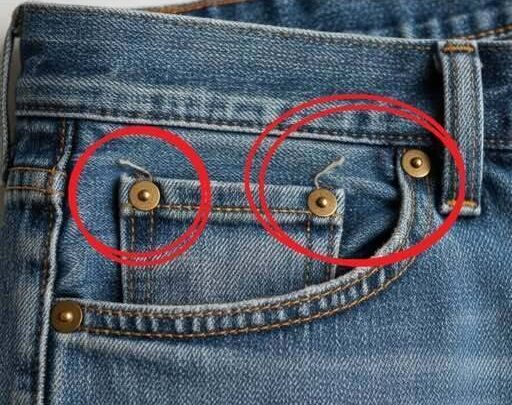
Copper and brass were the metals of choice because they resisted rust and handled constant stress without cracking. Rivets were placed where damage happened most: at pocket corners and along seams that flexed with movement. Early designs even included rivets on back pockets and near the fly, until riders complained they scratched saddles and damaged leather. Those placements were later adjusted, but the idea remained.
Rivets work by distributing force. Instead of fabric tearing at a single point, tension spreads across the reinforced area. Anyone who’s owned cheap jeans knows the difference—pockets without rivets fail fast.
Rivets in Modern Jeans
Most people today aren’t hauling tools or swinging hammers, but rivets remain a defining feature of classic denim. Many brands use them as a badge of craftsmanship, stamping logos into the metal or choosing finishes that match their identity.
That said, denim has evolved. Some modern jeans skip rivets altogether, relying on reinforced stitching or hidden supports. This creates a cleaner look and solves common annoyances—like metal pressing into your hip during long drives or flights. Rivet-free designs can also reduce weight and make recycling easier.
Still, denim purists often insist on traditional rivets. To them, those small metal fasteners represent durability, honesty, and a time when clothing was built to last, not cycle out of style.
Why They’ve Lasted for 150 Years
As jeans age, the fabric softens and molds to the body, but stress points remain under constant pressure. Rivets protect those areas long enough for denim to develop its signature worn-in character. Even their placement tells a story—corners for tension, seams for movement, and design changes driven by real-world use.
Trends come and go. Fits change. Fabrics stretch. But rivets have endured for more than a century because they solve a real problem.
When you put on a pair of jeans, you’re wearing more than cotton and thread. You’re wearing a piece of industrial innovation. Those tiny metal dots aren’t decoration. They’re visible engineering—proof that sometimes the smallest details are the reason something lasts at all.