
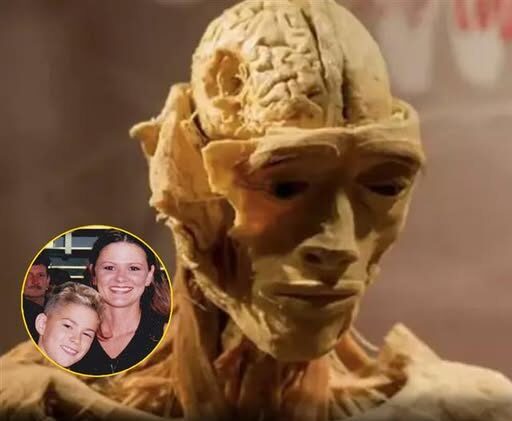
One particular figure stopped Erick cold.
The display, often referred to as “The Thinker,” depicts a skinned human body seated in a contemplative pose. Erick has said that upon seeing it, she experienced an immediate and overwhelming certainty that the figure was her son. According to her, specific physical details—body proportions, posture, facial structure—matched Chris in ways she could not rationalize away.
What began as a visceral reaction hardened into conviction. Erick came to believe that her son’s body had somehow entered the plastination process without her knowledge or consent.
The museum has categorically denied the claim.
Representatives for the exhibition have stated repeatedly that all bodies on display were legally obtained, ethically sourced, and accompanied by proper documentation. According to museum officials, none of the cadavers originated in the United States, and all were donated under the laws of their countries of origin, either through direct consent from the individuals themselves or authorization from next of kin.
The museum has emphasized that plastination is a highly regulated process involving extensive records at every stage—from donation and transport to preparation and exhibition—making misidentification or unauthorized use extraordinarily unlikely. Officials also note that the exhibition has been shown in multiple jurisdictions and subjected to inspections without any findings of wrongdoing related to body sourcing.
Despite those assurances, Erick remains unconvinced.
She argues that the official narrative surrounding her son’s death contains gaps that were never fully addressed. Over the years, she has pointed to what she believes are inconsistencies in timelines, documentation, and the handling of Chris’s remains. In her view, the museum’s reliance on paperwork and institutional process does not account for broader concerns about transparency in the global trade and display of human bodies.
Erick has filed complaints, spoken to media outlets, and shared her story online, where it has periodically gained viral attention. Each resurgence brings renewed scrutiny, public debate, and polarized reactions.
Some observers view Erick’s claims as the result of unresolved grief compounded by the shock of encountering a graphic anatomical exhibit. Others argue that, regardless of whether her conclusion is correct, her concerns highlight long-standing ethical questions surrounding body exhibitions—particularly those that rely on international sourcing and opaque supply chains.
The museum has acknowledged the emotional weight of such allegations but maintains that repeating unsubstantiated claims can cause harm—to staff, educators, and public trust in scientific institutions. It has reiterated that no evidence supports Erick’s belief and that her son’s remains were never part of the exhibition.
Still, the story persists because it touches a deeply human fear: that the dead can be stripped of identity, commodified, and displayed without dignity or consent. Even for visitors who accept the museum’s explanations, the idea that a grieving mother believes she recognized her child in such a setting is profoundly disturbing.
Mental health experts note that grief—especially when paired with unresolved doubt—can drive fixation on alternative explanations. When a loss feels abrupt, confusing, or mishandled by authorities, the mind often searches for meaning, accountability, or a narrative that restores a sense of control. In Erick’s case, encountering a human body displayed without personal context may have crystallized years of unanswered questions into a single, haunting image.
Online reaction to the renewed claims remains sharply divided. Some commenters accuse Erick of spreading misinformation and unfairly targeting a legitimate educational exhibit. Others express sympathy, arguing that even if her belief is incorrect, her anguish reflects broader failures in how institutions communicate with grieving families.
For Erick, evidence is not limited to documents or official statements. She has said repeatedly that a mother knows her child’s body—even years later. That certainty, rooted in memory rather than forensics, is what keeps her from letting go. To her, the exhibit is not an anatomical lesson but a reminder of a death she believes was never properly explained.
The case underscores a persistent tension between institutional authority and personal experience. Museums depend on documentation, regulation, and expert validation. Families rely on memory, intuition, and trust. When those frameworks collide, resolution is often elusive.
As the story circulates once again, the museum continues to stand by its position, while Erick continues to seek answers she believes were denied to her more than a decade ago. Whether her claim stems from grief, misunderstanding, or something more complex, it has become inseparable from her son’s legacy—and a reminder that when it comes to death, facts alone are not always enough to quiet the questions left behind.