
Just once, I wanted to exist without shrinking.
Saturday morning, Jackson rolled up in an oversized truck—the unofficial mascot of overcompensation. He greeted me with condescension and a freshly unwrapped tactical vest. During the drive, he rambled about “combat shooting” tips he learned from influencers who had never stepped foot outside a controlled range. He warned me not to get startled by the sound of a handgun… while texting across lanes.
When we arrived, his friends circled like they were waiting for a comedy show.
Jackson went first. Five shots. Only three hit the paper—barely. He turned, sweating like he’d climbed Everest. “Recoil’s crazy,” he bragged.
Then he handed me the gun and began “correcting” my stance with nonsensical advice. When he reached in to adjust my arms again, I caught his wrist gently but firmly.
“Don’t,” I said.
Everything in him paused.
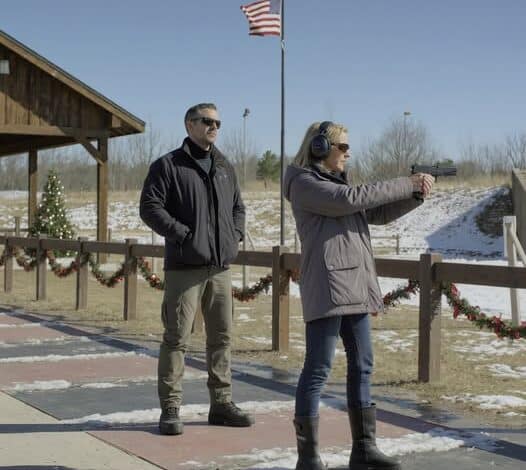
I stepped into my actual stance: grounded, steady, controlled. Years of training settling into place.
Five shots. Calm, quick, deliberate.
When he reeled in the target, expecting chaos, he froze. One tight grouping. Dead center. Five rounds through the same point.
Before he could speak, the range owner—Gary, an older Army veteran—walked over. Jackson puffed up, ready to brag, but Gary bypassed him entirely. He looked at my target, then at me.
“Nice work,” he said. “Did you train at the compound?”
I didn’t confirm anything. I didn’t need to.
Gary turned to Jackson, voice sharp but not unkind:
“Son… she knows what she’s doing. Listen to her.”
Jackson stared at me like he was meeting me for the first time.
The drive home was silent until he finally asked, “Why didn’t you tell me?”
“Because you never asked,” I said.
So I told him the truth—not details, just enough to set boundaries. Enough to make it clear I refused to be the family’s punchline anymore.
And for once… he actually listened.
A month later at our mom’s backyard cookout, everything was different. Jackson didn’t strut. Didn’t brag. He simply flipped burgers, laughed, and asked—asked, not instructed—about gear recommendations. His friends treated me with genuine respect. Even my mother softened, finally seeing me not as a disappointment, but as someone strong in her own quiet way.
Jackson’s son tugged on my sleeve. “Dad says you’re a real hero.”
I knelt and told him the truth:
Strength doesn’t need volume.
Real toughness is calm.
Real courage is protecting others, not performing for them.
As the sun set and laughter rose across the yard, something inside me settled. After years of living between two worlds—soldier on one side, misjudged daughter on the other—they finally aligned.
For the first time, I wasn’t hiding.
For the first time, they saw me.
And for the first time… I felt home.
What part of this story hit you the hardest — the family dynamic, the reveal, or the moment of respect? Drop your thoughts below!