
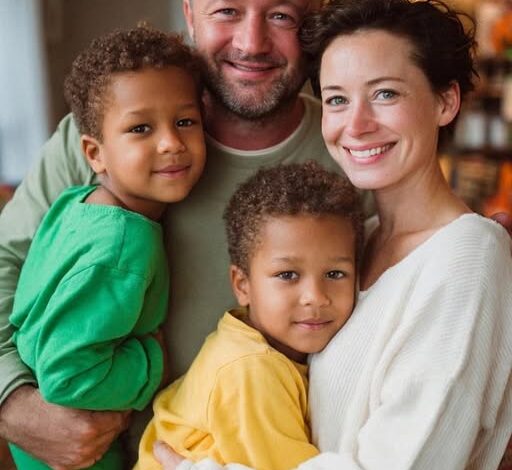
A Simple Walk That Changed Everything
One afternoon, we passed a neighborhood playground. Joshua stopped like his feet had suddenly rooted into the sidewalk. He watched the kids climbing, laughing, and chasing each other like it was a scene from a life we never got.
“Remember when we thought that would be us?” he asked.
I nodded, unsure whether to comfort him or protect myself from reopening old grief.
Then he said something that caught me off guard: “Does it still bother you?”
A few days later, he slid an adoption brochure across the breakfast table.
“Our house feels empty, Hanna,” he said. “I can’t keep pretending it doesn’t. We can still have a family.”
I reminded him—gently—that we had already made peace with things.
“Maybe you did,” he replied. “But I didn’t.”
He didn’t just suggest adoption. He pushed for it—persistent, emotional, and unusually intense. When I mentioned my job, he waved it away.
“It would help if you were home,” he said. “We’d have a better chance.”
Joshua had never begged me for anything before.
And somehow, instead of slowing down to question why, I did the opposite.
A week later, I resigned from a job I’d spent years building.
When I got home, he hugged me like he was afraid I’d change my mind.
The Adoption Process Took Over Our Lives
We dove into the adoption process: paperwork, interviews, home studies, background checks—every step designed to make sure children are placed in a safe, stable home. Joshua was laser-focused, like this was the most important thing he’d ever done.
Then he turned his laptop toward me.
“Four-year-old twins,” he said. “Matthew and William.”
In the photo, they looked small—not just in size, but in spirit. Their eyes held the kind of caution kids learn when adults haven’t been consistent.
Joshua squeezed my hand. “Maybe we can change that.”
Meeting the Boys
When we met them, Joshua knelt down immediately and spoke softly, offering a sticker like it was a peace offering.
Matthew barely responded. He stayed close to his brother, almost hidden behind him.
William watched us carefully—quiet, observant, like he was studying whether we were safe.
“He talks for both of us,” William said, nodding toward Matthew.
I crouched beside them. “That’s okay. I talk a lot for Joshua.”
Joshua laughed—an actual laugh, not the polite kind. I hadn’t heard that sound in years.
Our House Finally Felt Like a Home
The day the twins moved in, the house changed instantly. It wasn’t “easy,” but it was alive.
Toys appeared in every corner. Little footsteps ran down the hallway. Small voices called for help, snacks, hugs, and bedtime stories. We had pancake dinners and wobbly LEGO towers and laughter that echoed through rooms that used to feel empty.
Slowly, the boys started to trust us.
One night, after I tucked them in, Matthew looked up and asked, “Are you coming back in the morning?”
My heart cracked in a way I can’t fully explain.
William reached for my hand and held it until he fell asleep.
I thought: We’re doing it. We’re becoming a family.
Then Joshua Started Pulling Away
Not long after, Joshua began to disappear in small ways that didn’t make sense.
He stayed late at work. Took phone calls behind closed doors. Ate dinner with us, then retreated to his office like he couldn’t stand the noise—or the closeness—for very long.
One evening, I finally asked him directly if something was wrong.
He snapped his laptop shut too quickly. “Of course I’m fine. This is what we wanted, right?”
I nodded, but my stomach tightened. Something wasn’t adding up.
The Conversation I Was Never Meant to Hear
One afternoon, while the boys were napping, the house was quiet. I walked past Joshua’s office and heard his voice through the door.
“She thinks I wanted a family with her…”
I froze.
“I didn’t adopt the boys because of that,” he continued, and his voice cracked. “I just… I didn’t want her to be alone when I’m gone.”
I felt like the floor shifted under me.
When I’m gone.
In that moment, everything looked different—the urgency, the pressure, the way he clung to the adoption plan like it was a deadline.
He wasn’t building a future with me.
He was building a future for me… without him.
The Truth Was in the Paperwork
I left the house shaking and ended up at my sister Caroline’s. That night, I barely slept. The next morning, I searched until I found what I needed—medical records, test results, appointments he never told me about.
It was all there.
When I confronted him, my voice didn’t even sound like mine.
“You let me build a life around something you knew you might not be part of,” I said.
His eyes filled. “I wanted you to have a family,” he whispered.
“No,” I said. “You wanted to decide my future without me.”
He tried to call it protection. I called it what it was: fear—wrapped up in control and disguised as love.
“I’m here because those boys need their father,” I told him. “And because if there’s time left, it won’t be spent in lies.”
The Hardest Season of Our Lives
The days that followed blurred into hospital visits, paperwork, treatment discussions, and long nights where the silence felt heavier than any noise.
One night, I found Joshua recording messages for the twins—his voice steady, but his hands shaking.
And then the boys did what only children can do: they made the truth impossible to ignore.
“Don’t die, Daddy,” Matthew said one night, like he was asking for a glass of water.
William placed a toy in Joshua’s hand. “So you can come back and play.”
Something changed in Joshua after that. Not just emotionally—physically. Like he finally had a reason strong enough to fight through the fear.
The Call We Prayed For
After months that felt endless, the doctor finally said the words we’d been holding our breath for:
“The results are clear. He’s in remission.”
I didn’t collapse. I didn’t scream. I just sat there, stunned, feeling like I’d been carrying a weight so long I forgot what it felt like to set it down.
Two Years Later: A Loud, Beautiful Life
Today, our home is loud again in the best way.
Backpacks land on the floor. Crayons live on the table. There’s laughter in every room—and arguments too, because real families aren’t silent, polished things. They’re messy and honest and alive.
Joshua calls me the bravest one in the family.
But I’ve learned something important:
Bravery isn’t staying quiet to keep the peace. Bravery is choosing the truth before it’s too late.
For a long time, I thought my husband pushed adoption so I wouldn’t be lonely.
In reality, the secret nearly broke us.
But the truth—painful as it was—became the only reason we had a chance to heal.
Closing CTA: If this story moved you, share your thoughts in the comments—have you ever discovered a “loving” decision was hiding a painful truth? And if you want more real-life relationship and family stories, subscribe or bookmark this page so you don’t miss the next one.