
I nodded. I thanked them. I did what you do when your heart is too tired to form sentences.
The Man Who Chose Me
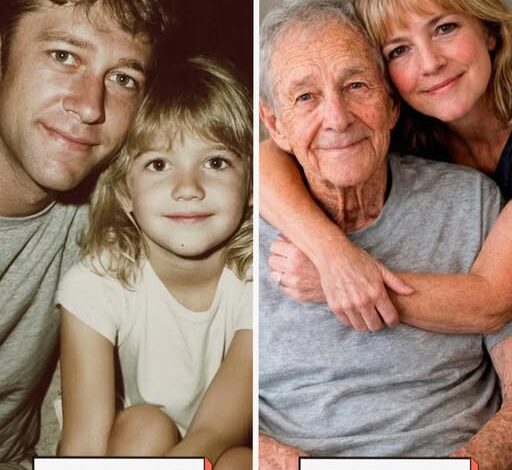
Michael came into my life when I was two, after he met my mom, Carina. I don’t remember a life without him. My earliest memory is sitting on his shoulders at a county fair—cotton-candy fingers, sun in my eyes, laughing like nothing bad could ever reach me.
When I was four, my mom died in a car accident.
One sentence. One phone call. One moment that split my childhood into “before” and “after.”
Michael could have stepped back. Plenty of people would have. Instead, he stepped in—fully. Not as a temporary solution. Not as an obligation. As my parent.
He taught me the everyday skills that quietly build a life: how to change a tire, how to budget, how to speak up when someone tries to push you around. He went to school events, sat through awkward teenage phases, and never once made me feel like I belonged to someone else.
When he got sick, I moved back home without hesitation. I managed appointments, medications, meals, and the long chemo days that made time feel heavy. And on the nights when the pain stole his words, I just sat beside him and held his hand—because sometimes love is simply staying.
A Warning I Didn’t Expect
After the service, the house filled with that familiar post-funeral noise—soft conversations, dishes clinking, laughter that feels misplaced but keeps people from falling apart.
I stood near the hallway table holding a glass of lemonade I never drank.
A neighbor leaned in and said, “You don’t have to be alone tonight. You can come stay with me.”
It was kind, but something about her urgency tightened my stomach.
Before I could answer, an older man I didn’t recognize walked up slowly, like he wasn’t sure he should speak at all.
“I’m Frank,” he said. “I knew your dad a long time.”
Then his voice dropped. “You weren’t supposed to hear this from me… but if you want the truth about what happened after your mom died, check the bottom drawer in your stepfather’s garage.”
He swallowed hard. “I made him a promise. I’m sorry.”
The Envelope in the Garage
That night, after everyone left, I walked into the garage without turning on the lights.
The air smelled like oil and sawdust—like every Saturday morning of my childhood. Michael’s workbench was still there, exactly as he’d left it. Tools lined up with the same quiet order he brought to everything.
I pulled open the bottom drawer.
Inside was an envelope with my name written in his blocky handwriting. Under it were legal documents, old letters, and a torn page from a journal.
I opened the envelope with shaking hands.
If you’re reading this, it means Frank kept his promise. I didn’t want you carrying this while I was alive…
The Truth About the Day My Mom Died
Michael’s letter explained something I had never known.
On the day my mom died, she wasn’t just out running errands.
She was driving to meet Michael to sign guardianship papers—documents meant to make sure I would be legally protected if anything ever happened to her.
But there was a problem no one told me about.
My aunt Sammie had threatened to fight for custody.
She believed biology mattered more than presence. More than bedtime stories. More than scraped knees, school mornings, and the kind of love that shows up every single day. She believed being related gave her the stronger claim.
My mom panicked at the idea of a custody battle. She wanted everything settled quickly.
Michael wrote that he told her to wait—to slow down, to be careful. But she got in the car anyway.
After the accident, Sammie tried again. Letters. Legal threats. Pressure designed to wear Michael down while he was grieving.
But Michael had something stronger than intimidation: documentation, dates, and a handwritten note from my mother.
If anything happens, don’t let them take her.
Near the end of his letter, Michael wrote the line that broke me all over again:
I didn’t protect you because the law said I could. I protected you because your mom trusted me. And because I loved you more than anything.
The Conversation I Finally Had
The next day, I met my aunt—with an attorney present.
She looked exactly the same: pearls, calm voice, perfectly composed, like emotions were something that happened to other people.
I didn’t yell. I didn’t beg. I didn’t let her steer the story.
I laid out the letters. The custody attempt. The legal threats. The proof my mom had tried to secure my future—because she knew what might come next if she didn’t.
And then I told my aunt the truth she never understood:
She didn’t just lose a sister when my mom died.
She lost control.
How the Story Ends
That night, I opened a box of childhood keepsakes.
Inside was a macaroni bracelet I made in second grade. Michael used to wear it like it was a luxury watch—proud, amused, and completely unbothered by what anyone thought.
I put on one of his old flannel shirts and stepped onto the porch.
For the first time since the funeral, the grief shifted. It still hurt, but it felt less like emptiness and more like evidence—proof that I had been loved fiercely and chosen on purpose.
Michael didn’t just raise me.
He fought for me. He kept me safe. He made sure I belonged.
And now it’s my turn to make sure the world remembers him that way.
If this story moved you, share what “family” means to you in the comments—and if you know someone who’s been a real-life parent without sharing blood, send this to them.