
I nodded and thanked her. I thanked everyone.
But inside, one thought kept repeating: You weren’t supposed to leave me, too.
The Man Who Chose Me
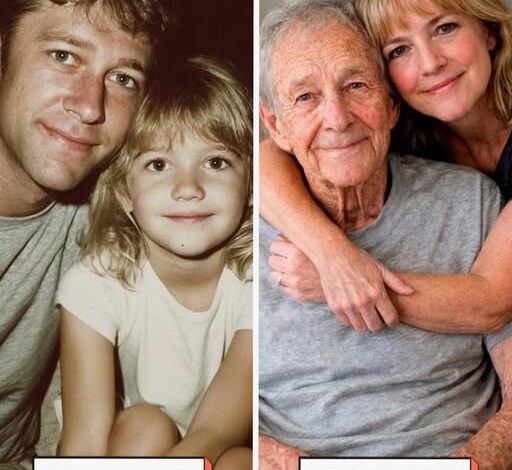
Michael came into my life when I was two, after he met my mom, Carina. I don’t remember a “before him.” My earliest memory is sitting on his shoulders at a county fair, sticky fingers from cotton candy, laughing like the world couldn’t touch me.
Then my mom died when I was four. A car accident. A short sentence that shaped my entire childhood.
Michael never treated me like I was someone else’s responsibility. He didn’t “step in” temporarily—he became my parent in every way that mattered. He taught me practical life skills, showed up to school events, and gave me the kind of stability kids don’t realize is priceless until it’s gone.
When he got sick, I moved back home without thinking twice. I handled meals, cleaning, appointments, and long chemo days. When the pain made him quiet, I just held his hand and stayed close.
I thought I knew our story: tragedy, then love, then survival.
I didn’t know there was more.
A Stranger’s Warning at the Reception
After the funeral, the house filled with the usual noise people bring when they don’t know what else to do—soft conversations, clinking dishes, laughter that feels out of place.
I stood near the hallway table with a glass of lemonade I never touched. The house still smelled like Michael: cedar, aftershave, and that lavender soap he insisted “wasn’t his.”
My Aunt Sammie appeared beside me, calm and polished.
“You don’t have to stay here alone,” she said. “Come with me for a while.”
Her smile stayed fixed, but something about her tone made my stomach tighten.
Before I could respond, an older man approached—creased face, stiff tie, hands wrapped around a paper cup like it was keeping him upright.
“I’m Frank,” he said. “I knew your dad a long time.”
I thanked him automatically, still numb.
Then he lowered his voice. “You weren’t supposed to hear this from me… but if you want the truth about what happened after your mom died, check the bottom drawer in your stepfather’s garage.”
He pressed a business card into my hand. “I made him a promise,” he added. “I’m sorry, kid. I really am.”
Even with the organ music in the background, his words landed like a bell.
The Envelope With My Name on It
That night, after everyone finally left, I walked into the garage without turning on the lights. The darkness felt easier than the sympathy.
The air smelled like oil and sawdust. Michael’s workbench was exactly where it always had been—organized in the way only he could manage.
I pulled open the bottom drawer. It stuck at first, then slid out with a rough groan.
Inside was an envelope with my name written in Michael’s blocky handwriting.
Under it: legal documents, old letters, and a torn page from a journal.
I sat on the cold concrete floor and opened the envelope.
The letter began simply:
If you’re reading this, it means Frank kept his promise. I didn’t want you carrying this while I was alive…
The Truth He Protected Me From
Michael explained that the day my mother died, she wasn’t just out running errands. She was on her way to meet him to sign guardianship paperwork—to make everything official, to make sure I was legally protected.
But there was a problem I’d never known about.
Aunt Sammie had threatened to take me to court.
She believed being “blood” mattered more than being present. She questioned whether Michael was “fit.” She hinted she could win. She pushed hard enough to scare my mother into panic.
Michael wrote that my mom didn’t want a custody battle. She was afraid of losing me—or of me being dragged through something ugly.
I told her to wait, he wrote. But she got in the car anyway.
After the accident, Sammie tried again—letters, legal threats, pressure.
But Michael had paperwork. He had documentation. And he had a note from my mother that made her wishes unmistakable:
If anything happens, don’t let them take her.
Michael’s words in the letter broke something open in me:
I kept you safe—not because the law gave me the right, but because your mom trusted me. And because I loved you more than anything.
All those years, I believed our story was simple.
It wasn’t.
Behind the scenes, there had been a quiet fight—one Michael handled alone so I could grow up feeling secure.
The Conversation I Never Thought I’d Have
The next morning, I met with an attorney. Aunt Sammie showed up looking composed—pearls, soft lipstick, the same controlled expression I’d seen my whole life.
I didn’t yell. I didn’t cause a scene.
I just looked her in the eye and said, “You didn’t just lose a sister when my mom died. You lost control.”
The attorney carefully confirmed what the documents showed: there had been an attempted custody action, and Michael had kept every piece of correspondence.
“I know about the letters,” I told her. “The threats. You tried to take me from the only parent I had left.”
Then I said the truest thing I’ve ever said out loud:
“Michael didn’t owe me anything. He chose me. Every day.”
Choosing How the Story Ends
That night, I opened a box of childhood keepsakes and found a macaroni bracelet I made in second grade. Michael used to wear it like it was a trophy—out in public, proudly, like being my dad was the best title he had.
I slid the bracelet onto my wrist. The elastic pinched a little, but I didn’t take it off.
I put on one of his old flannels and stepped onto the porch. The sky was wide and dark, the kind of quiet that makes you feel small—and also strangely brave.
“Thank you,” I whispered. “I understand now. I know how loved I am.”
Tomorrow, I’ll start the paperwork to restore his name where it belongs—on the documents that define family in ink, not just in memory.
Because now I know the truth:
My stepdad wasn’t “like” a father.
He was my father.
And now, finally, I get to decide how our story is told.
If this story moved you, share what “family” means to you in the comments—and if you know someone who’s been raised by a stepparent who truly showed up, send this to them.