
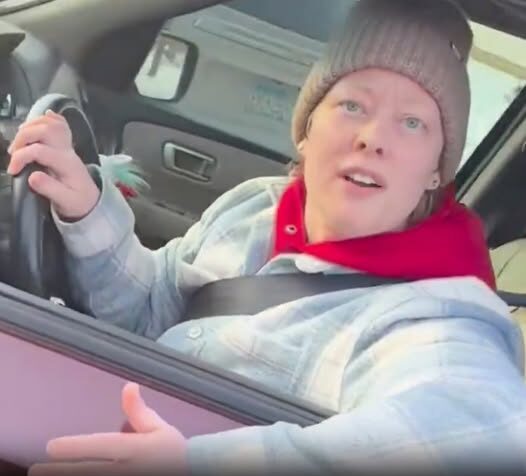
These statements drew immediate and widespread criticism. Minneapolis Mayor Jacob Frey publicly rejected the narrative, stating bluntly, “They’re already trying to spin this as an action of self-defense. Having seen the video myself, I want to tell everybody directly — that is bulls**t.”
Amid the political firestorm, attention has turned to video footage capturing Good’s final moments. Forensic analyst Dr. G, known for his online reviews of complex cases, examined the recordings frame by frame. His analysis highlights critical details that many say have been overlooked or misinterpreted.
Dr. G focused on the subtle movements of Good’s hands and the position of her vehicle. He noted that as the incident unfolded, Good’s steering wheel was turned to the left, with her tires angled in the same direction—an indication she was preparing to leave the scene, not move toward anyone. He pointed out the brake and reverse lights were visible, further suggesting she was attempting to back up and escape the confrontation.
The video also shows Good’s wife attempting to enter the vehicle from the passenger side while an ICE agent pulled on the driver’s side door. According to Dr. G, this moment likely triggered a flight response.
Good attempted to reverse the car while her wife’s hand remained on the locked door handle, a detail suggesting panic and confusion rather than deliberate aggression. Later, when Good shifted from reverse to move forward, her tires briefly pointed straight ahead as she completed her turn—another subtle detail contradicting claims that she intentionally aimed the car at the officer.
In Dr. G’s view, the movements of Good’s hands and vehicle reflect a person attempting to flee from danger, not someone planning an attack. “The video tells a story of fear and flight,” he said, emphasizing that even under the stress and adrenaline of the moment, Good’s actions were defensive rather than offensive.
The shooting has become a focal point in broader conversations about law enforcement practices, use of force, and accountability. Families, advocacy groups, and protesters continue to demand transparency and a thorough investigation into the circumstances surrounding Good’s death. The forensic observations of Dr. G have intensified calls for scrutiny, providing what many see as objective evidence that challenges the official narrative.
For Renee Nicole Good’s loved ones, the tragedy is deeply personal. Friends and family describe her as a devoted mother and community member, and the ongoing debate surrounding the shooting has been a source of additional pain. The incident has also sparked nationwide conversations about the ways in which government agencies respond to encounters with civilians and the narratives that are constructed in the immediate aftermath of such tragedies.
As investigations continue and public debate intensifies, Renee’s death remains a stark reminder of the human cost behind headlines, political statements, and legal arguments. The video footage and forensic analyses may not resolve every question, but they offer crucial context in understanding the events that led to her untimely death. In a country already divided over questions of justice and institutional power, the case of Renee Nicole Good has become both a symbol of systemic failure and a rallying point for those demanding accountability, transparency, and reform.