
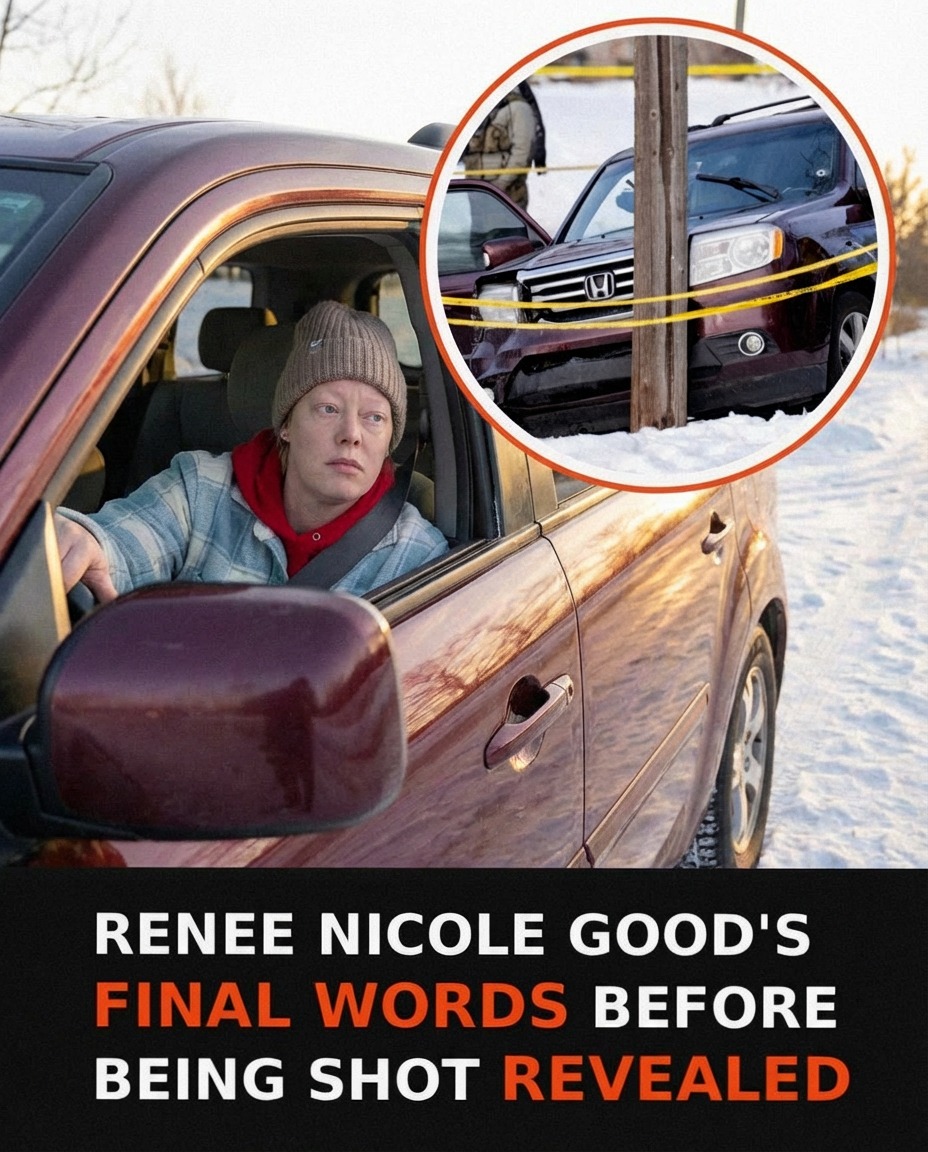
Newly released video footage has renewed national focus on the fatal encounter between federal immigration agents and Renee Good, shedding light on the tense moments leading up to her death on a residential street in Minneapolis. The recording, captured from a federal agent’s point of view, documents an interaction that begins calmly but escalates within seconds, ending in a fatal shooting that has sparked widespread concern and calls for accountability.
The short video, first made public by a local news organization, opens during what authorities described as a routine immigration enforcement operation in south Minneapolis. Agents approach a parked SUV where Good is seated. Initially, the exchange appears orderly and non-confrontational. Good speaks in a steady tone and does not appear hostile. Nearby, her wife, Becca, records the interaction on her phone and at one point attempts to ease the atmosphere with a light remark, suggesting no immediate threat is perceived.
That calm atmosphere makes the following moments especially unsettling.
An agent instructs Good to exit the vehicle. Within seconds, the situation changes dramatically. The SUV briefly reverses and then moves forward. Almost immediately afterward, gunshots are heard. The video ends abruptly, leaving a gap in visual information during the most critical moments of the encounter.
Subsequent video clips that later circulated online show the SUV traveling several blocks before coming to a stop. Emergency responders arrived shortly after, and Good was taken to a nearby hospital, where she was pronounced dead. Federal officials later confirmed that an agent discharged his weapon, stating that he believed he faced an imminent threat and acted in self-defense during what was described as a fast-moving and unpredictable situation.
The agent involved has been placed on administrative leave, a standard procedure following officer-involved shootings. Federal authorities emphasized that this step is routine and does not indicate misconduct. Multiple investigations are underway, including internal reviews and oversight by external agencies, to determine whether the use of force complied with federal guidelines and the law.
Despite those assurances, the release of the footage has intensified public scrutiny. Viewers across the country have questioned how an interaction that appeared controlled and conversational could escalate to deadly force so quickly. Civil rights advocates and legal analysts have pointed to the lack of visible aggression in the early moments of the video, raising concerns about decision-making, de-escalation practices, and proportional use of force.
Eyewitnesses who were nearby at the time have shared similar concerns in interviews with local media. Several described the scene as confusing and chaotic, with rapid commands and little time to process what was happening. Some said they did not fully grasp the seriousness of the situation until shots were fired. These accounts have added complexity to the official narrative and increased calls for transparency.
The incident has also reignited debate over the role of U.S. Immigration and Customs Enforcement (ICE) in local communities, particularly in cities that have expressed concerns about federal immigration operations. Minneapolis, like many large urban areas, has long been at the center of discussions about public trust, community safety, and cooperation between local and federal authorities.
In the days following Good’s death, protests spread across the city. Demonstrators gathered near the site of the shooting and outside government buildings, demanding accountability and an independent investigation. Many carried signs bearing Good’s name, while others called for broader reforms to immigration enforcement and law enforcement practices. Community leaders urged peaceful demonstrations while acknowledging the anger and grief felt by residents.
Family members have described Good as a devoted partner who posed no threat. In public statements, they expressed shock that a routine encounter could end so tragically. They have called for the full release of all available body camera footage, surveillance video, and related evidence to provide a complete and transparent account of what occurred.
Legal experts note that incidents involving federal agents are often especially complex. Differences between federal and local use-of-force standards, combined with overlapping jurisdictions, can slow investigations and complicate accountability. Critics argue that without clear communication and transparency, public confidence can erode quickly.
The video itself has become central to the ongoing debate. Analysts have examined it frame by frame, evaluating body language, tone, and the timing of commands. While officials maintain that the agent perceived the vehicle as an immediate danger, others argue that the footage does not clearly demonstrate intent, highlighting how difficult it can be to assess split-second decisions after the fact.
Supporters of law enforcement urge patience, warning against drawing conclusions before investigations are completed. They emphasize that vehicles can pose serious risks and that officers often must make rapid decisions to protect themselves and others. At the same time, even some law enforcement professionals have acknowledged that the footage raises challenging questions about communication and escalation.
Beyond this individual case, the incident has become part of a broader national conversation about public safety, law enforcement accountability, and the use of force by federal agencies. It underscores how quickly routine encounters can turn deadly and how those moments can permanently affect families and communities.
As investigations continue, federal officials have said additional information will be released when appropriate. State authorities have indicated they are closely monitoring the case due to its civil rights implications. Meanwhile, community organizations are providing counseling and support services, while advocacy groups continue to push for policy changes.
The release of the video ensures that Renee Good’s death remains in the public eye. For many, the footage is more than evidence—it is a stark reminder of how rapidly ordinary situations can escalate into irreversible tragedy. As the case moves forward, the focus remains on uncovering the full truth, delivering accountability where warranted, and ensuring that similar outcomes are prevented in the future.