
Brown shells are darker, which makes it harder for inspectors to see tiny spots during candling. White eggs allow more light to pass through the shell, making small irregularities easier to detect before the eggs are packaged.
Are Eggs With Blood Spots Safe to Eat?
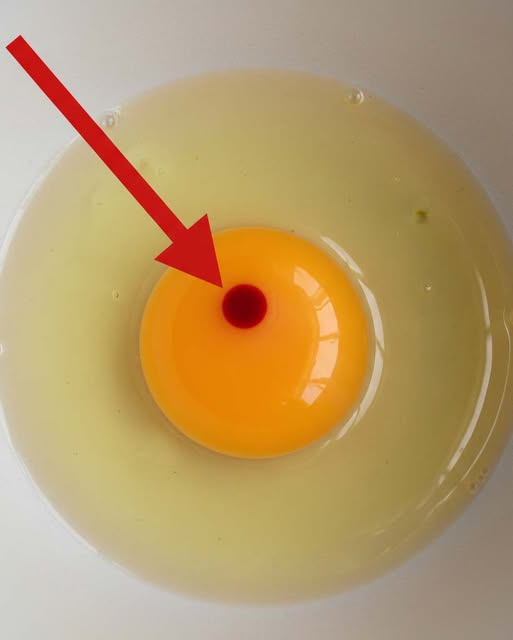
Yes—eggs with small blood spots are generally safe to eat as long as the egg is fresh and properly stored.
The spot does not indicate bacteria or spoilage, and it doesn’t change the egg’s nutritional value. Many people simply remove the spot with the tip of a spoon or knife before cooking.
Once removed, the egg can be used normally in recipes such as scrambled eggs, omelets, or baked dishes.
Signs an Egg Should Be Discarded
While blood spots are harmless, other signs may indicate an egg has spoiled. You should throw an egg away if:
It has a strong, unpleasant odor when cracked open
The egg white or yolk has an unusual green or gray color
The egg feels slimy or the shell is leaking
The egg has been left unrefrigerated for long periods
In these cases, the issue is spoilage rather than the blood spot itself.
Do Blood Spots Affect Nutrition?
From a nutritional standpoint, the small speck inside the egg has almost no impact. It may contain tiny traces of iron or proteins, but the amounts are extremely small.
Eggs naturally contain these nutrients throughout the yolk and white, so the presence of the spot doesn’t significantly change the egg’s nutritional value.
A Natural Part of Egg Production
Eggs are natural products, and occasional variations are normal. Blood spots are simply minor irregularities that can occur during the biological process of egg formation.
Even with modern farming and quality checks, it’s still possible for a tiny spot to appear occasionally. It’s just a reminder that eggs come from a living animal and not from a completely controlled manufacturing process.
The Bottom Line
Finding a small red spot in an egg might seem alarming at first, but it’s usually nothing to worry about. Blood spots and meat spots are natural and harmless in most cases.
As long as the egg smells fresh and shows no signs of spoilage, it can still be safely used in your cooking—just remove the spot if you prefer.
Have you ever cracked an egg and noticed a red spot inside? Share your experience or kitchen tips in the comments—your insight might help other readers too!