
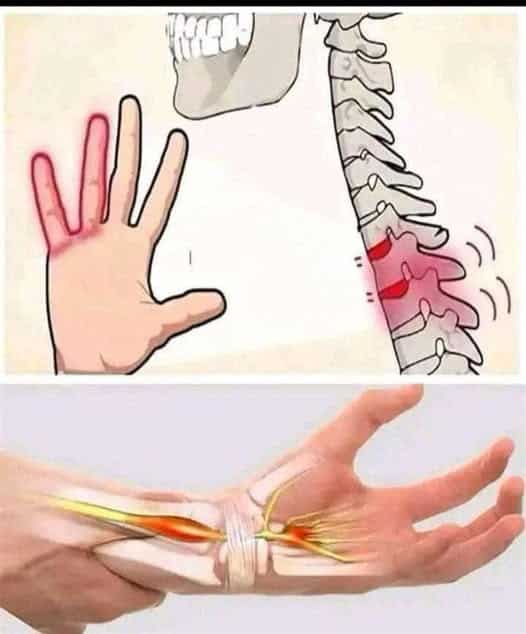
How to make the tingling go away
It’s hardly a surprise that the majority of people aren’t too keen on experiencing paresthesia. Though, as stated, it’s not commonly associated with any great amount of pain, it is uncomfortable, and sensitivity is often higher in the affected limb.
To restore normalcy to the limb, one must get blood circulating once more to the affected nerve. Stretching or massaging the limb can help with this, hastening relief.
Can it become chronic?
While most of your brushes with paresthesia will be brief, it can actually develop into a chronic issue as a result of neurological disease or nerve damage, including a stroke, multiple sclerosis, or encephalitis.
Tumors, vascular injuries, or carpal tunnel syndrome can also cause chronic paresthesia.
It should go without saying that readers should see a doctor or qualified medical professional if they are concerned. It may be time to seek help if your paresthesia:
Begins suddenly
It follows a recent head injury
Involves an entire arm or leg
You experience weakness or paralysis
You experience confusion
You experience difficulty talking
You experience dizziness
You have a sudden, severe headache
You have had a head injury
Your doctor suspects or needs to rule out a brain tumor or stroke
It begins or worsens gradually
It affects both sides of the body
It comes and goes
It seems related to certain activities, particularly repetitive motions
It affects only a part of a limb, such as your toes or fingers
Have you ever experienced paresthesia? Let us know in the comments.