
Fur is essential for many animals, providing warmth, protection, and their characteristic appearance. But what happens when an animal loses it entirely? Sometimes, the result is so surprising that it’s almost unrecognizable.
Recently, wildlife rescuers in Nova Scotia discovered an extraordinary creature that looks like a hairless cat — yet it’s far rarer than that.
A Surprising Backyard Discovery
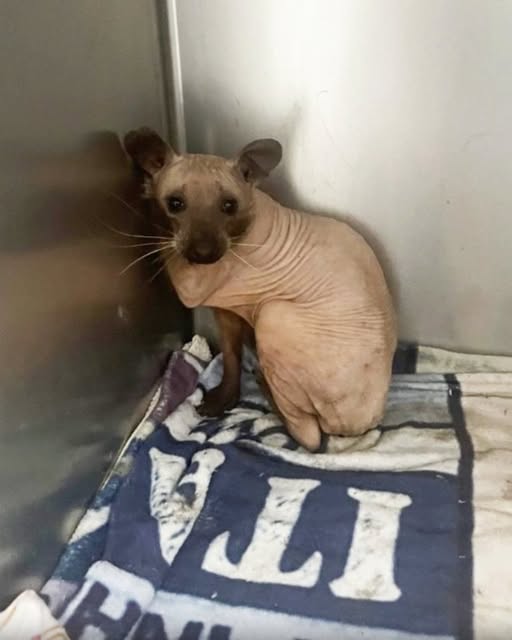
Last month, Hope for Wildlife, a nonprofit wildlife rehabilitation group in Nova Scotia, took in an unusual animal found shivering in a West Arichat backyard. At first glance, it resembled a Sphynx cat, but closer inspection revealed something much more unexpected: a completely hairless raccoon.
Raccoons are known for their distinctive fur and masked facial markings, so seeing one without hair is rare. This female raccoon is suffering from severe alopecia, leaving only small tufts of fur around her snout, ankles, and paws.
“We’ve had a few balding raccoons before, but nothing like this,” said Hope Swinimer, director of Hope for Wildlife, to the Canadian Press.
The team has named her Rufus, after the naked mole-rat character in the cartoon Kim Possible.
The Mystery of Her Hair Loss
The cause of Rufus’s hairlessness hasn’t been fully confirmed. The rescue suspects an autoimmune condition may be damaging her hair follicles. Parasites, mange, and fungal infections were ruled out, as her skin appeared healthy.
Fur is vital for raccoons to retain heat and shield their skin from harsh weather, so it’s astonishing that Rufus survived the cold.
“We’re amazed she made it through the winter without fur, frostbite, or worse,” the rescue wrote on Facebook.
Rufus’s spunky personality likely played a role in her survival. She was reportedly “down and out” when first brought to the shelter, but quickly recovered her energy and spirit.
“We were panicking for a few short hours… but she got hungry and came out. She’s getting quite feisty, and we’ve seen a big improvement since she first arrived,” Swinimer said.
A Special New Home
Due to her condition, Rufus may remain at the shelter permanently. She will live in a specially designed outdoor enclosure with warm areas to crawl into, hammocks, and nesting boxes to keep her comfortable.
Seeing a hairless raccoon is extremely rare, and Rufus’s story highlights the resilience of wildlife — and the vital role of organizations like Hope for Wildlife in protecting it.
It’s incredible that she survived in the wild for so long. Thanks to rescuers, Rufus now has a safe place to thrive.
If you love wildlife stories, share Rufus’s remarkable journey and celebrate the dedication of the people who saved her!