
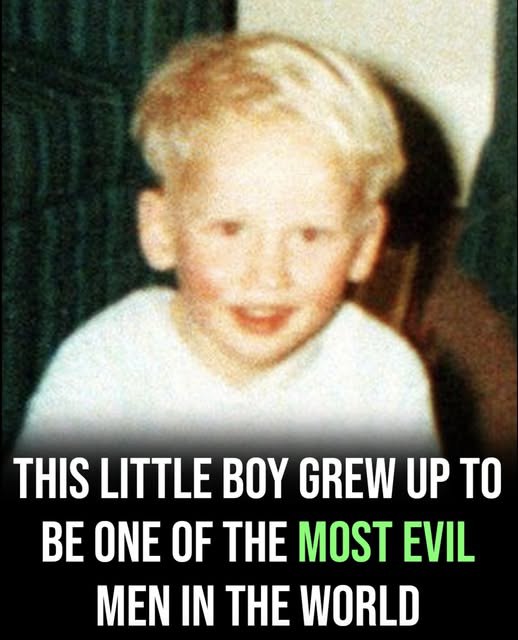
The environment in which Aileen grew up was not a sanctuary but a breeding ground for tragedy. She later alleged that her childhood was defined by a grandmother who struggled with severe alcoholism and a grandfather who subjected her to years of physical and sexual abuse. In this atmosphere of fear and silence, the girl who would one day be dubbed the “Damsel of Death” learned that the world was a predatory and unforgiving place. By the age of fourteen, the cycle of trauma reached a devastating peak when she became pregnant following a rape; rumors even persisted for years that the father of the child was her own brother. After giving birth to a son, she immediately placed him for adoption, an act she believed was the only way to grant him a life free from the misery she had known.
By the time she was a teenager, Aileen was already navigating the world with the scars of a lifetime’s worth of grief. When her grandmother passed away, she dropped out of school and found herself on the streets, surviving the only way she knew how. Between 1970 and 1980, her life became a blur of arrests, drifting, and desperation. She was frequently detained for disorderly conduct, assault, and prostitution—not out of a desire for a criminal lifestyle, but as a byproduct of a life lived on the absolute margins. The death of her brother in 1976 and the subsequent suicide of her grandfather further severed her remaining ties to the world, pushing her closer to a total psychological breaking point.
Driven by a desire for a fresh start, she hitchhiked south to Florida, but the change in geography did little to heal her fractured psyche. She continued to live in extreme poverty, working as a prostitute along highways and truck stops. During these years, she attempted suicide multiple times, her internal struggle with mental illness and untreated trauma becoming an invisible weight she carried every day. It was in the humid woods and roadside bars of Florida that her narrative would take its final, lethal turn.
In late 1989, Aileen encountered Richard Mallory, a 51-year-old electronics store owner.2 The two ended up in a secluded area near Daytona, where Aileen shot him three times. While she initially claimed the conflict was over money, she later testified that Mallory had brutally assaulted and raped her, and that she had acted purely in self-defense. At the time, her claims were met with skepticism, though it was later revealed that Mallory did indeed have a history of sexual violence—a fact that might have changed the public perception of the case had it been known earlier.
However, Mallory was only the beginning. Over the course of the next year, the bodies of six more middle-aged men were discovered across Florida. The victims included construction workers, a retired police chief, and a truck driver. The pattern was chillingly consistent: each man was found shot to death in isolated locations after encountering Aileen while she was working. When the police eventually closed in on her, using ballistics and items she had stolen from the victims, Aileen confessed to the killings. She maintained that every single instance was an act of self-defense against men who tried to rape or harm her, but the sheer volume of the victims made her story difficult for a jury to accept.
The media frenzy that followed her arrest was unprecedented. Aileen Wuornos became a cultural fixation, a polarizing figure who represented either a cold-blooded serial killer or a tragic victim of a society that had failed her at every turn. Psychologists who evaluated her noted a complex web of Borderline Personality Disorder and severe PTSD, pointing to her childhood as the catalyst for her eventual explosion into violence. Prosecutors, meanwhile, focused on the calculated nature of the thefts and the repetitive cycle of the murders, painting a picture of a woman who lured men to their deaths for financial gain.
In the courtroom, Aileen was a volatile presence, often lashing out at the legal system she believed was rigged against her. Despite the efforts of her defense team to highlight her history of abuse, she was convicted and sentenced to death six times. Her final years on death row were marked by increasing paranoia and a fluctuating narrative; at times she expressed deep remorse, and at others, she claimed she was the victim of a grand conspiracy involving the police and the media.
On October 9, 2002, at the age of forty-six, Aileen Wuornos was executed by lethal injection.3 Her story remains one of the most studied cases in criminal psychology, serving as a dark testament to the long-term effects of childhood neglect and systemic abuse. For those who look back at the original photograph of the small girl in Michigan, the tragedy is twofold: there is the loss of the seven men who died at her hands, and the loss of the innocent child who never had a chance to become anything other than a product of her environment.
Ultimately, her life serves as a grim reminder that when children are left to fend for themselves in cycles of violence, the consequences often ripple outward for decades. Aileen Wuornos did not become a monster overnight; she was forged in a furnace of trauma that the world ignored until it was far too late. By the time the nation learned her name, the path back to the girl in the photograph had long since been buried under a trail of blood and broken dreams.