
That morning’s cold felt unforgiving, the kind that cuts straight through coats and settles deep in your joints. After more than fifteen years as a school bus driver, I’ve learned that winter tests everyone involved—students, parents, and staff alike. I unlocked the depot gate before dawn, climbed into the familiar bus, and waited for the engine to warm as the heater struggled against the icy air. I expected a routine day. Instead, it became one I’ll never forget.
The route started normally. Children climbed aboard wrapped in bulky jackets and scarves, boots thudding on the steps, voices filling the aisle. I greeted them like I always did, trading jokes, waving to parents, and teasing little Marcy about her bright pink pigtails. Those brief moments mattered to me more than the paycheck. They were reminders that school transportation is about more than schedules—it’s about care.
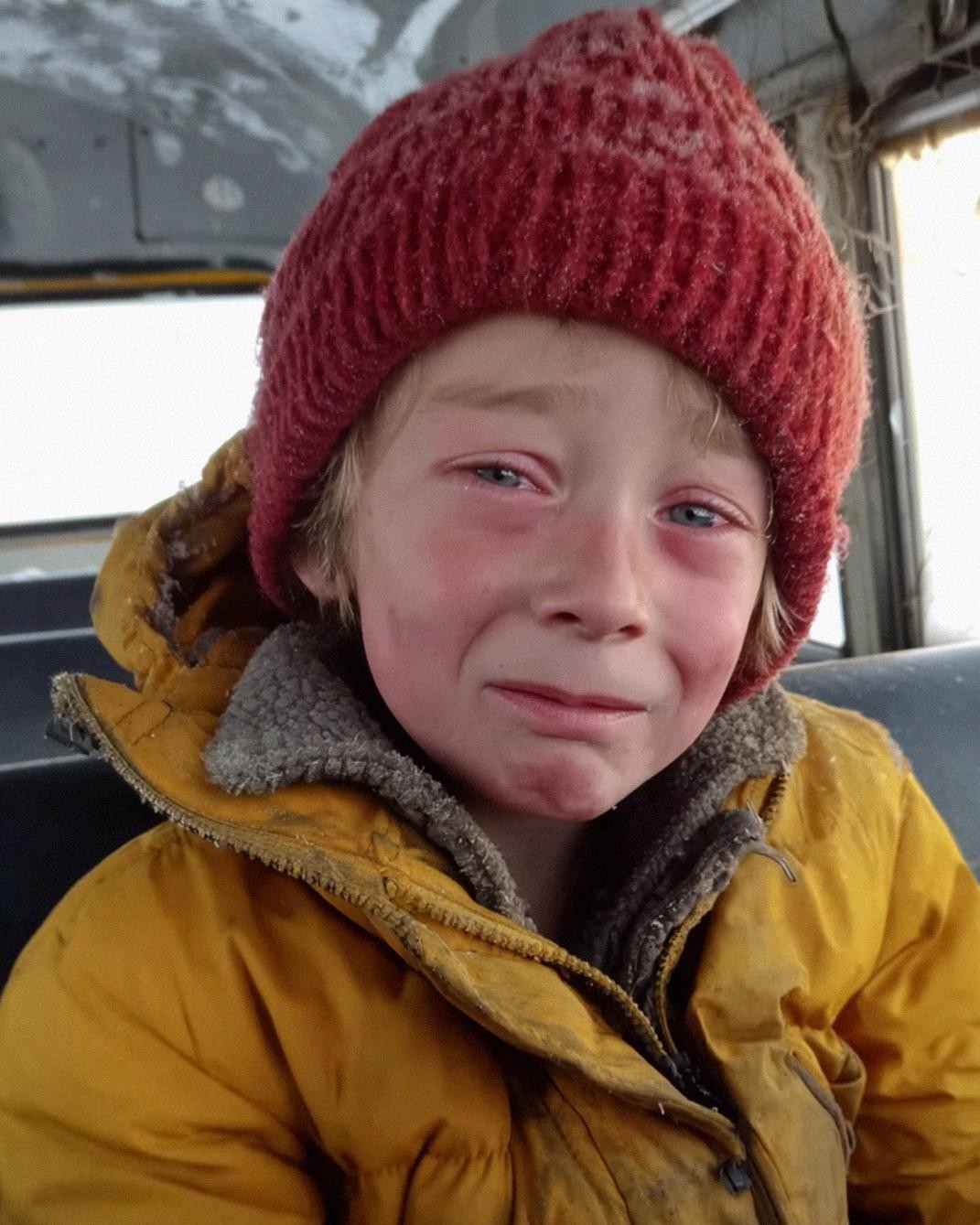
After the morning drop-off, I completed my usual safety check. I walked the aisle, scanning for forgotten gloves, lunch bags, or backpacks. That’s when I heard it—a quiet sob near the back of the bus. It wasn’t loud, but it was unmistakable. I followed the sound and found a small boy curled by the window, his coat pulled tight, eyes locked on the floor. He said he was cold. When I gently asked to see his hands, he hesitated before slowly holding them out.
His fingers were blue, swollen, and stiff. This wasn’t just discomfort—it was prolonged exposure to the cold. Without thinking, I removed my own gloves and slipped them onto his hands. They were far too big, but warmth mattered more than size. He explained softly that his gloves had torn and his parents would replace them next month. He said his dad was “doing his best.” I recognized that phrase immediately. I’d lived it myself.
Later that morning, instead of grabbing coffee, I stopped by a small neighborhood shop. I bought a thick pair of winter gloves and a navy scarf with bold stripes—the kind a kid could feel good wearing. It used up the last of my extra cash, but I didn’t hesitate. Back on the bus, I placed them in a shoebox behind my seat and added a simple note: “If you’re cold, you can take something from here.” No names. No attention. Just help.
That afternoon, I watched quietly through the mirror. A few students paused, read the note, and moved on. Then a small hand reached into the box and took the scarf. No eye contact. No explanation. But the boy stepped off the bus without shivering—and he smiled. I assumed that was the end of it.
I was wrong.
A few days later, I was asked to stop by the principal’s office. My mind raced through worst-case scenarios—policy concerns, complaints, misunderstandings. Instead, I was met with appreciation. The principal explained the boy’s situation. His father, a firefighter, had been injured and was temporarily out of work. Finances were strained. What I’d done hadn’t just kept a child warm—it had preserved a family’s dignity during a difficult season.
More importantly, others had noticed the shoebox. Teachers mentioned it. Parents asked questions. The school responded. A winter clothing fund was created. Collection bins appeared. Gloves, scarves, and coats were donated—no questions asked. Quiet, respectful support rooted in child welfare and community care.
The response grew quickly. A local bakery donated hats. A retired teacher began knitting wool caps. A shop owner offered weekly glove donations. Handwritten thank-you notes appeared in the box, decorated with crayon and uneven letters. I continued driving my route, pretending not to notice how full the box had become.
One afternoon, the same boy ran up the steps holding a folded piece of paper. Inside was a drawing of me driving the bus, surrounded by smiling kids wearing winter gear. At the bottom, it read: “Thank you for keeping us warm. You’re my hero.” I taped it near my steering wheel, where I could see it every day.
Then came a school assembly. I sat in the back, confused, until my name was called. Applause filled the gym. What began as one small act had expanded beyond our school to other routes and neighborhoods. No child in the district would walk into class with numb fingers again. The boy’s father stepped forward—still moving carefully, uniform pressed, eyes full—and thanked me. Not for charity, but for noticing his son.
That’s when it finally clicked. My job wasn’t just about driving safely or staying on schedule. It was about awareness. About recognizing needs that go unseen. About understanding that small acts of kindness, done quietly, can travel further than anything loud.
Winter eventually passed. The bus still rattles. The heater still struggles. Bills still arrive. But I drive differently now—steadier, more attentive. Because somewhere along that route, a child learned they didn’t need to hide their hands. And I learned that sometimes, the warmest ride comes from simply paying attention.