
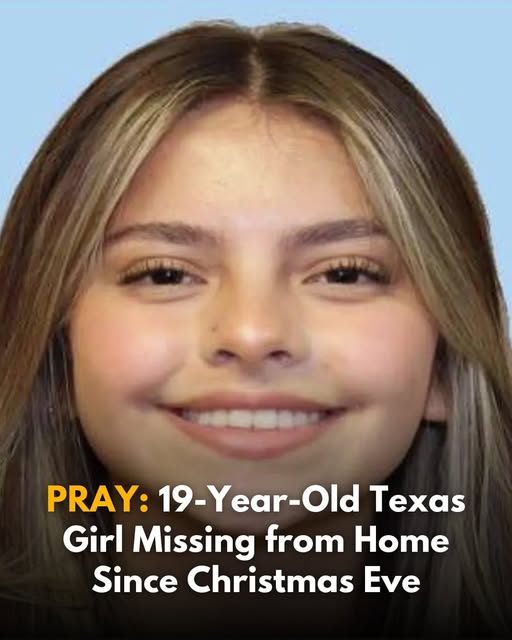
When Camila did not return and calls went unanswered, concern escalated rapidly. Her parents, Rosario Mendoza and Alfonso Olmos, knew something was wrong. This was not how their daughter behaved. She did not disappear without explanation. She did not leave her phone behind. As the realization set in, fear replaced confusion, and the search began almost immediately.
What followed was not a dramatic chase or a cinematic investigation, but the slow, exhausting reality of a missing-person search. Family members retraced Camila’s steps. Friends arrived. Neighbors joined in. Volunteers gathered. More than a hundred people combed nearby streets, vacant lots, drainage areas, and open fields around the San Antonio neighborhood—places that had once felt ordinary and safe now scrutinized inch by inch.
For the family, time stopped behaving normally. Minutes stretched into hours. Hours blurred into days. Every small detail became enormous. Why did she leave her phone? Why didn’t she take the car? Did someone see her? Did someone speak to her? Each unanswered question carried weight, pressing harder as the hours passed.
Camila’s parents have been unwavering in one belief: their daughter did not vanish by choice. This was not a runaway situation. This was not a planned disappearance. Between interviews with local media and quiet moments of prayer, her mother has repeated the same request—not for speculation, not for online theories, but for help. Real help. Information. Any detail, no matter how small, that could lead them closer to their daughter.
The absence has transformed their home. A bedroom once filled with everyday sounds now sits untouched. A phone that once buzzed with messages lies silent. The normal rhythms of family life have been replaced by waiting—waiting for a call, a lead, a sighting, anything that might break the unbearable stillness.
Cases like this expose the fragility of certainty. A person can step outside for a routine moment, and the world can change irreversibly. There is no dramatic turning point captured on camera beyond that last piece of footage. Beyond it lies a gap—one filled with questions, fear, and hope fighting for space.
Law enforcement continues to investigate, but there are no conclusions yet. No confirmed sightings. No definitive answers. Just a timeline that ends too abruptly and a community holding its breath. Search efforts have expanded and contracted as leads are pursued and exhausted, but the family remains locked in a state of suspended anticipation, refusing to let hope disappear even as days pass without resolution.
This kind of uncertainty is its own form of trauma. Unlike grief, which has rituals and finality, disappearance offers none. Families live between possibilities—clinging to hope while preparing for pain they cannot yet name. Mental health experts often describe this as “ambiguous loss,” one of the most psychologically taxing experiences a family can endure. There is no closure, only waiting.
The community response has been steady, if quiet. People who never met Camila share her photo, replaying the last known moments, scanning their memories for something that might matter. Someone might have seen a young woman walking alone. Someone might remember a car slowing down. Someone might recall a detail dismissed at the time as insignificant. In cases like this, those fragments can become everything.
Her family has been careful to remind the public that this is not entertainment or a mystery to be consumed. This is a real person. A daughter. A young woman with plans, routines, and a life that did not end willingly. Each retelling of her story carries responsibility—to speak with care, to avoid rumor, and to center the goal that matters most: bringing Camila home.
Christmas came and went without her. Decorations remained, but the meaning drained from them. The holiday, once associated with closeness and celebration, is now marked by absence. Yet even in that pain, her parents continue to speak with clarity and dignity, urging anyone who knows something to come forward.
Somewhere beyond the edge of that final surveillance frame is information that could change everything. A memory. A conversation. A sighting. Until that moment arrives, a family remains in limbo, held together by hope, love, and the refusal to accept silence as an answer.
Camila Mendoza Olmos is not a headline. She is a life interrupted. And until answers come, her story remains unfinished, carried by those who refuse to stop looking.