
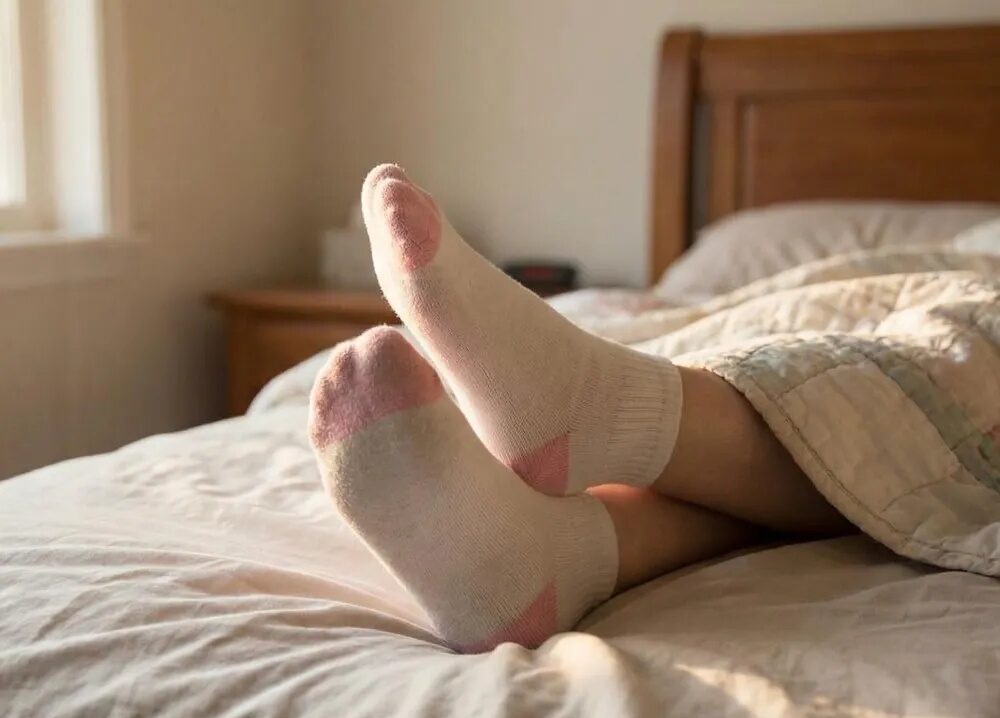
For many people, especially those who’ve spent decades padding around the house barefoot, wearing socks indoors can feel unnecessary—almost restrictive. Bare feet are often associated with comfort, freedom, and feeling at home. But as the body changes with age, small habits that once felt optional can quietly become beneficial. One of the simplest upgrades? Wearing socks at home.
It may sound minor, but this small adjustment can make a meaningful difference in comfort, safety, and overall foot health—especially as the years go by.
How Aging Changes the Feet
Feet tend to change more than we realize over time. The skin becomes thinner and more fragile, natural padding on the soles gradually wears down, and sensitivity to temperature increases. Circulation also tends to slow, making cold feet more common—even in warm homes. Floors that once felt neutral can begin to feel harsh, cold, or uncomfortable.
Socks act as a soft barrier between aging feet and unforgiving surfaces. That layer may be thin, but it plays a powerful role in maintaining comfort throughout the day.
Warmth That Supports Circulation
Cold feet are more than just annoying. When feet are exposed to chilly floors, blood vessels constrict, which can further reduce circulation and increase stiffness or numbness. Socks help maintain gentle warmth, encouraging better blood flow and helping muscles and joints feel more relaxed.
Over time, warmer feet can translate into easier movement—less stiffness when standing, more comfort while walking, and fewer distractions caused by persistent cold. This is especially noticeable in homes with tile, stone, or hardwood floors.
Continue reading on the next page…